Crew scheduling software helps businesses assign workers to shifts, manage availability, and coordinate rotas. For event staffing agencies, however, the real challenge goes beyond building a simple schedule. It is coordinating large freelance teams across multiple clients, events, and locations without errors, clashes, or last-minute chaos.
Most generic scheduling tools are built for fixed teams in fixed locations. Construction sites. Airline rotations. Warehouse rotas. Event staffing agencies operate differently. They manage fluctuating demand, shared freelance pools, and schedules that change hours before doors open.
This article explains where generic scheduling tools break down in event operations, what that failure costs over time, and what changes when agencies move to a platform built for their world.
Liveforce is a workforce management platform designed specifically for event-led businesses managing temporary workforces at scale.
How Crew Scheduling Falls Apart in Multi-Client Event Work
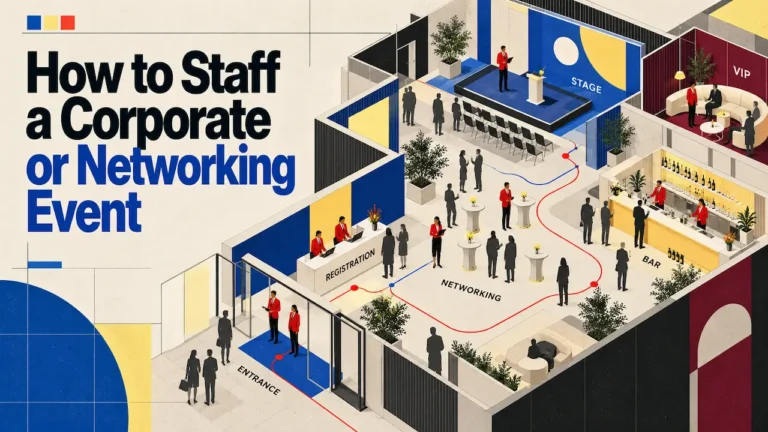
A hospitality staffing agency running three events at the same weekend will have overlapping crew pools, different client requirements for each booking, and shift times that change right up until the morning of the event.
This is normal. This is what the work looks like.
The problem starts when the scheduling system treats every event as an isolated rota. Most crew scheduling software assumes a single site, a consistent team, and shifts that rarely change once published. In event staffing, none of those assumptions holds.
Consider a typical mid-week scenario. An agency needs to assign 40 crew to a corporate hospitality event on Friday. Fifteen of those same crew are needed at a festival site on Saturday. A last-minute catering booking comes in for Sunday. Each event has different roles, different dress codes, different client contacts, and different compliance requirements.
A generic scheduling tool shows none of that context. Crew get assigned to shifts they cannot work. Double bookings surface the day before the event. Briefing details sit in a separate email chain that half the crew never opens.
The system was never designed for work that spans multiple clients and constantly moving parts.
Early Warning Signs Teams Ignore
The signs appear gradually.
- Coordinators keep a personal spreadsheet alongside the main system
- Crew call the office to confirm shifts because the app does not match their expectations
- Account managers spend Monday mornings apologising to clients about small errors
- Updates go out via WhatsApp and get buried under group chat noise
None of these feel catastrophic on their own. A missed confirmation here. A wrong shift time there. A crew member at the wrong venue because the update went out too late.
But they are all symptoms of the same root issue: the crew scheduling software was not built for event complexity.
What Broken Crew Scheduling Actually Costs an Agency
The direct cost is time. Every manual fix, every phone call to chase a confirmation, every scramble to find a replacement eats into hours that should be spent on delivery or business development.
For a mid-sized agency managing 10 to 15 events per month, that admin overhead adds up fast.
But the indirect costs are larger and harder to recover from.
Impact on Delivery, People, and Growth
Client confidence erodes when small mistakes become a pattern. A hospitality client who receives the wrong number of crew for the second time in three months will start looking for another supplier. They may not complain. They may just stop rebooking.
By the time the agency notices, the relationship is already gone.
Crew reliability also suffers. Freelance workers who repeatedly receive unclear briefings, late shift changes, or incorrect payment details start accepting work elsewhere. The best crew have options. If an agency feels disorganised, those crew drift toward competitors.
Growth stalls because the team cannot take on more work without the operation breaking further. Winning a new client becomes a source of stress because the existing systems barely hold together for the current workload.
The cost of poor scheduling tools is rarely one dramatic failure. It is a slow accumulation of friction that wears down delivery, staff trust, and the ability to scale.
When Agencies Realise Their Crew Scheduling Has Outgrown the Tools
There is usually a specific moment.
It might be a bank holiday weekend with six overlapping events and a coordinator working until midnight to reconcile who is going where. It might be a compliance audit that reveals half the crew files are out of date.
It might be a client requesting a staffing report and the agency realising it would take three hours to pull the data together.
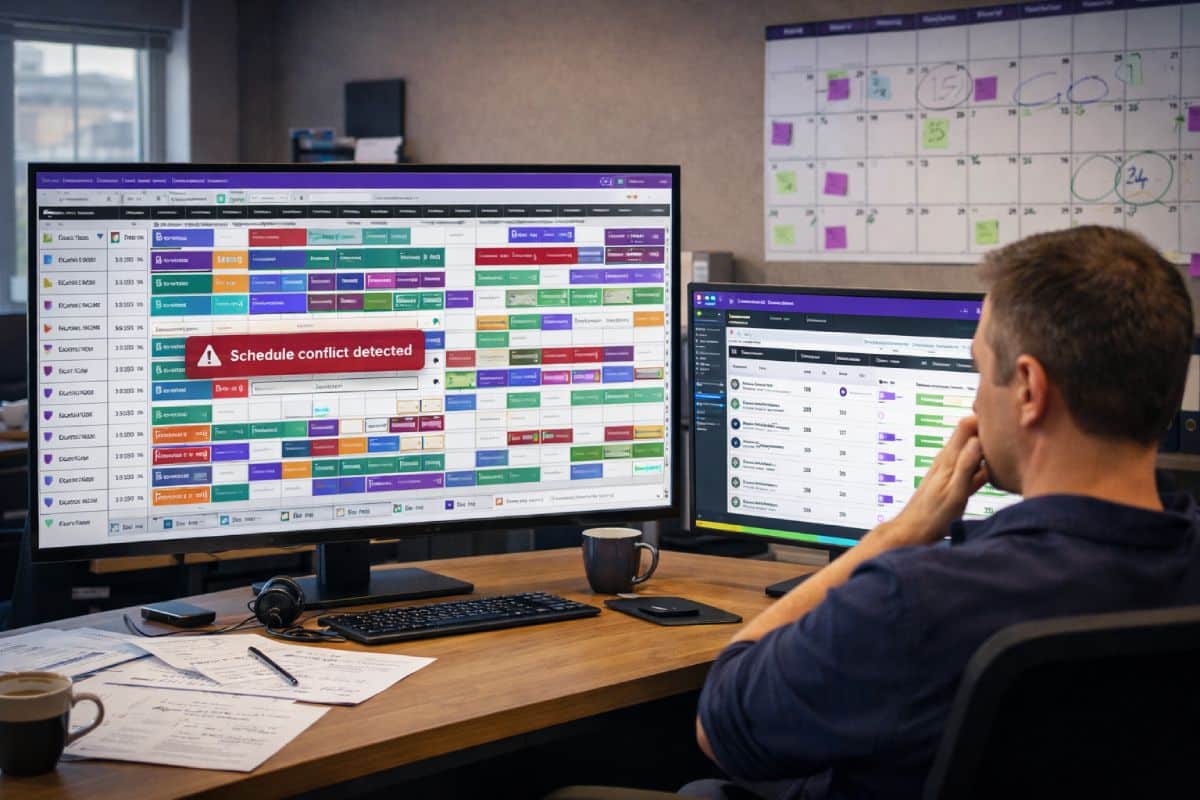
When Teams Realise the Current Setup No Longer Works
The common thread is complexity. Crew scheduling software that worked fine for five events a month starts failing at fifteen. What seemed manageable with 30 crew becomes chaotic at 120.
The tool did not get worse. The operation outgrew it.
This is where agencies start searching for crew scheduling software that actually matches their workflow. They are not looking for more features or a flashier interface.
They want a system that understands event staffing:
- Multiple clients with different requirements
- Multiple locations running at the same time
- Variable crew pools with changing availability
- Schedules that shift right up to the last minute
The turning point is quiet. Someone on the team says, “We cannot keep doing it this way.” Everyone else already agrees.
What Changes When Crew Scheduling Software Is Built for Events
The right crew scheduling software does not digitise the existing mess. It restructures how work flows through the agency.
For event staffing businesses, three capabilities matter most:
- Scheduling clarity across clients and events
- Communication that reaches crew before problems develop
- Compliance and timesheet tracking without manual chasing
Liveforce is a workforce management platform built specifically for this type of operation. It is designed for agencies and suppliers who manage large temporary workforces across multiple projects, locations, and clients.
Here is what that looks like in practice.
Scheduling Clarity Across Multiple Events and Clients
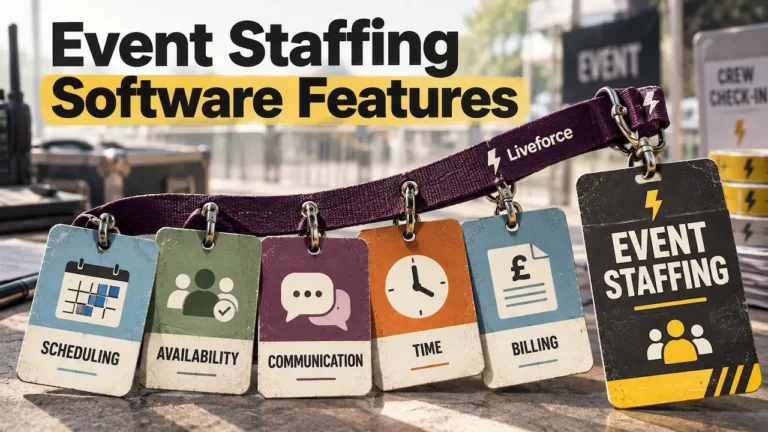
When an agency uses Liveforce, every event, client, and shift sits inside a single system. Coordinators can see who is booked where, which crew are available, and where conflicts exist before they become problems. The scheduling tools catch clashes automatically.
If a crew member is already assigned to a Friday hospitality booking, they cannot be accidentally double-booked for a Friday festival shift. The system prevents it.
This matters because event scheduling is rarely static. A client adds 10 extra crew to a Saturday booking. Another cancels a shift at 48 hours’ notice. A crew member drops out and a replacement needs to be found, briefed, and confirmed within hours.
All of those changes happen in one place. Visible to everyone who needs to see them.
Communication That Reaches Crew Before Problems Happen
One of the most common failure points in event staffing is communication. Crew who do not receive their shift details in time. Updates that get lost in group chats. Briefings that were emailed three days ago but never opened.
Liveforce’s communication features centralise all operational messaging. Shift confirmations, briefing details, location updates, and schedule changes reach crew through one channel.
Coordinators can see who has read the information and who has not. They follow up with the right people instead of resending everything to everyone.
Closing that gap is one of the highest-impact changes an agency can make.
Compliance and Timesheets Without the Manual Chasing
Event staffing agencies operate in a compliance-heavy environment. Right-to-work checks. Insurance documents. Health and safety certifications. DBS clearances.
When that data lives in email inboxes and shared drives, keeping it current is a full-time job that nobody was hired to do.
Liveforce’s timesheet and payment tracking brings compliance data and hours tracking into the same system where scheduling happens. Agencies can see which crew have up-to-date documentation and which do not.
Timesheets are linked directly to shifts. Fewer disputes. Faster processing. Less time reconciling hours after each event.
When that check happens automatically inside the scheduling workflow, it stops being a source of risk.
Generic Scheduling Software vs Event-Built Platforms
A quick view of what matters when teams manage multiple events, clients, and freelance staff.
| Operational Requirement | Generic Scheduling Software | Liveforce (Event-Built) |
|---|---|---|
| Multi-event scheduling | Basic location-based rota | Built for multiple concurrent events |
| Shared freelance pool | No cross-client visibility | Centralised workforce database |
| Conflict prevention | Manual checking required | Automated clash detection |
| Compliance tracking | Stored externally | Tracked within scheduling system |
| Communication | External tools required | Integrated operational messaging |
| Timesheet tracking | Separate system or manual | Linked directly to shifts |
The purpose of this comparison is not to criticise generic tools. It is to clarify that software built for static environments struggles in dynamic ones.
Liveforce replaces disconnected spreadsheets, rota apps, and messaging chains with one central operational system.
Why Liveforce Is the Crew Scheduling Software Event Agencies Choose

Liveforce is a workforce management platform built for event-led businesses. It is used by event staffing agencies, hospitality suppliers, experiential marketing companies, festival operators, and venue staffing teams across the UK and internationally.
It exists for the point at which spreadsheets and basic rota tools stop scaling.
Liveforce provides agencies with:
- Multi-project scheduling with automated conflict prevention
- A centralised workforce database with skills, availability, and compliance data
- Structured communication that replaces WhatsApp chains and email threads
- Timesheet tracking linked directly to scheduled shifts
- A crew app that gives workers visibility of their shifts, briefings, and confirmations
It is not a recruitment marketplace. It does not hire staff. It is the system agencies use to manage their own workforce more effectively.
The distinction matters. Agencies remain in control of their people, their processes, and their client relationships. Liveforce provides the operational structure underneath.
For agencies managing temporary workforces across multiple clients and events, Liveforce is crew scheduling software built for the way event operations actually work. Book a Liveforce demo and see the platform in action.
The Scheduling Decision That Shapes Everything Else
Crew scheduling sits at the centre of every event staffing operation. When it works, briefings go out on time. Crew arrive prepared. Compliance stays current. Clients get the service they were promised.
When it does not, every other part of the business absorbs the impact.
The question for most agencies is not whether they need crew scheduling software. They already use something. The question is whether that tool was designed for the complexity of event-led work, or whether it was designed for something simpler.
Frequently asked questions
What is crew scheduling software?
Crew scheduling software is a platform that helps businesses assign workers to shifts, track availability, and manage scheduling across teams and locations. For event staffing agencies, it coordinates freelance crew across multiple clients, events, and locations from a single system.
Why does generic crew scheduling software fail for event agencies?
Generic tools are designed for fixed teams in fixed locations. Event agencies manage shared freelance pools across overlapping events with different requirements. Without cross-project visibility and automated conflict detection, double bookings, communication gaps, and compliance issues increase as the operation grows.
What should event staffing agencies look for in scheduling software?
Agencies should prioritise multi-event scheduling with conflict prevention, centralised workforce databases, integrated communication, and compliance tracking built into the scheduling workflow. The platform should handle variable crew pools and last-minute changes without requiring manual workarounds.
How does Liveforce differ from other crew scheduling software?
Liveforce is a workforce management platform built specifically for event-led businesses. It supports multi-client, multi-location operations with automated clash prevention, integrated communication, timesheet tracking, and a centralised crew database. It replaces fragmented spreadsheets and rota tools with one operational system.
Can crew scheduling software handle last-minute shift changes?
Event-built platforms like Liveforce are designed for exactly this. When a shift changes, the update flows through the system immediately. Affected crew receive revised details through the platform. Coordinators can see who has confirmed and who has not, reducing the risk of day-of-event problems caused by outdated information.