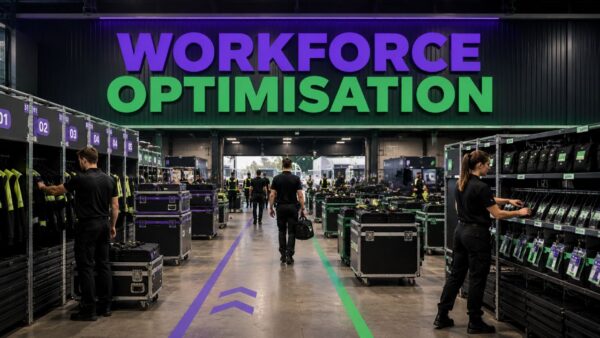


Temporary recruitment agency software plays a central role in how agencies operate in 2026. Agencies supplying temporary staff for events, hospitality, festivals, venues, experiential activity, catering and similar sectors rely on technology to manage fast-moving schedules, large worker pools, compliance documentation and client expectations.
The right system reduces admin, minimises errors and gives teams reliable control over their temporary workforce. This guide explains the essential features to look for, the problems the software must solve and what agencies should prioritise when choosing a platform for the year ahead.
Temporary recruitment continues to expand across the events and hospitality sectors. Agencies manage larger workforces, deliver more projects and face increased pressure to coordinate staff quickly and accurately. Without the right tools, teams spend too much time on spreadsheets, messaging apps, manual onboarding processes and late-night schedule updates. Modern temporary recruitment agency software helps them run operations with clarity and confidence.
This buyer’s guide outlines what defines high-quality software in 2026 and provides practical evaluation points for agencies ready to upgrade their systems.
Why Temporary Recruitment Agencies Need Specialist Software
Temporary recruitment agencies operate in unpredictable, high-volume environments. They manage workforce pools made up of part-time, freelance, casual and event-based staff who must be scheduled across multiple clients and venues.
Unlike permanent recruitment, where placements are infrequent and linear, temporary staffing involves continuous movement. Agencies cannot rely on slow or fragmented systems.
Core challenges agencies now face include:
- Staff applying for several jobs at once across different companies
- Complex schedules involving overlapping shifts across many venues
- Staff availability changing at short notice
- Compliance requirements increasing
- Workers expecting mobile-first communication
- Payment cycles needing more transparency
- Clients demanding accurate staffing numbers earlier
These challenges intensify as workforce numbers grow. Temporary recruitment agency software provides a structured workflow for recruitment, scheduling, communication and payment.
It brings everything into one place so operations teams can work quickly and make accurate decisions.
What Temporary Recruitment Agency Software Should Deliver in 2026
The best temporary recruitment agency software goes beyond simple scheduling. It must support the full workflow from onboarding to payments, reduce admin, and give agencies confidence that their operations are consistent and compliant.
When reviewing platforms, agencies should focus on the following categories.

1. A Central Workforce Database
A temporary recruitment agency needs a clear, searchable database of all staff. This database should store worker profiles, roles, skills, documents, compliance information and booking history. Teams must be able to filter workers by availability, distance, experience or qualifications.
A detailed database makes it easier for agencies to place the right people into the right roles quickly. It also helps agencies build strong workforce pools by segmenting workers and tracking performance.
Agencies reviewing options should look for systems offering structured workforce records and a simple way to keep information updated. A workforce database should form the foundation of the software and connect seamlessly to recruitment, scheduling and communication tools.
You can see an example of structured workforce data in Liveforce’s Staff Database feature.
2. Recruitment and Onboarding Tools Designed for Temporary Staff
Temporary recruitment agency software must support fast, accurate onboarding. Agencies often onboard hundreds of staff each year, and many need to update documents or availability frequently. The software should manage:
- Recruitment forms
- Right to work documents
- Certifications
- Experience and role preferences
- Availability updates
- Contract agreements
This removes the need for manual back-and-forth with new starters. Agencies should prioritise systems that provide easy-to-use recruitment workflows and automated document management.
Liveforce’s Recruitment CRM page shows how agencies can centralise this process.
3. Multi-Project Scheduling Capabilities
Scheduling is one of the most important parts of temporary recruitment agency software. Temporary workforces often support several events, shifts or bookings in a single day. The software must allow agencies to schedule staff across multiple clients and venues with accuracy.
High-quality scheduling tools should provide:
- A clear overview of projects
- Real-time worker availability
- Bulk scheduling for larger events
- Conflict checks
- Automated confirmations
- Role-specific scheduling
- Visibility for both teams and staff
Agencies should look for scheduling systems that allow them to see all open roles, send job offers, track responses and update project teams instantly. Software must be built to handle complex, multi-event environments without confusion or delays.
Liveforce’s Staff Scheduling features demonstrate this type of workflow.
4. Real-Time Communication Tools
Temporary workers move quickly between jobs, so communication must be instant and clear. Agencies need a way to send updates, reminders and shift confirmations without relying on multiple channels.
Temporary recruitment agency software should support:
- App notifications
- Group messaging
- Schedule updates
- Automated reminders
- Role-specific instructions
- Shift changes and replacements
Staff must be able to receive updates on their phones at any time. Good communication tools reduce no-shows and ensure workers always have the right information.
The Event Staff Communication features in Liveforce illustrate how agencies can improve clarity and reduce operational stress.
5. A Mobile App for Workers
Temporary workers expect to manage their jobs from a mobile device. The app should allow them to:
- View upcoming shifts
- Apply for roles
- Confirm availability
- Upload documents
- Track payments
- Communicate with the agency
A reliable mobile app reduces admin for agencies because workers self-manage much of their information. The app becomes the central place where staff stay informed about their work and availability.
Liveforce’s Staff App section highlights this kind of mobile experience.
6. Compliance and Document Management
Compliance requirements continue to increase across temporary staffing. Agencies must ensure documents are up to date, and staff must meet the requirements for the roles they are given. Software should support:
- Right to work checks
- Document expiry tracking
- Role-specific qualifications
- Automatic reminders
- Secure storage of personal information
Manual compliance tracking adds pressure and increases risk. Agencies should select software that automates these tasks. This reduces errors, improves accuracy and supports GDPR compliance by ensuring worker data remains secure and controlled.
7. Timesheets and Payments
Accurate timesheets and efficient payment processes help agencies build trust with their workforce. Temporary recruitment agency software should provide:
- Digital timesheets
- Automated approvals
- Recording of hours and breaks
- Calculations for different pay rates
- Clear status tracking for workers
Agencies often lose time chasing hours or fixing manual mistakes. Digital tools remove this friction.
See Liveforce’s Timesheets and Payments features for examples of how this workflow can operate.
8. Automation Across the Full Workflow
In 2026, automation is no longer optional. Temporary recruitment agency software must reduce repetitive tasks so teams can focus on service delivery. The software should automate:
- Job offers
- Reminders
- Document expiry alerts
- Shift confirmations
- Timesheet approvals
- Availability checks
Automation reduces errors and ensures operations run consistently, even during peak periods.
How Liveforce Solves the Most Common Agency Problems
Temporary recruitment agencies face patterns of operational challenges, many of which can be solved directly by the right software. Below are examples of common pain points and how software addresses them.
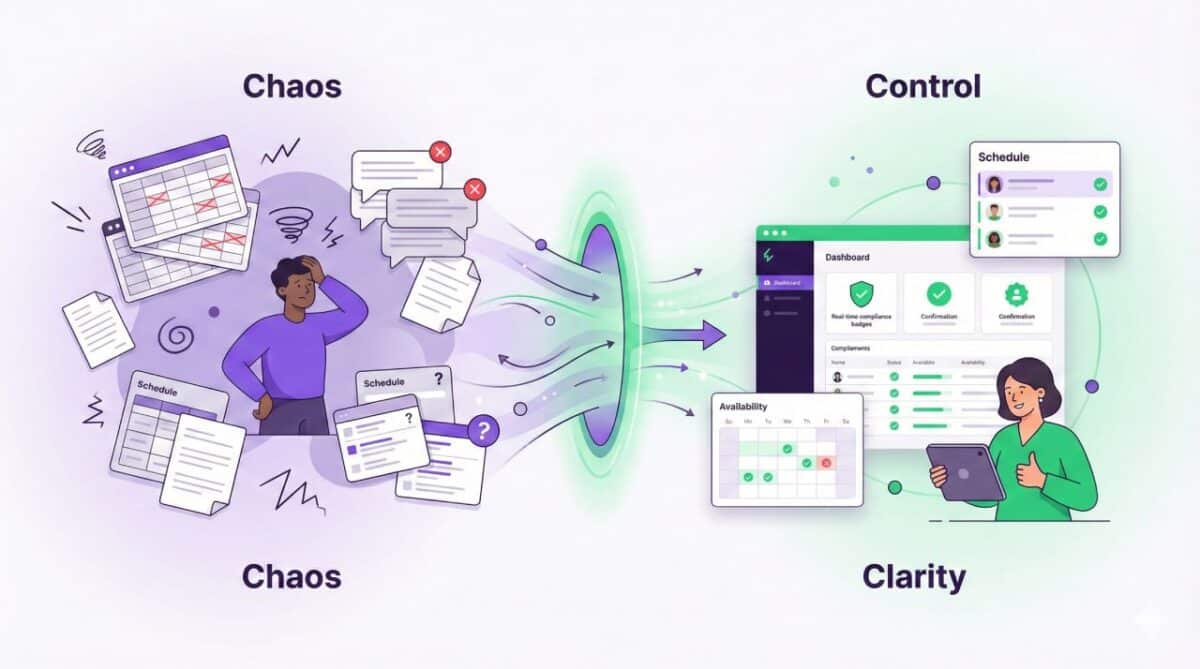
Problem: Too Much Admin
Agencies rely on spreadsheets, email threads and group messages to coordinate hundreds of workers. This results in errors, double bookings and delays.
Software Solution:
A centralised system removes admin duplication, ensures information is accurate and gives teams immediate access to the data they need.
Problem: No-Shows and Missed Updates
Temporary workers often receive information across several apps and may miss key messages.
Software Solution:
A mobile app with instant notifications ensures staff always know their schedules and receive reminders at the right time.
Problem: Slow Recruitment Processes
Agencies need staff ready for work quickly, and manual onboarding slows down projects.
Software Solution:
Automated onboarding tools shorten the recruitment process and ensure new workers meet compliance requirements.
Problem: Complex Scheduling Across Many Events
Agencies delivering multiple events at once need visibility across projects.
Software Solution:
Multi-event scheduling tools provide a single view of all open roles, responses and confirmed bookings.
Problem: Compliance Gaps
Manual compliance checks put agencies at risk and create delays when booking workers into roles.
Software Solution:
Digital compliance tracking ensures documents remain current and alerts teams to renewals or expiries.
Problem: Payment Delays
Workers expect clear payment information. Agencies must process timesheets quickly and accurately.
Software Solution:
Digital timesheets, automated approvals and payment visibility increase transparency and reduce queries.
Must-Have Features in Temporary Recruitment Agency Software for 2026
Below is a summary of the essential features agencies should expect in modern software:
- Central workforce database
- Recruitment CRM
- Automated onboarding
- Multi-event scheduling
- Real-time communication
- Staff mobile app
- Compliance tracking
- Digital timesheets
- Payment transparency
- Automation across workflow
- Staff availability visibility
- Reporting tools
These features support the full lifecycle of temporary staffing and allow agencies to deliver high-quality service with reduced operational effort.
Questions Agencies Should Ask Before Choosing Software
When selecting temporary recruitment agency software, agencies should consider the following:
- Does the software support multiple clients and events at the same time?
- Can staff self-manage their availability and documents?
- Is communication fast, reliable and mobile-friendly?
- Does the system automate manual tasks such as reminders and compliance?
- Can the team see all open roles and worker responses in one place?
- Is the platform secure and compliant with GDPR requirements?
- Will the software scale as the workforce grows?
These questions help agencies understand how well the software fits their operational model.
Temporary Recruitment Agency Software Checklist
Below is a practical checklist agencies can use when comparing options:
✔ One centralised system
✔ Strong scheduling tools
✔ Clear worker availability
✔ Fast onboarding
✔ Mobile-first communication
✔ Automated reminders
✔ Compliance checks
✔ Digital timesheets
✔ Staff payment tracking
✔ High visibility for teams and workers
✔ Workflow automation
✔ Industry-specific functionality
Agencies that use this checklist can quickly identify platforms that match their needs.
| Evaluation Area | What to Look For | Why It Matters |
|---|---|---|
| Workforce management | One central database for all staff | Improves accuracy and speeds up placement |
| Recruitment | Automated onboarding and document collection | Reduces admin and supports compliance |
| Scheduling | Multi-project visibility and conflict-free tools | Helps manage busy periods effectively |
| Communication | Instant updates through a mobile app | Reduces no-shows and last-minute confusion |
| Compliance | Document tracking with expiry alerts | Reduces risk and keeps operations secure |
| Payments | Digital timesheets and approval workflows | Improves transparency for staff and reduces errors |
| Automation | Alerts, reminders and shift confirmations | Creates predictable, efficient workflows |
| Staff experience | Mobile-first design and self-service tools | Improves engagement and response rates |
Making the Right Choice for 2026
Temporary recruitment agency software is essential for agencies looking to improve efficiency, reduce admin and deliver high-quality service across every project. Choosing the right platform allows teams to manage their workforce with clarity and control.
Agencies should prioritise software that handles multi-event scheduling, recruitment workflows, communication, compliance and payments in one place.
Technology continues to evolve, and 2026 will see even more agencies adopting tools built specifically for temporary staffing. A modern system helps agencies stay competitive and operate with full confidence.
If you would like to understand how Liveforce supports temporary recruitment agencies with scheduling, communication, workforce management and compliance, book your demo now with Liveforce.
FAQs
What is temporary recruitment agency software?
Temporary recruitment agency software helps agencies manage their temporary workforce by centralising recruitment, scheduling, communication, compliance and payments in one system. It replaces spreadsheets and manual processes with reliable, automated workflows.
Who uses temporary recruitment agency software?
Agencies supplying temporary staff for events, hospitality, festivals, venues, experiential marketing, catering, charity and promotional work use this software to coordinate large, fast-moving teams with greater accuracy and control.
What features should temporary recruitment agency software include?
It should offer a workforce database, recruitment CRM, multi-project scheduling, real-time communication, compliance tracking, a mobile app for staff and digital timesheets. Automation across these areas helps reduce admin and improve delivery.
How does temporary recruitment agency software improve scheduling?
The software gives teams visibility of worker availability, allows bulk scheduling across multiple events and sends instant confirmations or updates to staff. This reduces errors, last-minute changes and time spent coordinating shifts manually.
Why should agencies upgrade their temporary recruitment systems in 2026?
Agencies are managing larger workforces, increasing compliance requirements and rising client expectations. Modern software provides the clarity, automation and reliability needed to run a scalable operation with less admin and more consistency.