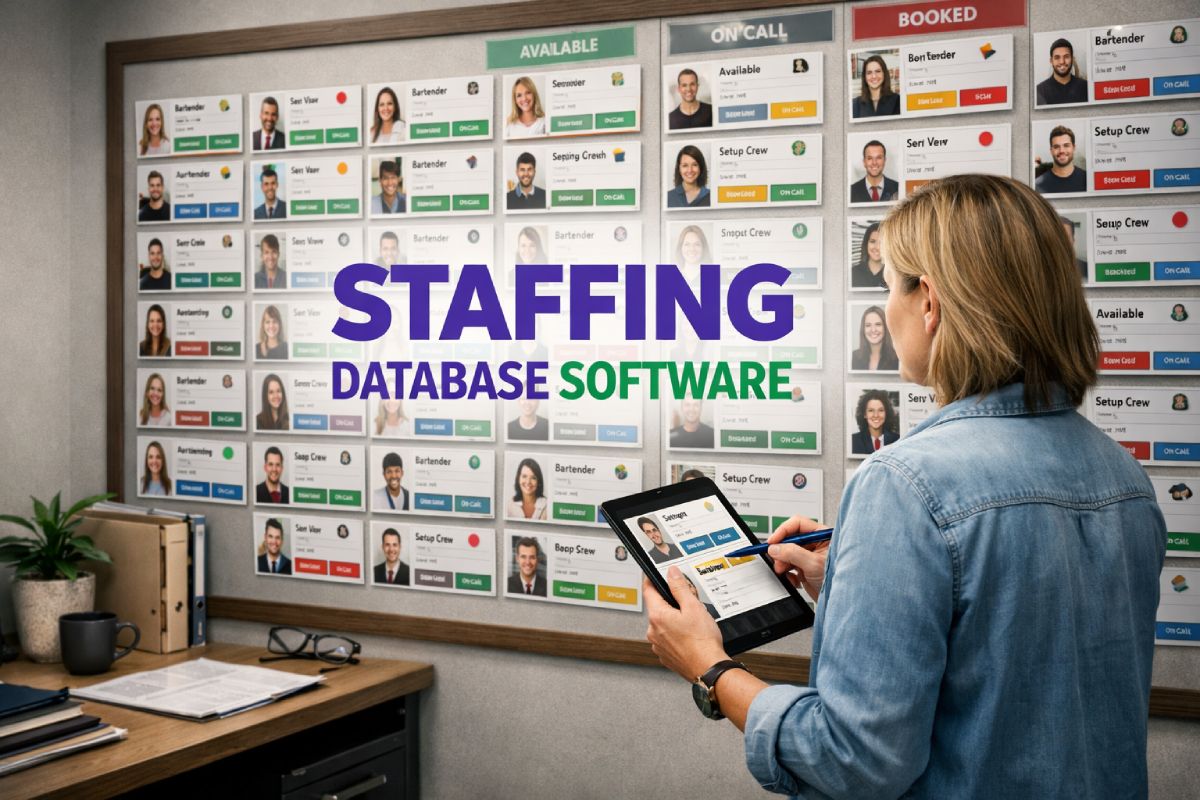


Staff scheduling software helps businesses organise shifts, assign staff, and manage rotas. For event agencies, however, the real challenge is not simply building a weekly rota. It is coordinating large freelance teams across multiple clients, events, and locations without errors, clashes, or communication breakdowns.
This is where most generic staff scheduling software begins to fail, and where event-built platforms such as Liveforce become operationally essential.
What Generic Staff Scheduling Software Solves
Generic staff scheduling software is designed to solve predictable shift planning problems.
In a single-location environment such as a retail store or restaurant, it works well. Managers can:
- Create rotas by location
- Assign staff to shifts
- Track hours
- Send basic notifications
For static teams working in one place, this model is effective.
Even some hospitality environments benefit from this structure. A single venue running regular service patterns can rely on basic scheduling tools because staffing demand is consistent and roles are repeatable.
The problem emerges when staffing stops being predictable.
Event agencies do not operate from one fixed location. They manage fluctuating demand, multiple client requirements, and freelance pools that move between projects. The structure that works in a restaurant does not translate to a festival, sports venue, or nationwide brand activation.
Generic staff scheduling software handles shifts. It does not handle operational complexity.
Where Generic Tools Break in Multi-Event Operations
The breaking point for most agencies arrives when growth increases overlap.
Consider a hospitality agency supplying staff to multiple Premier League fixtures across the same weekend. The agency may be supporting corporate hospitality at one stadium while also covering staffing for another venue in a different city. Many staff work across both clients.
A generic rota tool can assign shifts per location. What it cannot do effectively is:
- Detect availability clashes across separate projects
- Provide centralised visibility of a shared freelance workforce
- Manage layered compliance requirements per client
- Track real-time updates across multiple live events
The same challenge appears in experiential marketing. Agencies often run nationwide campaigns in which brand ambassadors operate simultaneously across different cities. Schedules change daily. Client briefings vary. Staff availability shifts at short notice.
Without a unified workforce system, scheduling becomes reactive. Admin teams manually check spreadsheets, WhatsApp groups, and email threads to prevent double bookings.
The issue is not that staff scheduling software cannot create shifts. It is that generic systems are not designed for shared freelance pools across concurrent projects.
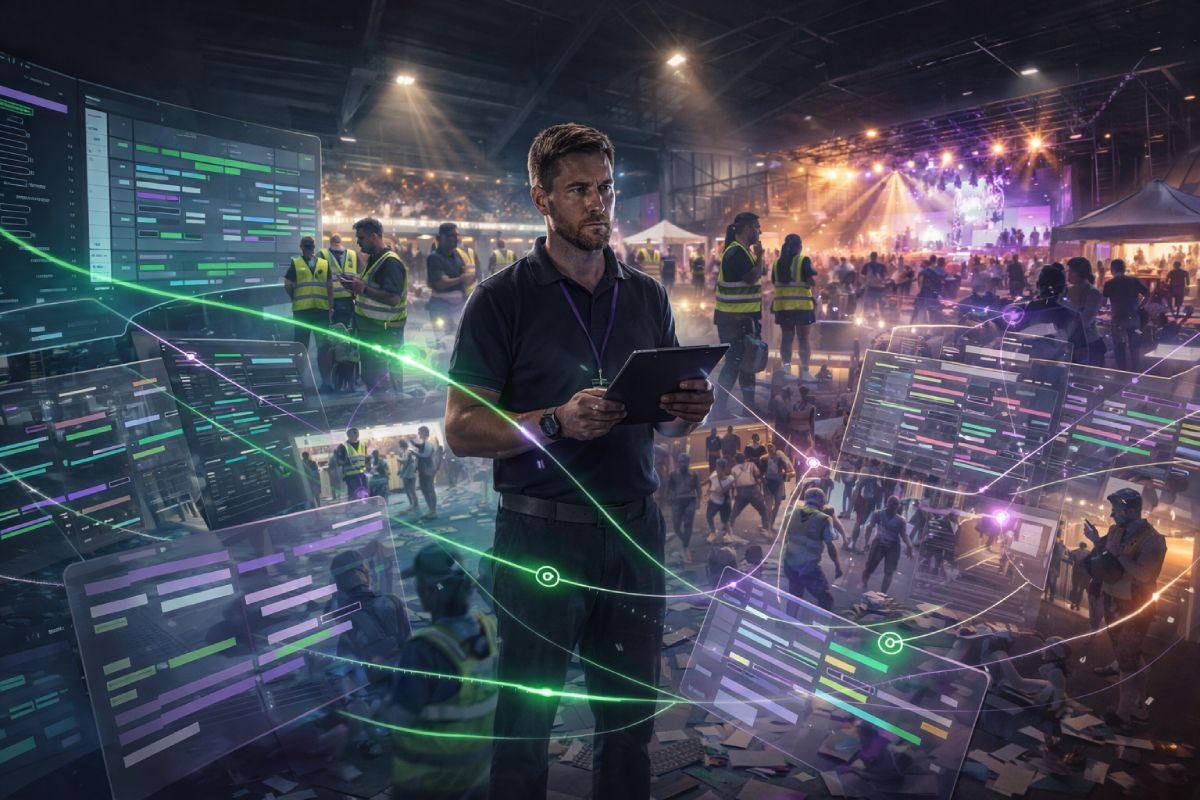
The Hidden Cost of Complexity
When generic staff scheduling software is stretched beyond its design, the cost is rarely visible at first.
Admin workload increases.
Manual checks become routine.
Communication fragments across tools.
Over time, this creates measurable operational risk.
Large-scale events such as Glastonbury demonstrate the scale of workforce coordination required in the events industry. Although festival organisers operate at a different scale to most agencies, the principle is the same: teams across hospitality, production, security, logistics, and access control need clear visibility of the workforce. Fragmented scheduling systems increase the risk of miscommunication and compliance gaps.
For mid-sized agencies, the consequences may include:
- Double-booked staff
- Missed briefing updates
- Last-minute replacements
- Disputes over hours worked
- Increased compliance exposure
Industry data reinforces the pressure. The UK events sector has continued to expand post-pandemic, with temporary staffing demand remaining high across hospitality, festivals and sporting events. As reliance on freelance workforces increases, coordination complexity rises with it.
When spreadsheets and basic staff scheduling software sit at the centre of operations, growth compounds inefficiency. Admin scales faster than revenue.
The real cost of unsuitable staff scheduling software is not subscription price. It is operational drag.
What Event-Built Workforce Platforms Do Differently
Event-led businesses require staff scheduling software that understands how they operate.
This means:
- Multiple concurrent events
- Shared freelance databases
- Client-specific compliance
- Real-time change management
- Layered communication
A workforce management platform built specifically for events handles these realities by design.
Liveforce is built for agencies managing temporary and freelance teams across multiple projects, clients and locations. It is used when operations move beyond simple shift planning and into multi-event coordination.
Where generic staff scheduling software assigns shifts by location, Liveforce enables agencies to plan across events.
Where generic tools require manual conflict checks, Liveforce prevents clashes through centralised availability visibility.
Where communication typically happens in external messaging apps, Liveforce structures operational updates within the workforce system itself.
The difference is structural rather than cosmetic.
Below is a comparison of how generic staff scheduling software differs from an event-built platform.
Generic Staff Scheduling Software vs Event Workforce Management Platform
A quick view of what matters when teams manage multiple events, clients, and freelance staff.
| Operational requirement | Generic scheduling software | Liveforce (event-built platform) |
|---|---|---|
| Multi-event scheduling | Basic location-based rota | Built for multiple concurrent events |
| Shared freelance pool | No cross-client visibility | Centralised workforce database |
| Conflict prevention | Manual checking | Automated clash prevention |
| Compliance tracking | Stored externally | Tracked within workforce system |
| Communication | External tools required | Integrated operational messaging |
The purpose of this comparison is not to criticise generic staff scheduling software. It is to clarify that tools built for static environments struggle in dynamic ones.
Liveforce replaces disconnected spreadsheets, rota apps and messaging chains with one central operational system. It provides agencies with:
- Clear visibility of workforce availability
- Structured event-level planning
- Integrated communication
- Accurate timesheet tracking to support payroll processes
This is not an add-on scheduling tool. It is the operational backbone for event-led businesses.
Real-World Operational Reality
To understand why this matters, consider large sporting tournaments. A venue hosting multiple fixtures within a short window requires different teams per matchday, each with role-specific compliance and training requirements. Staff may work across hospitality, stewarding, and premium client zones.
If the agency managing those teams relies solely on generic staff scheduling software, it must layer additional spreadsheets and manual processes to maintain visibility.
Experiential agencies face similar conditions. A nationwide product sampling campaign may involve hundreds of temporary staff deployed across retail sites and pop-up activations. Availability changes quickly. Brand training differs per client. Travel logistics must be coordinated.
In both scenarios, the complexity lies in orchestration, not shift creation.
Liveforce is used in these environments because it was designed around multi-project, multi-client operations. It centralises the workforce database, stores skills and experience, tracks availability, and connects scheduling with communication.
Staff scheduling software becomes effective when it mirrors operational reality. For event agencies, that reality is fluid and layered.
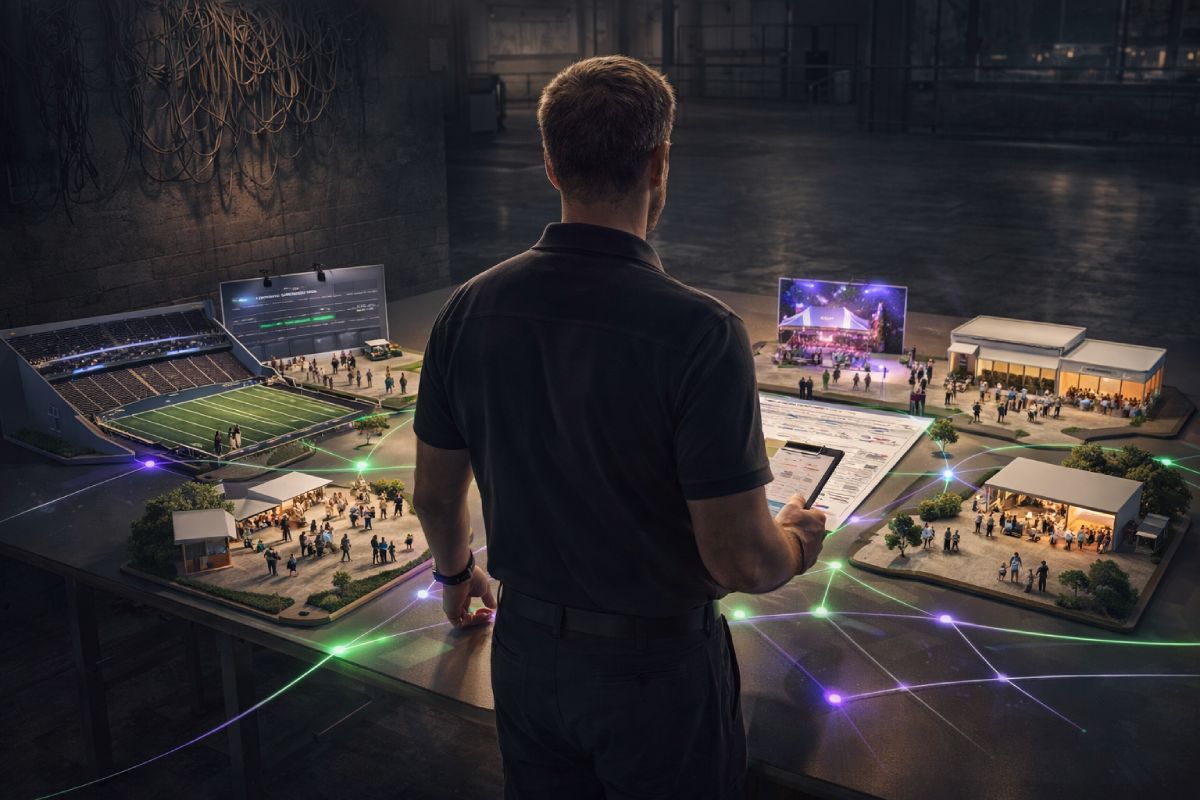
How Agencies Should Choose Staff Scheduling Software
Choosing staff scheduling software should not begin with feature lists. It should begin with operational structure.
Agencies should assess:
- How many concurrent events are managed each week
- Whether staff work across multiple clients
- How availability is currently tracked
- Where compliance data is stored
- How last-minute changes are communicated
If the business operates from one venue with predictable demand, generic staff scheduling software may be sufficient.
If the business manages multiple clients, rotating freelance pools, and overlapping projects, the requirements change.
Staff scheduling software must:
- Prevent cross-project clashes
- Centralise workforce data
- Support structured communication
- Scale without increasing admin load
Liveforce exists for the point at which spreadsheets and basic rota tools stop scaling.
It is not a recruitment marketplace.
It does not hire staff.
It is the system agencies use to manage their own workforce more effectively.
The distinction matters.
The Strategic Shift
As event agencies grow, complexity grows faster than headcount. More clients mean more concurrent projects. More projects mean more scheduling pressure. More pressure exposes system limitations.
Staff scheduling software should reduce operational strain, not multiply it.
For event-led businesses managing temporary and freelance teams across multiple events, the requirement is clear: scheduling must sit inside a platform built for event operations.
If an agency manages one fixed location, generic staff scheduling software may remain adequate.
If it manages multiple clients, cities, and event types, staff scheduling software must be designed for complexity or operations will eventually break under growth.
FAQs
What is the difference between generic staff scheduling software and event-specific platforms?
Generic staff scheduling software is designed for fixed locations with predictable shifts. Event-specific platforms like Liveforce are built for agencies managing multiple events, clients, and freelance teams at the same time. They provide centralised workforce visibility, conflict prevention, and structured communication across projects.
Can staff scheduling software prevent double bookings across events?
Basic staff scheduling software often requires manual checks to avoid clashes. Event-built systems such as Liveforce track availability across all projects in one place, helping agencies prevent double bookings when staff work across multiple clients and locations.
Is staff scheduling software suitable for freelance and temporary workforces?
Yes, but only if it is designed for flexible staffing models. Agencies managing temporary or freelance teams need staff scheduling software that handles fluctuating availability, role-specific skills, and compliance tracking. Platforms built for event operations are better suited to this than standard rota tools.
How does staff scheduling software improve communication during live events?
In event environments, last-minute changes are common. Advanced staff scheduling software integrates shift updates and confirmations within the system itself, reducing reliance on fragmented WhatsApp groups or email chains. Liveforce supports structured operational communication to keep teams aligned in real time.
When should an agency upgrade its staff scheduling software?
Agencies should reconsider their staff scheduling software when spreadsheets become unreliable, admin time increases, or staff begin working across overlapping projects. This is often the point where generic tools stop scaling and a dedicated workforce management platform such as Liveforce becomes necessary.