Hiring event staff is one of the biggest operational challenges agencies and event suppliers face. When it goes well, events run smoothly and clients trust you.
When it goes badly, the impact is immediate. Missed shifts, wrong skills on site and last-minute panic quickly undo weeks of planning.
This guide explains how to hire event staff in a clear, practical way. Each tip is based on how experienced agencies actually operate day to day. The goal is to help you hire better, faster and with less stress, without turning the process into something rigid or impersonal.
Tip 1: Treat event staff hiring as an ongoing process, not a one-off task
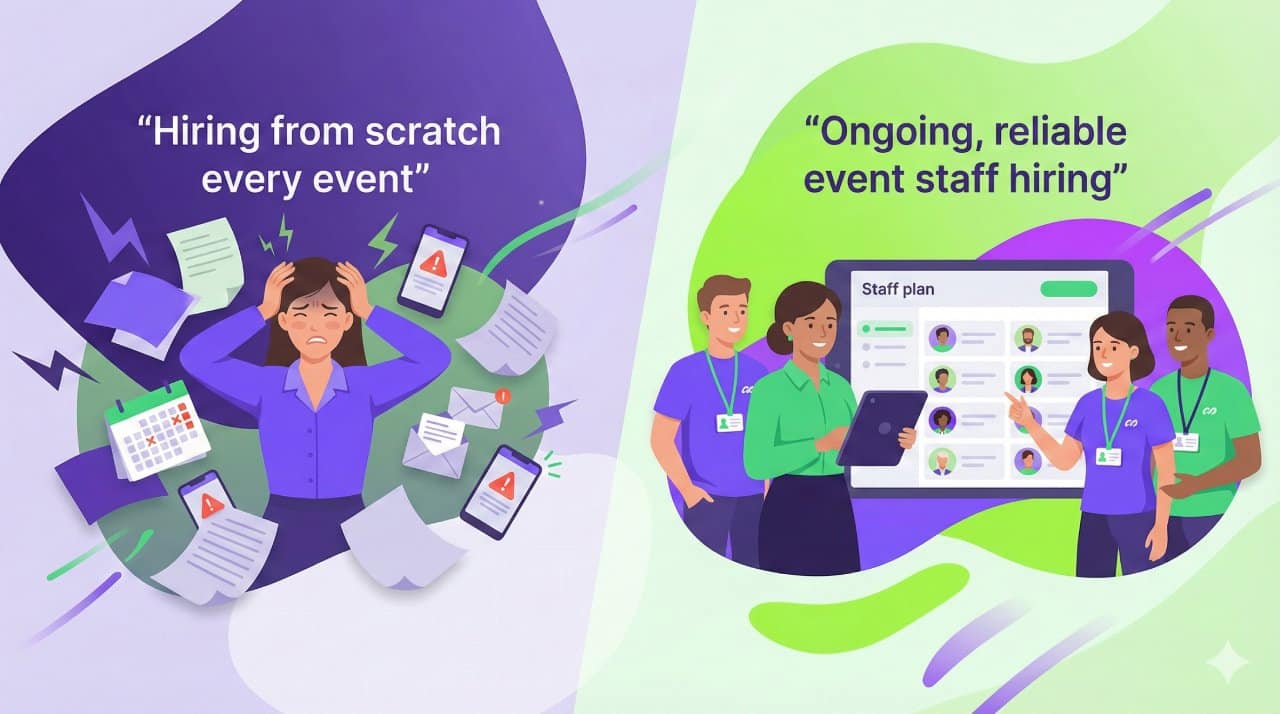
One of the biggest mistakes in event staffing is treating every event as a fresh hiring exercise.
Imagine an agency delivering hospitality staff for sports fixtures every weekend. If the hiring process starts from zero each time, the team spends most of its energy sourcing instead of managing quality. Deadlines feel tighter than they need to be, and mistakes creep in.
A better approach is to see hiring as continuous. Every event adds information. You learn who turns up early, who communicates well and who performs under pressure. That knowledge should shape future hiring decisions.
When hiring event staff becomes ongoing:
- You move faster because you already know your people
- You reduce risk because staff are proven
- You stop relying on last-minute fixes
The result is calmer operations and more predictable outcomes.
Tip 2: Build a reliable event staff database you actually trust
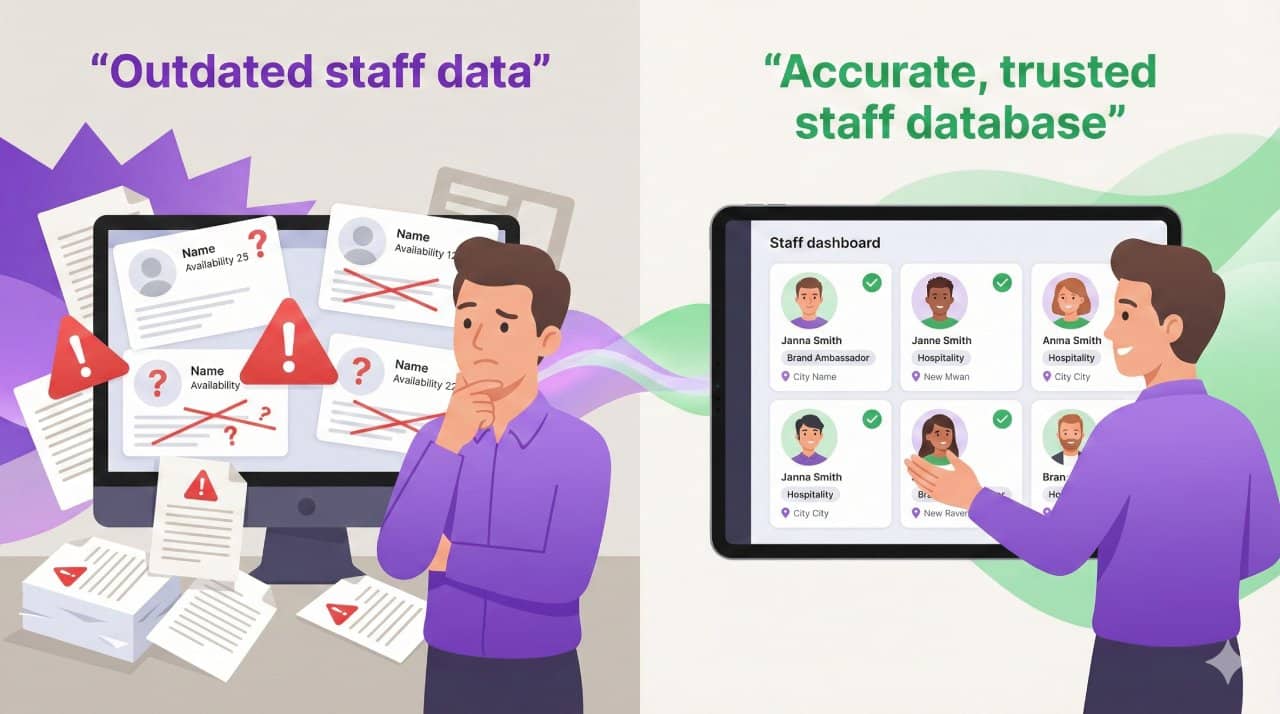
Many agencies technically have a staff database, but do not trust it. Details are out of date, availability is unclear and key documents are missing.
Picture a last-minute brief for 20 brand ambassadors. You know you have the numbers, but you are unsure who is available or suitable. You end up messaging people individually and hoping for the best.
A reliable database should answer basic hiring questions instantly:
- Who is available on this date?
- Who has done this role before?
- Who is local to the venue?
When your database is accurate and easy to update, hiring shifts from chasing information to making decisions. You spend less time checking and more time planning.
This is the backbone of how to hire event staff efficiently at scale.
Tip 3: Hire for reliability, not just experience

Experience matters, but reliability matters more.
An agency may have a pool of highly experienced staff, but if some regularly cancel late or respond slowly, they introduce risk. Over time, this erodes confidence and increases admin.
Consider two staff members:
- One has years of experience but often confirms late
- The other has less experience but always turns up and communicates clearly
For many events, the second person is the safer hire.
Hiring event staff should factor in:
- Attendance history
- Responsiveness
- Consistency
Tracking these patterns helps you build a dependable core team. Reliability is what allows agencies to scale without losing control.
Tip 4: Match staff to roles carefully, not just to shifts

Not all event roles are interchangeable, even if timings look similar.
For example, a busy conference registration desk requires calm communication and problem-solving. A product sampling role may prioritise energy and confidence. Assigning the wrong person creates friction for staff and clients alike.
When hiring event staff, role matching should consider:
- Skills and temperament
- Past role performance
- Client expectations
Agencies that take role matching seriously see fewer on-site issues and stronger client feedback. Staff also feel more confident when they know they are suited to the work.
Tip 5: Communicate clearly and consistently from the start
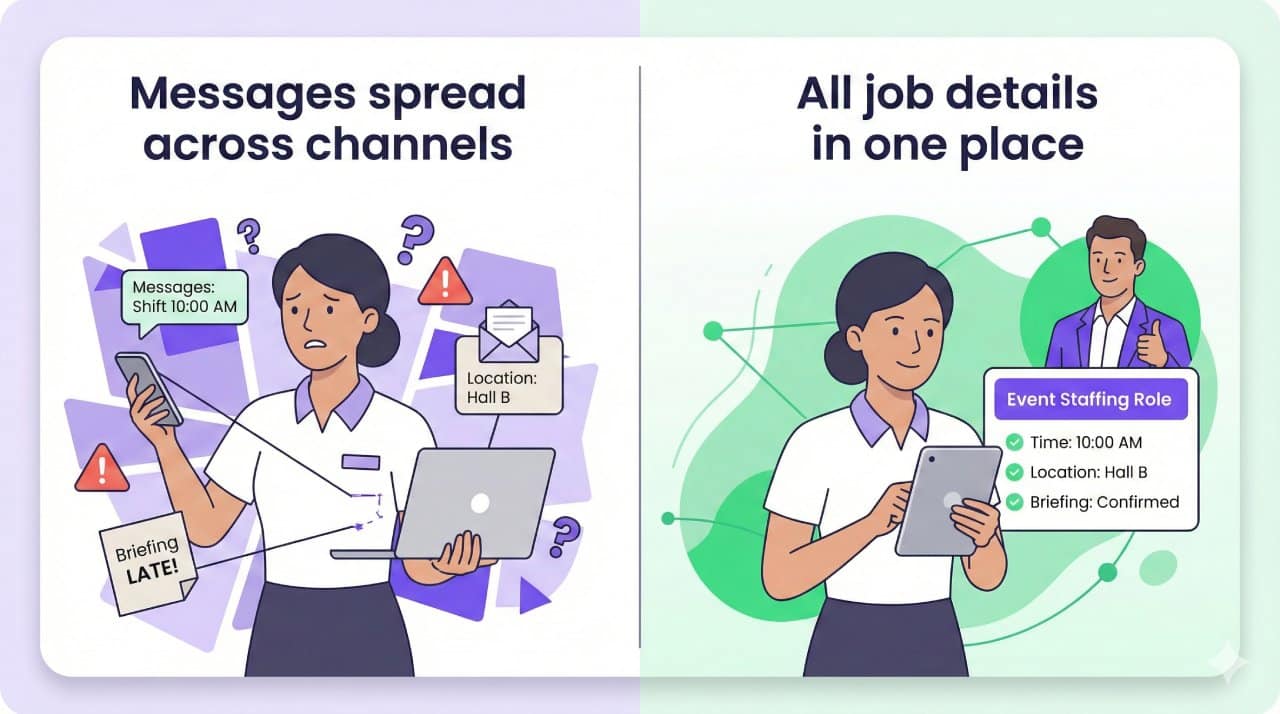
Poor communication is one of the fastest ways to lose good staff.
Think of a situation where a staff member receives a shift time by text, a location by email and a briefing note the night before the event. Confusion is almost guaranteed.
Clear hiring communication should cover:
- What the role involves
- When and where it takes place
- What is required before arrival
Consistency matters as much as clarity. When all information lives in one place, staff know where to look and what to trust.
Strong communication early on reduces questions, dropouts and misunderstandings later.
Tip 6: Confirm commitment early and visibly
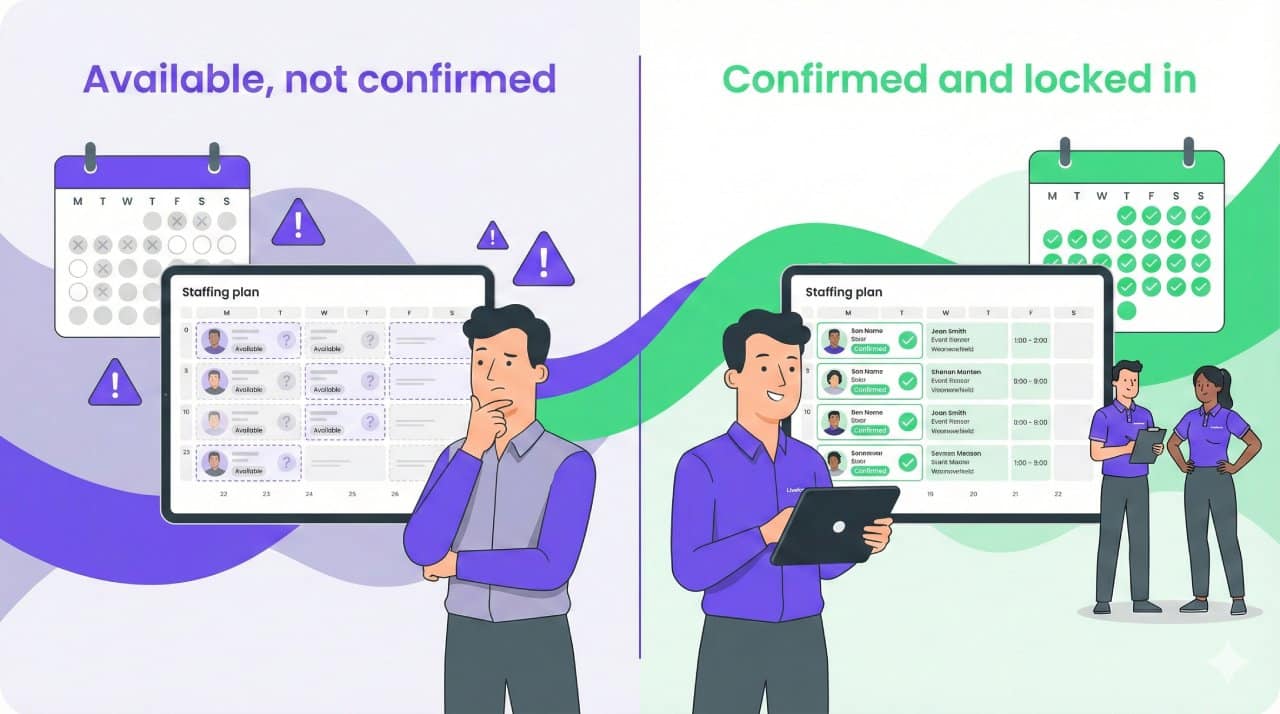
Availability does not equal commitment.
Many agencies assume that verbal or informal confirmation is enough. Then, days before the event, gaps appear and stress levels rise.
A structured confirmation process helps prevent this. Staff should be able to clearly see:
- Which shifts they are confirmed for
- What is expected of them
- That their place is secured
Early confirmation gives your team time to react if someone drops out. It also gives staff confidence that the work is locked in.
This step alone can significantly reduce last-minute hiring pressure.
Tip 7: Reduce last-minute changes through better visibility

Last-minute changes often feel unavoidable in events, but many are preventable.
For example, double-booking a strong staff member across two events usually happens because availability is unclear or fragmented. The result is rushed reassignments and unnecessary phone calls.
Visibility across your workforce allows you to:
- Spot conflicts early
- See coverage gaps clearly
- Make calm decisions under pressure
When hiring event staff is supported by real-time visibility, problems surface sooner and are easier to manage.
Tip 8: Review attendance and performance after every event
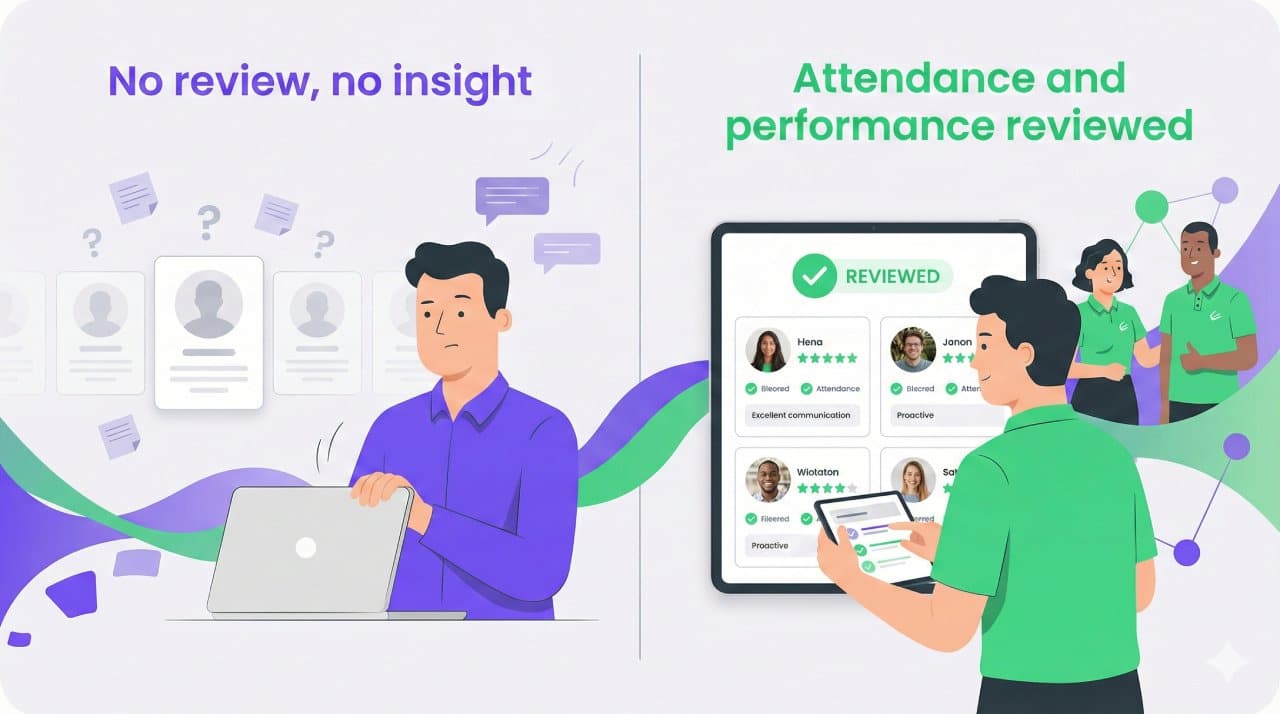
Hiring does not stop when the event ends.
Agencies that skip post-event review miss valuable insight. Even a short assessment helps answer questions like:
- Who performed well?
- Who struggled in certain roles?
- Who would you hire again immediately?
Over time, these reviews shape a stronger workforce. Hiring decisions become informed by evidence, not memory.
This feedback loop is what turns hiring from guesswork into a refined process.
Tip 9: Standardise your hiring process so it scales with you
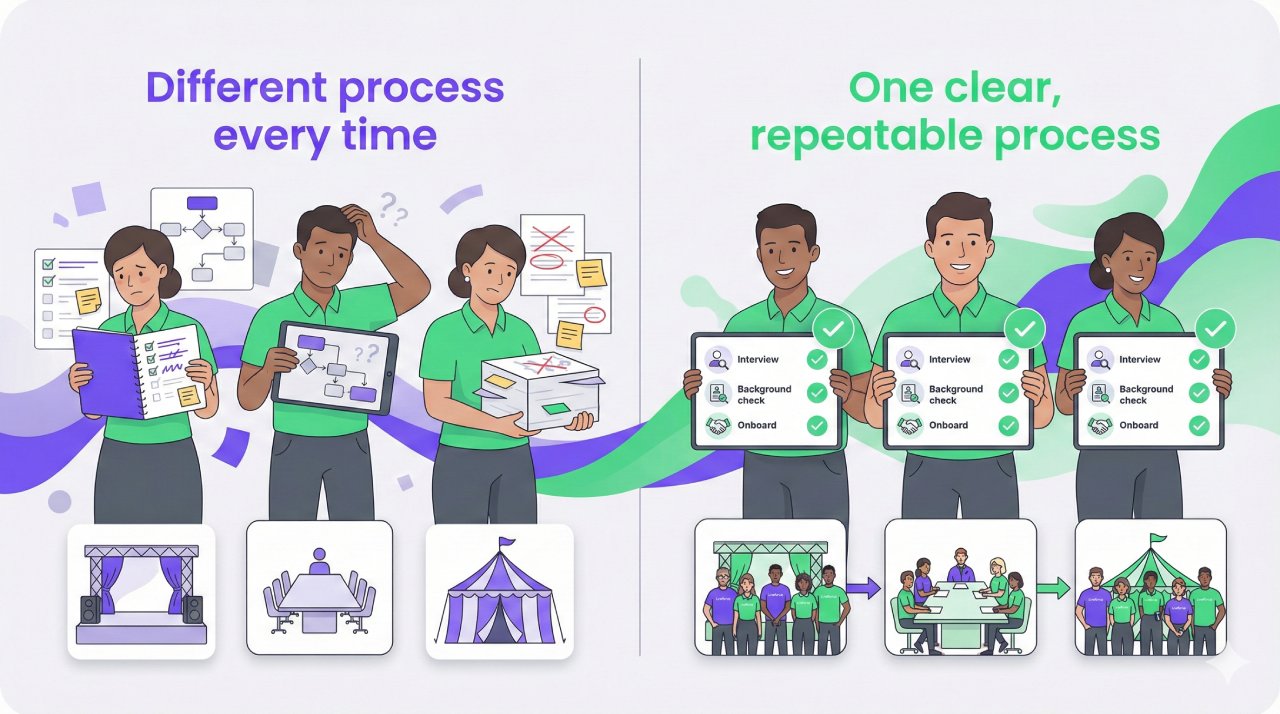
As agencies grow, inconsistency becomes a risk.
If each project manager hires event staff differently, quality varies and mistakes increase. A standard process ensures every event benefits from the same level of care.
Standardisation does not mean rigidity. It means:
- Clear steps
- Shared expectations
- Repeatable outcomes
When hiring event staff follows a familiar structure, teams work faster and with more confidence, even during busy periods.
How Liveforce supports better event staff hiring
Putting all these tips into practice is difficult without the right operational support. This is where Liveforce fits naturally into the hiring process.
Liveforce supports agencies by:
- Keeping all staff data accurate and accessible
- Showing availability and suitability in one place
- Supporting clear communication linked to each job
- Providing visibility across multiple events
- Feeding attendance and performance data back into future hiring decisions
Rather than adding complexity, Liveforce helps bring structure to how you hire event staff, making the process easier to manage as operations grow.
Knowing how to hire event staff well is about more than filling roles. It is about building a workforce you can rely on, event after event.
By focusing on structure, clarity and continuous improvement, agencies can:
- Reduce stress
- Improve staff retention
- Deliver more consistent results
When hiring is treated as a core operational process and supported by the right systems, it becomes a strength rather than a risk.
Frequently asked questions
How far in advance should you hire event staff?
Ideally, event staff should be hired as early as possible once dates and roles are confirmed. Hiring in advance gives agencies time to secure reliable staff, confirm availability and avoid last-minute gaps.
What skills should you look for when hiring event staff?
The most important skills depend on the role, but reliability, communication and role suitability matter more than experience alone. Agencies should also consider past performance and responsiveness when hiring event staff repeatedly.
How do agencies avoid last-minute dropouts when hiring event staff?
Clear communication, early confirmation and visibility of availability all reduce dropouts. A structured hiring process makes it easier to spot risks early and act before they affect delivery.
Is it better to rehire the same event staff or find new people each time?
Rehiring proven staff is usually more reliable and efficient than starting from scratch. Agencies that build and maintain a trusted workforce can hire faster and deliver more consistent results.
How can software help improve how you hire event staff?
Software helps agencies centralise staff data, track availability, manage communication and review performance. Tools like Liveforce support a structured approach to how to hire event staff across multiple events.