
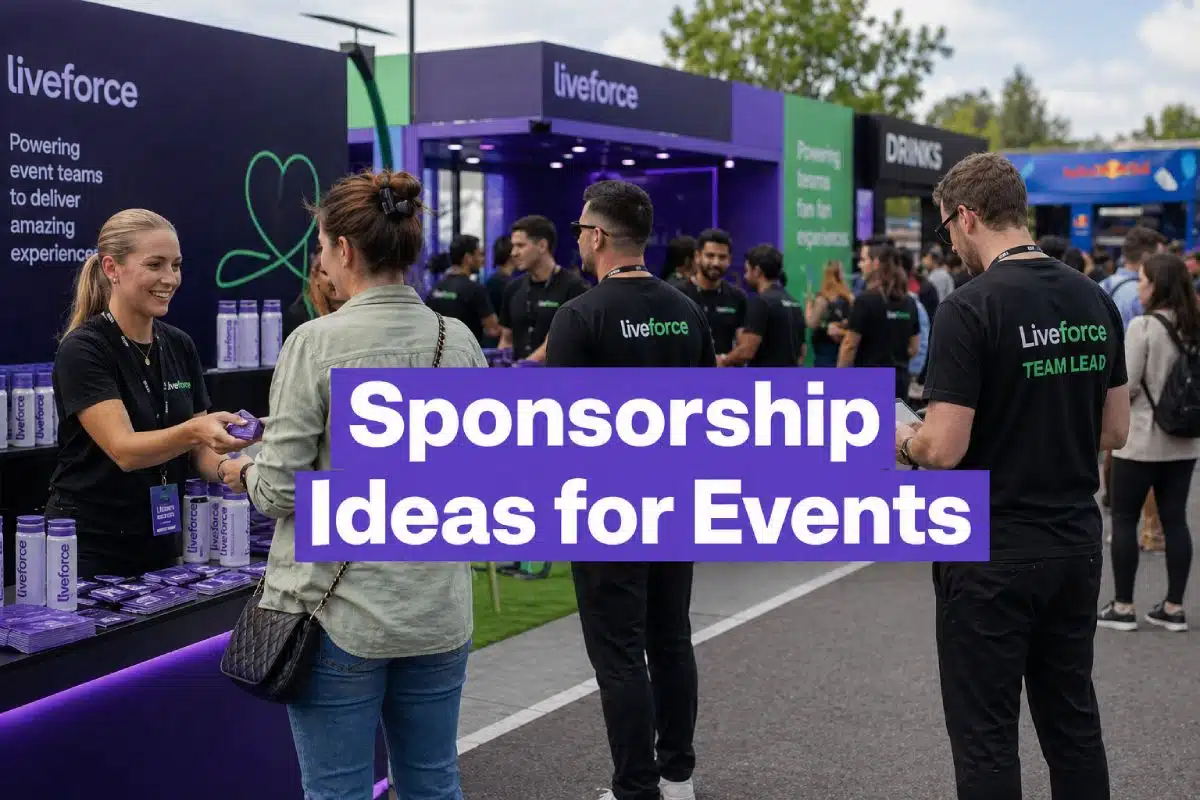

Sponsorship ideas for events only work when the team behind them shows up. The best concept on paper falls apart if briefings are missed or staff arrive late. The same is true if no one knows which brand they are working for. Strong sponsorship ideas for events are operational projects first, creative ones second.
Most blogs treat sponsorship ideas for events as a brainstorming exercise. They list thirty or fifty concepts and stop there. That is fine if the reader is the brand sponsoring the activation.
It is not enough for the agency or organiser who has to deliver it. This piece is written for the people responsible for staffing and running activations, not the people buying them.
What to agree on before you commit to any sponsorship activation
Strong sponsorship ideas for events start long before the event itself. The planning conversation between the agency and the sponsoring brand sets up everything that follows. Skip it, and the activation runs into avoidable problems on the day.
The same patterns show up across experiential marketing agencies and event production teams managing brand activations for multiple clients.
Defining the brief with the sponsoring brand
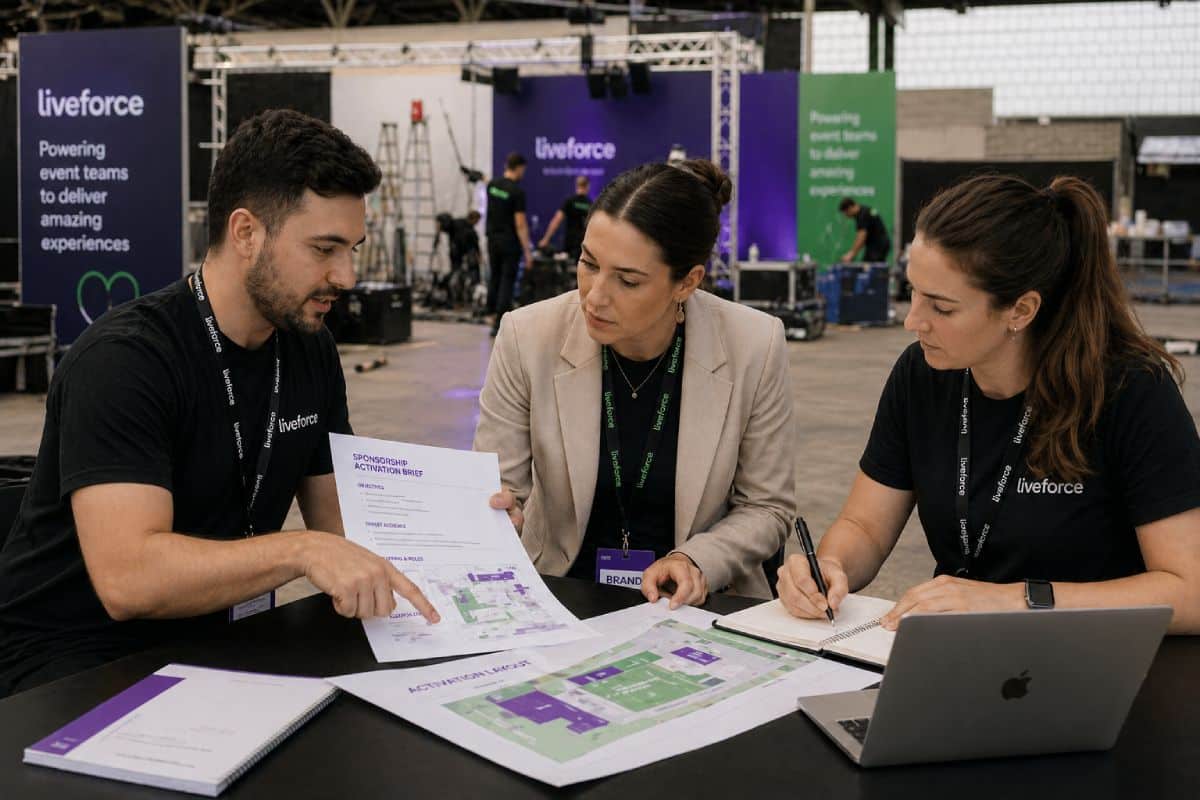
A clear brief is the foundation of every successful activation. It needs to cover three things. The brand’s objectives. The audience they want to reach. The specific outcomes they expect. Vague briefs lead to vague activations. Both sides should agree on what success looks like before any creative work begins.
Most disputes between agencies and sponsors trace back to a brief that was never properly nailed down. The agency assumes one thing. The brand assumes another. The activation lands somewhere neither side wanted.
Practical points to confirm during the brief stage:
- Brand objectives. What does the sponsor want from this activation? Awareness, lead capture, product trial, or social content?
- Audience definition. Who exactly are they targeting at this event? General attendees, VIPs, trade buyers, or a specific demographic?
- Staff requirements. How many people are needed, in what roles, with what training?
- Reporting expectations. What data does the sponsor want back, in what format, and by when?
A brief that does not define staffing requirements is not finished yet.
Matching the concept to your available workforce
A creative activation is worth nothing if the workforce cannot deliver it. Agencies often agree to ambitious concepts before checking whether they have the right people to staff them. By the time the gap is spotted, the contract is signed and the date is fixed.
Workforce checks should happen during the pitch stage, not after. That means knowing exactly who is available, what skills they have, and which roles they can confidently fill. Agencies running spreadsheets across multiple clients rarely have this visibility in real time.
4 Creative event sponsorship ideas worth considering
There is no shortage of creative concepts for sponsors. The harder question is which ones an agency can realistically deliver well. The strongest sponsorship ideas for events fall into a few familiar categories, each with its own staffing demands.
Below are four formats that are popular with brands and demanding to deliver.

1. Conference sponsorship ideas that go beyond a branded lanyard
Conferences offer sponsors a captive professional audience. The standard package of logo placement and lanyard branding does little to shift perception. The most effective conference sponsorship ideas for events fund interactive elements that require real staffing on the ground.
Examples include hosted networking lounges and branded coffee bars staffed by product specialists. Other formats include live demo zones with dedicated brand ambassadors and sponsor-led breakout sessions that need facilitators. Each of these requires staff who can represent the brand credibly and engage with senior decision-makers.
2. Trade show sponsorship ideas built for high footfall
Trade shows reward activations that capture attention quickly. Footfall is high, attention spans are short, and competition for engagement is fierce. The activations that work are the ones with enough staff to handle volume without making attendees queue.
Common formats include branded experience zones, product sampling stations, and gamified activations with prize draws. Pop-up consultation areas also work well, giving attendees a chance to talk to a brand expert. The staffing demand for trade shows is typically heavier than conferences because crowds move in waves.
3. Sponsorship ideas for virtual events
Virtual events have settled into the calendar as a permanent format rather than a pandemic substitute. They reduce travel cost for sponsors and broaden audience reach, but they introduce different staffing demands. Activations need moderators, breakout hosts, technical support staff, and sometimes presenters who can hold a remote audience.
The mistake agencies make is treating virtual activations as low-touch. They are not. The difference is that the staffing is digital, not physical. The team still needs briefing, scheduling, and coordination on the day.
4. Event sponsorship activation ideas that require a trained team
Some sponsorship formats stand or fall on the quality of the people delivering them. Examples include immersive brand experiences and hosted VIP receptions. Others include product demonstrations that require technical knowledge and interactive installations where staff guide attendees through the experience.
These cannot be staffed by general event crew. They need people who have been briefed on the brand, trained on the product, and prepared for likely questions.
Agencies that win repeat sponsorship work usually have a freelance pool deep enough to handle this kind of brief. That depth is built over time. It is also lost quickly if scheduling, communication, and admin are managed badly enough that good staff stop accepting shifts.
Staffing and managing activations on the day
This is where most sponsorship activations either succeed or fail. The concept is locked in, the budget is signed off, and the sponsor’s expectations are clear. Whether the experience matches what was promised depends entirely on the team showing up and doing what was briefed.
Why sponsorship activations fail (it is rarely the concept)
Activations rarely fail because the creative idea was wrong. They fail because the briefing was sent over WhatsApp and half the team did not read it. They fail because two staff confirmed verbally and never showed up. They fail because the team lead spent the morning chasing arrivals instead of running the activation.
The pattern is consistent across agencies. The breakdown is operational, not creative. Practical guidance on how to manage event staff on the day applies directly to running sponsorship activations.
How agencies brief, deploy, and monitor activation staff
Effective activation delivery follows a simple sequence:
- Confirm availability in advance. Lock down who is working before the week of the event, not the night before.
- Send a structured briefing. Each role should receive instructions tailored to what they will actually do on the day.
- Confirm receipt and understanding. Staff should acknowledge the brief before they arrive on site.
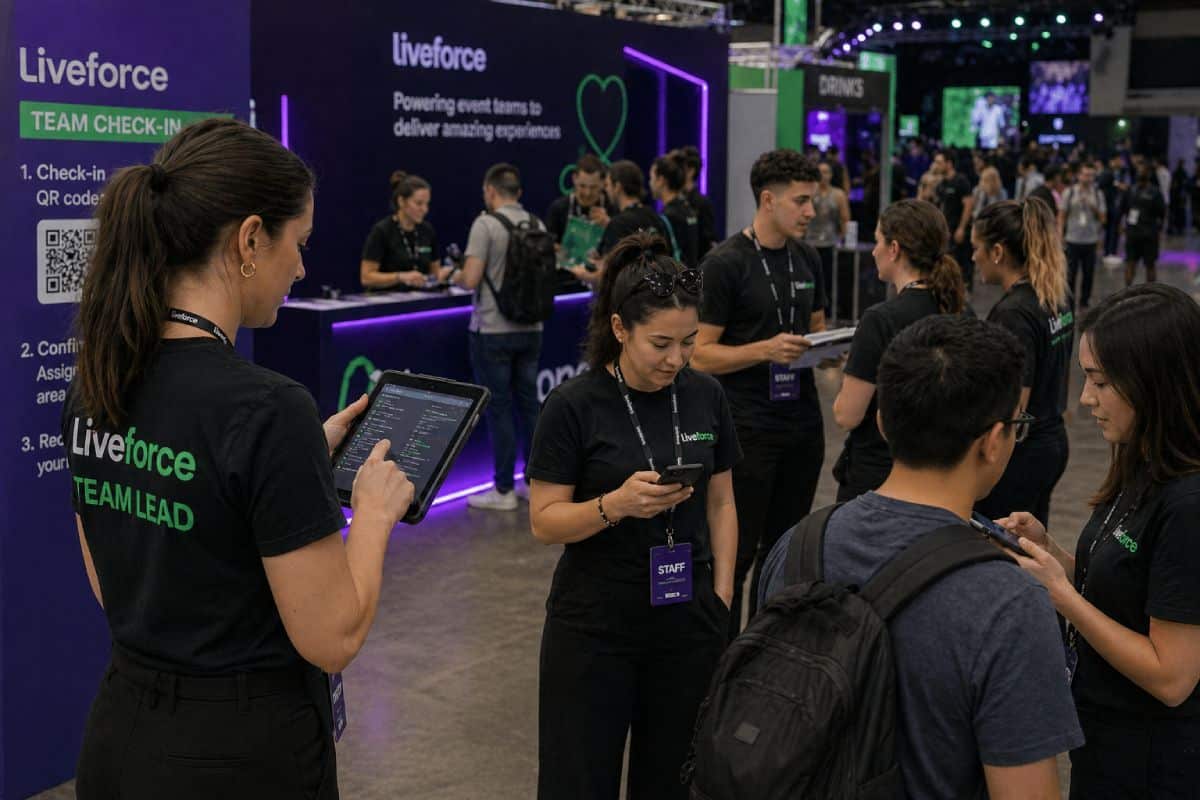
- Monitor arrivals in real time. The team lead needs visibility on who has arrived and who has not.
- Track hours accurately. Records made on the day are easier to reconcile than guesses made a week later.
Each step sounds basic. Each step also breaks down when the only tools available are spreadsheets, group chats, and phone calls.
How Liveforce supports sponsorship activation delivery
Liveforce is the platform agencies use to manage the operational layer of activations. It is used at the point where an agency has agreed an activation with a brand. The team then needs to be deployed to deliver it. Strong event staff communication sits at the centre of how that delivery happens.
For staff scheduling, Liveforce replaces the spreadsheets agencies typically use to track who is confirmed for each activation. It allows shifts to be assigned by role, location, and date, with availability checked across the entire freelance pool. Agencies running multiple activations across the same weekend can see every commitment in one view.
For communication, Liveforce replaces WhatsApp groups and email chains with structured briefings sent through the platform. Briefings can be tailored to each activation, attached to the relevant shifts, and confirmed by staff before the day. Team leads can see who has read the brief and who has not.
The Liveforce Crew App sits at the worker’s end of this. It is how staff receive their assigned shifts, view the briefing, and confirm availability. It is not a job board. It is the operational tool the agency’s existing workforce uses to manage shifts they have already been booked for.
Before and after: managing sponsorship activations
Reporting back and protecting the relationship
Sponsorship is a long-term relationship, not a single transaction. Brands that are happy with how an activation was delivered come back for the next one. The reporting stage is what turns a one-off booking into an ongoing partnership.
Reports should cover the agreed metrics and the qualitative observations from the team on the ground. They should also include any learnings for the next activation. Accurate data depends on accurate records, which depend on accurate timesheets and shift logs from the day itself. Agencies that run timesheets manually often submit reports late or with gaps. Both undermine the partnership.
The agencies that win repeat sponsorship work are the ones that close out every activation cleanly. Clear reporting. Clean invoicing. No surprises three weeks later. That level of professionalism is hard to fake with spreadsheets and group chats. It is also what separates agencies that win bigger sponsorship ideas for events from those that lose ground each year.
The decision sponsorship-led agencies eventually have to make
At some point, every agency running multiple activations for multiple brands hits a ceiling. The creative work is good. The client list is growing. The operational layer is the bottleneck. That is the moment to stop treating workforce management as an admin problem. It is the moment to start treating it as a competitive advantage.
The agencies already delivering sponsorship ideas for events at scale are not picking better concepts than their competitors. They are running better operations behind them. That is the gap worth closing in 2026.
A short demo walks through how Liveforce handles the activation lifecycle from booking to reporting. Agencies running brand activations for multiple clients usually find the booking and briefing flow most relevant. Book a demo with Liveforce to see how the platform fits the way activations actually run.
FAQs
What are the most effective sponsorship ideas for events in 2026?
The most effective formats are interactive activations that give attendees a genuine reason to engage with the brand. Hosted lounges, product demonstrations, sampling stations, and gamified experiences all perform well when staffed by trained brand representatives.
What is a sponsorship activation and how does it differ from standard branding?
A sponsorship activation is an active, staffed experience funded by a brand at an event. Standard branding is passive, such as logos on signage. Activations require people on the ground to deliver an interaction with attendees.
How many staff does a typical sponsorship activation require?
Staffing depends on the format and footfall. A small consultation pod might run with two staff. A large branded experience zone at a major festival can need fifteen or more. Agencies should agree staffing levels with the sponsor at the brief stage.
What should an event organiser include in a sponsorship proposal?
A strong proposal includes the audience profile and the activation formats available. It should also include costs broken down by element and the reporting the sponsor will receive afterwards. Specific staffing and operational delivery details build sponsor confidence.
How do agencies track the performance of sponsorship activations?
Agencies track activations through agreed metrics. These include attendee engagement counts, lead capture, sampling volumes, and qualitative feedback from staff on the ground. Accurate tracking depends on accurate operational records from the day itself.


