
Staff turnover in event staffing is driven by a lack of clarity, not a lack of pay.
When temporary workers feel forgotten between jobs, receive unclear briefings, or have no visibility over upcoming shifts, they move on. The agencies that retain their best workers are the ones that communicate well, schedule clearly, and treat their workforce as a long-term asset.
This article breaks down why turnover happens in event agencies, what common fixes get wrong, and how to reduce staff turnover by fixing the operational issues that drive people away.
What high turnover actually looks like in event agencies
Most agency owners think about staff turnover in annual terms. They count how many workers disappeared over the past year and compare it to a rough average. But in event staffing, turnover does not follow a neat annual cycle.
Workers drift away silently.
- They stop responding to shift offers.
- They accept fewer bookings.
Then one day, the agency realises a reliable worker has not been seen for months.
This is what makes turnover in event agencies so difficult to spot early. The workforce is not contracted in the traditional sense. Many workers operate across multiple agencies. There is no resignation letter and no exit interview. There is just a slow fade, and by the time it becomes visible, the best people have already gone.
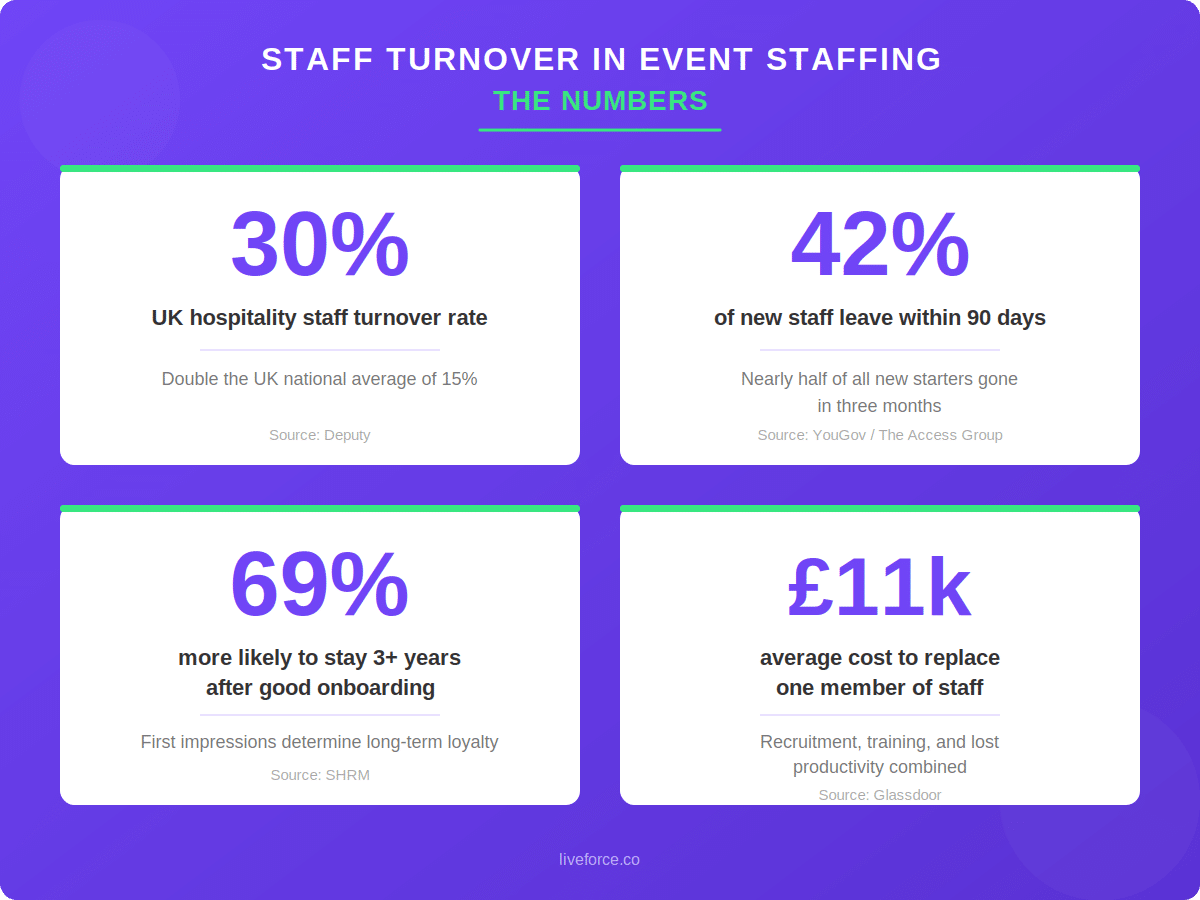
Hospitality sector staff turnover in the UK runs at approximately 30%, which is double the national average, according to Deputy data. For event agencies working with casual and freelance pools, the real rate is likely higher because many workers are never formally counted as having left.
The pattern that most agency owners recognise too late
The first sign is usually a decline in shift acceptance rates.
Workers who used to confirm quickly start delaying or ignoring offers altogether. Then scheduling gaps become harder to fill at short notice. The operations team spends more time chasing confirmations and less time on delivery.
The second sign is a drop in quality.
When experienced workers leave, replacements arrive without the same operational understanding. Briefings take longer. Mistakes increase. Client feedback begins to slip. Agency owners often blame the quality of new recruits when the real issue is that the experienced workforce has quietly walked away.
By the time turnover becomes obvious, the damage is already months old.
What teams try first, and why it rarely works
When agency owners notice high staff turnover, the first instinct is almost always to increase pay. The logic seems sound: if workers are leaving, they must want more money. So rates go up by a pound or two per hour, and the agency waits for things to improve.
Sometimes this works in the very short term. A small bump in pay can bring back a few workers for a handful of shifts. But within weeks, the same patterns return.
- Workers drift again.
- Acceptance rates plateau.
- The agency has increased its cost base without solving the underlying problem.
Other common responses include offering bonuses for completing a set number of shifts, adding perks like free meals on site, or running appreciation campaigns. These gestures are well intentioned, but they treat symptoms rather than causes.
A worker who does not know when their next shift is, or who regularly turns up to poorly organised events, is unlikely to stay loyal because of a free sandwich.

Why pay rises and perks do not solve the real problem
Research from Glassdoor estimates the average cost of replacing a member of staff in the UK at around £11,000. Agencies spending money on incremental pay rises to slow attrition often end up spending more than they would on fixing the structural issues that drive people away.
The reality is that most temporary workers in event staffing accept that pay rates are broadly similar across agencies. The differences that determine loyalty are operational, not financial. Workers want to know when work is coming.
They want clear information about where to go, what to wear, and what to expect. They want to feel that their time and reliability are recognised.
When those basics are missing, no amount of money compensates for the frustration of turning up to an event unprepared, or worse, not hearing from an agency for weeks and then receiving a last-minute plea to fill a gap.
The real root cause
Staff turnover in event agencies almost always traces back to the same three issues:
- poor scheduling visibility,
- weak communication, and
- lack of consistency in how workers experience the agency between events.
These are structural problems, not people problems. Understanding how to reduce staff turnover starts here, with a rethink of temporary workforce management, not a bigger pay budget.
Clarity, communication, and how workers experience your agency
Think about it from the worker’s perspective.
They have registered with two or three agencies. One sends them shift offers via a system where they can see upcoming work, check details, confirm instantly, and receive clear briefings in advance.
The other sends a WhatsApp message at 9pm the night before asking if they are free. Both agencies might pay the same hourly rate, but the experience is completely different.
The first agency makes the worker feel part of something organised and professional. The second makes them feel like an afterthought. Over time, workers gravitate towards the agencies that treat them well operationally. They respond faster, accept more shifts, and stay longer.
Workers do not leave agencies because they found a better hourly rate. They leave because another agency made them feel like their time was respected.
- A 2023 YouGov survey, cited by The Access Group, found that 42% of new hospitality staff leave within the first 90 days. In event staffing, where the early experience is even more fragmented, the first few weeks are where most damage is done. If a new worker’s first event is chaotic, their briefing is vague, and nobody thanks them afterwards, the agency has already lost them.
- Research from SHRM consistently shows that workers are 69% more likely to stay for three or more years following a positive onboarding experience. In event staffing terms, onboarding is every first interaction: the first shift offer, the first briefing, the first event. Each one either builds trust or breaks it.
How to fix it properly
The operational changes that build a workforce that stays
Understanding how to reduce staff turnover starts with accepting that the fix requires changes to systems, not speeches. The agencies with the lowest turnover rates are not the ones with the highest pay. They are the ones with the clearest processes. Here is what that looks like in practice.
Scheduling and availability management
The foundation of staff retention is simple: workers need to see when work is available, and agencies need to see who is free. When this exchange happens through spreadsheets, text messages, or memory, gaps appear constantly. Workers miss offers. Agencies miss availability. Both sides end up frustrated.
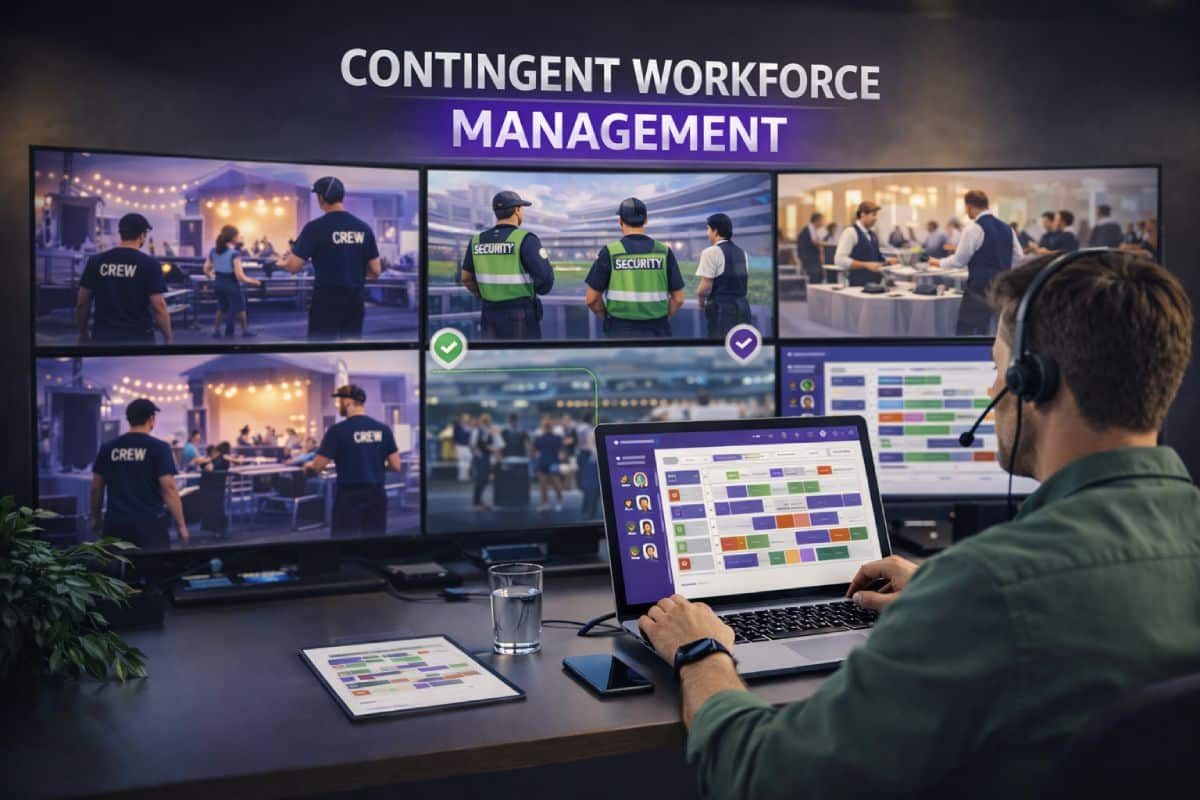
A structured scheduling system removes this friction. Workers can view upcoming events, flag their availability in advance, and receive offers based on their skills and location. Agencies can see at a glance who is confirmed, who is pending, and where gaps remain.

EXAMPLE: Consider a staffing agency supplying workers to a major UK festival such as Glastonbury. Agencies like Tracsis Events and Ethical Staffing coordinate hundreds of temporary workers across traffic management, stewarding, and logistics roles, each with different shift patterns, skill requirements, and site locations.
Workers need to know their shift times, whether they are on days or nights, and which area of the site they are assigned to. The agencies that reduce staff turnover year after year are the ones whose workers can see their confirmed schedule before they arrive on site, not the ones sending last-minute texts.
Platforms like Liveforce provide this through a centralised scheduling and workforce database that replaces disconnected spreadsheets and WhatsApp groups with a single, reliable system.
When workers can see their schedule clearly and confirm shifts with one tap, the uncertainty that drives people away is removed.
Briefings and communication
Poor briefings are one of the most underestimated causes of staff turnover. When a worker arrives at an event and does not know the dress code, the check-in point, or the client’s expectations, they feel set up to fail.
That experience sticks.
After two or three poorly briefed events, even a good worker starts looking elsewhere.
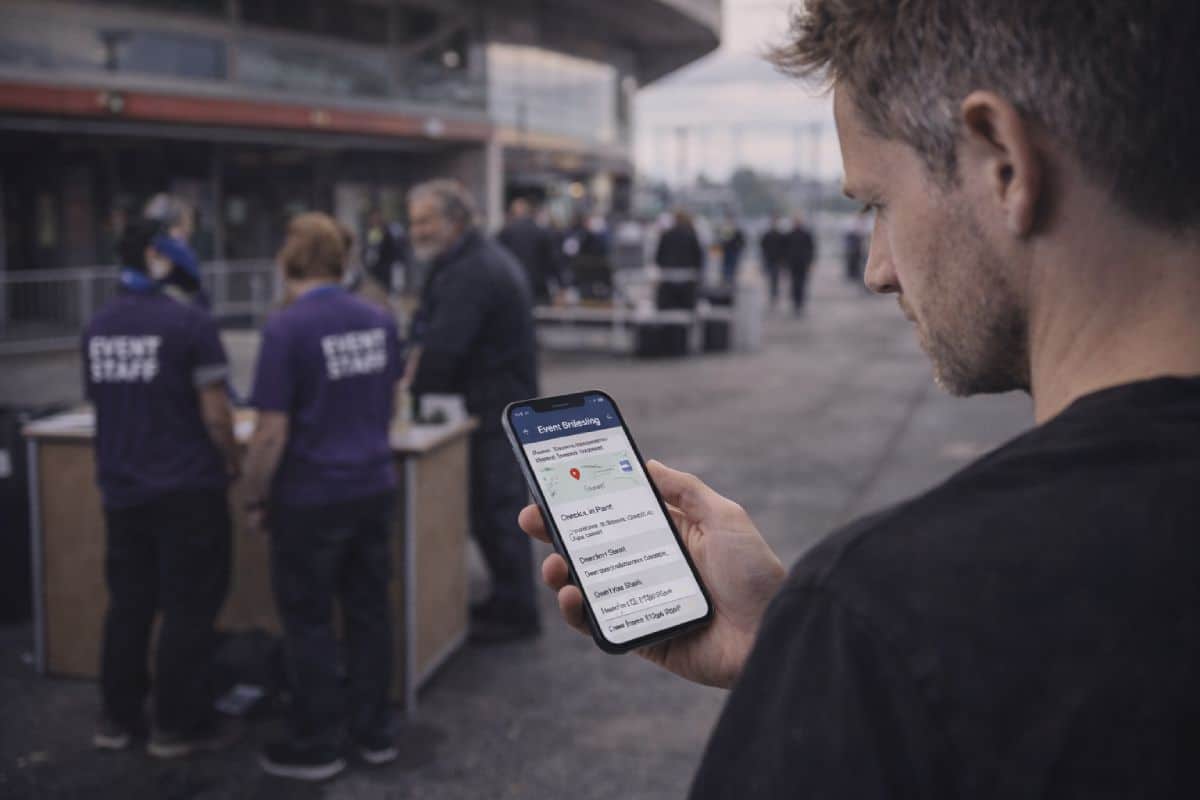
Strong agencies send clear, structured briefings well in advance of every shift. A proper briefing covers:
- Exact location and check-in point, including any access instructions or parking details
- Dress code and presentation standards, especially for client-facing roles
- Role expectations and responsibilities for the specific event
- Break times, shift duration, and any client-specific requirements
When changes happen at short notice, updates are sent immediately through a system the worker already checks and trusts.
EXAMPLE: Wimbledon offers a good reference point. Compass Group, which runs the food and drink operation at The Championships, requires all temporary hospitality staff to complete a mandatory two-day on-site orientation before the tournament begins.
Workers receive detailed role assignments, location maps, dress code requirements, and client expectations well in advance. That level of preparation means workers arrive confident and ready, not confused and anxious.
Agencies that operate at any scale can apply the same principle: send the briefing early, make it specific, and give workers a single place to find everything they need.
This is where a dedicated communication and staff app makes a measurable difference. Instead of chasing workers through personal messages, agencies can send briefings, updates, and confirmations through a single platform that workers check as part of their routine.
Recognition and consistency between jobs
In permanent employment, recognition happens through appraisals, promotions, and pay reviews. In event staffing, none of those mechanisms exist naturally. Workers finish an event, go home, and hear nothing until the next shift offer arrives, if it arrives at all.
The gap between events is where staff turnover accelerates. Workers who feel invisible between jobs are far more likely to accept offers from a competing agency that stays in touch. Recognition in event staffing does not need to be elaborate.
Even small, consistent actions make a difference:
- Confirming a worker’s next booking before their current event ends, so they always know what is coming
- Passing on positive client feedback directly to the worker who earned it
- Maintaining a clear, accessible record of hours worked and earnings so workers never have to chase for information
None of these require a big budget. They require a system that keeps the agency connected to its workforce between events.

EXAMPLE: Staffing agencies that supply hospitality workers for Premier League matchdays see this pattern clearly. The same venues run 19 or more home fixtures per season, and agencies that give their best workers priority booking for the next season’s matches keep those workers loyal.
A worker who knows they have first refusal on a regular Saturday shift at their preferred stadium is far less likely to register with a competing agency. The principle scales down to any agency running repeat events: give your returning workers visibility and priority, and staff turnover drops.
Consistency matters more than grand gestures. A worker who always knows where they stand, always receives clear information, and always gets paid accurately is a worker who stays. Event staff engagement is built through reliable systems, not occasional rewards.
Poor retention vs. strong retention in event staffing agencies
| Poor retention practice | Strong retention practice |
|---|---|
| Shift offers sent via WhatsApp the night before, with minimal details | Shifts published in advance through a scheduling platform with full event details attached |
| No briefing sent before the event; workers rely on verbal instructions on arrival | Structured briefing sent days before, covering dress code, location, role, and client expectations |
| No contact between events; workers hear nothing until a last-minute gap needs filling | Regular visibility of upcoming work; next booking confirmed before the current event ends |
| Hours and payments tracked manually, leading to disputes and delayed pay | Timesheets logged digitally with full transparency; workers can view earnings at any time |
What changes when turnover falls
The operational and commercial difference lower turnover makes.
When staff turnover drops, the effects are felt across the entire operation. The most immediate change is scheduling speed. Agencies with stable, responsive workforces fill shifts faster because they already have confirmed, experienced workers who know the drill.
There is less time spent chasing, less time spent onboarding replacements, and fewer gaps to fill at the last minute.
Client delivery improves too. Workers who have completed multiple events for the same agency understand the standards, the processes, and the expectations. They need less supervision. They make fewer mistakes. The agency can confidently assign them to high-profile clients, knowing the quality will be consistent.
Lower staff turnover does not just save money. It makes every part of the operation run more smoothly.
There is also a compounding effect on recruitment. Agencies with low staff turnover spend less time and money finding new workers, because they are not constantly replacing the ones who left. That frees up operational capacity to focus on growth, on winning new clients, and on improving service delivery rather than firefighting workforce gaps.
Financially, the numbers add up quickly. If replacing a single worker costs around £11,000, as Glassdoor research suggests, then reducing turnover by even a modest percentage across a workforce of 200 saves tens of thousands of pounds a year. For many agencies, that saving is larger than any single client contract.
Perhaps most importantly, lower staff turnover creates a better culture. Workers who stay longer build relationships with each other and with the agency team. They refer friends. They take ownership of their performance. They become the reliable core that every successful agency depends on.
For any agency trying to work out how to reduce staff turnover, the fix starts with how your workforce experiences working with you.
Liveforce gives event staffing agencies a single platform for scheduling, communication, and workforce management, replacing the disconnected tools that drive workers away.
Book a Liveforce demo and see how a clearer system builds a workforce that stays.
FAQs
What is a good staff turnover rate for an event staffing agency?
There is no single benchmark, because event staffing operates differently from permanent employment. However, agencies that track their workforce closely typically aim for annual turnover below 25%. Given that the wider hospitality sector averages around 30%, anything consistently below that suggests a stable, well-managed pool.
What are the main reasons for high staff turnover in event staffing?
The most common causes are poor communication between events, unclear briefings before shifts, inconsistent scheduling, and a lack of visibility over upcoming work. Pay is rarely the primary driver. Workers leave when they feel disorganised agencies waste their time.
How do you calculate staff turnover rate?
Divide the number of workers who left during a period by the average total workforce during that same period, then multiply by 100. For event agencies, it is worth tracking both formal departures and workers who simply stopped accepting shifts, as the second group is often much larger.
Does better scheduling actually reduce staff turnover?
Yes. When workers can see upcoming shifts, confirm availability in advance, and receive clear details about each event, they are far more likely to stay engaged. Scheduling systems that give workers visibility and control over their own calendar directly reduce staff turnover by removing the uncertainty that drives people away.
How long does it take to reduce staff turnover once changes are made?
Most agencies see measurable improvement within three to six months of implementing structured scheduling and communication systems. The first sign is usually an increase in shift acceptance rates, followed by higher repeat booking rates from existing workers.