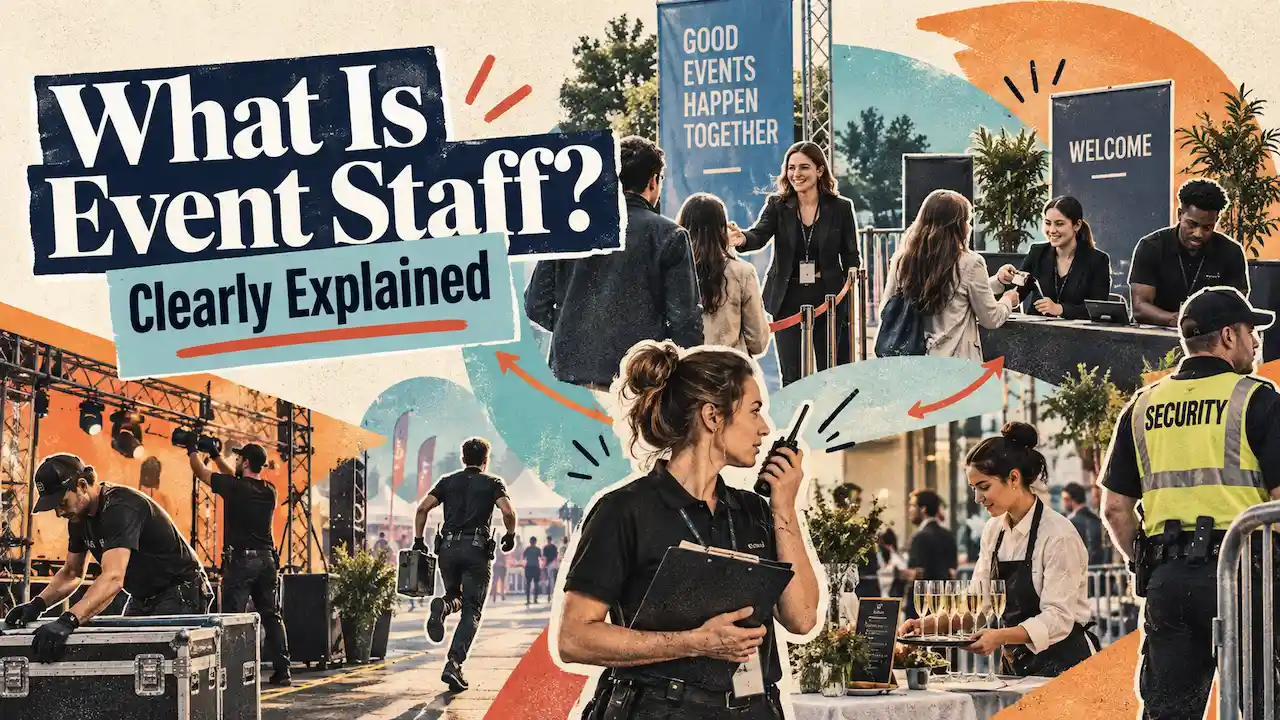
Event staff are temporary or freelance workers engaged to deliver specific roles at events.
That is the simple definition.
But for agencies and suppliers, understanding what is event staff goes far beyond a dictionary explanation. Event staff are not just extra hands on event day. They are a structured, skilled workforce that determines whether delivery feels smooth or chaotic.
Defining what is event staff is easy. Managing event staff at scale is where complexity begins.
The Common Belief About Event Staff
When people ask, “what is event staff?”, the usual assumption is straightforward. Event staff are temporary workers brought in to support an event.
- They show up.
- They complete their shifts.
- They go home.
From the outside, it looks simple.
This simplified view persists because events themselves are short-term. A festival lasts a weekend. A conference runs for two days. A product launch may last a single evening. The workforce appears temporary, so the structure behind it is often underestimated.
But agencies know the reality is different.
The Operational Reality of Event Staff
A more accurate answer to what is event staff is this:
Event staff are a flexible workforce organised across roles, skills, compliance requirements, clients and locations to deliver controlled, consistent event experiences.
That definition reflects how agencies actually operate.
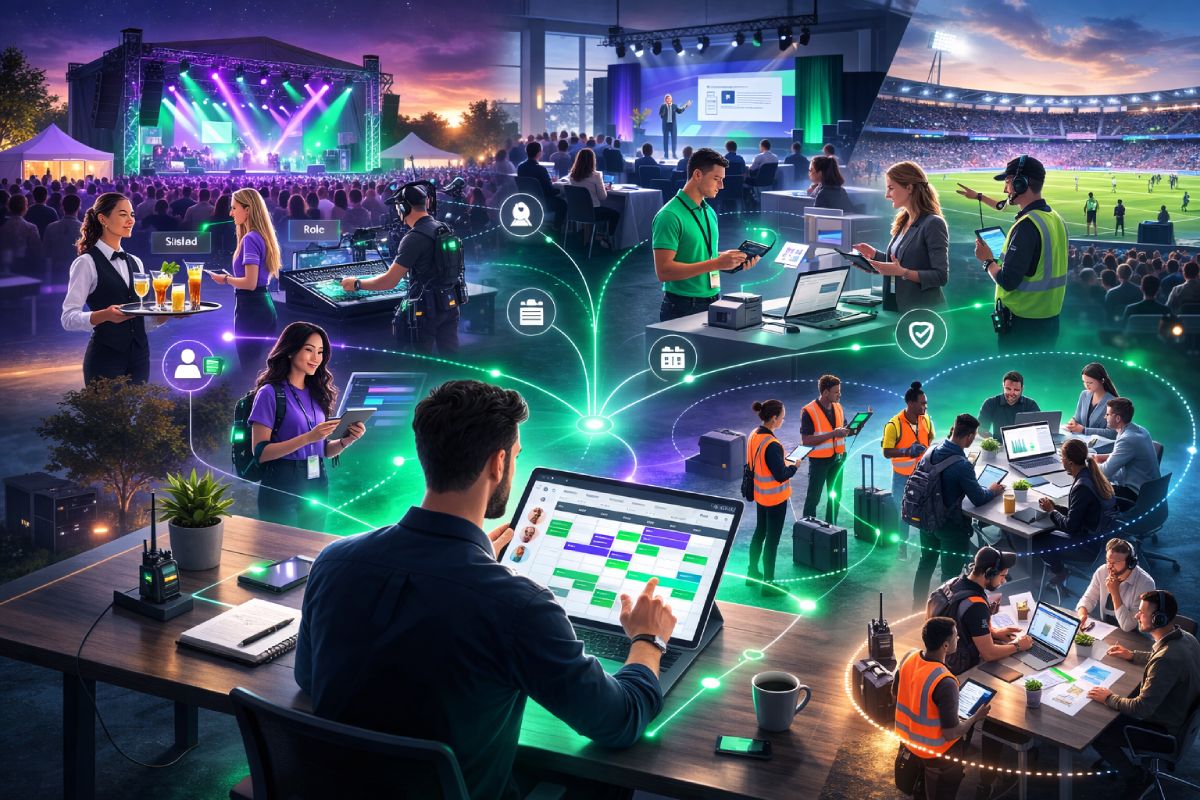
Event Staff Roles
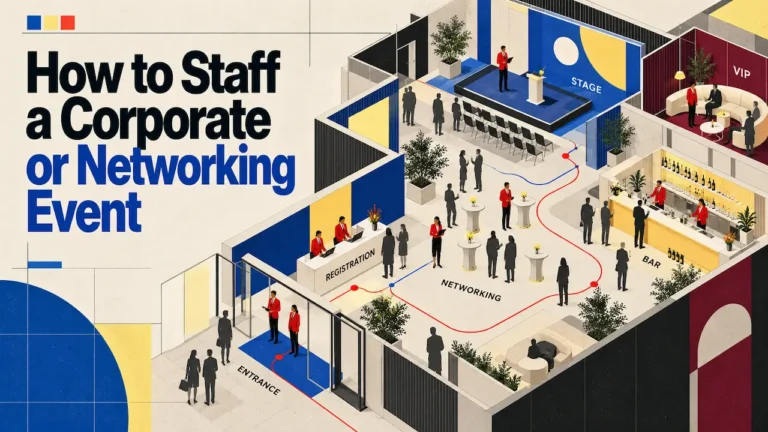
Event staff roles vary widely depending on the event type and sector. These may include:
- Brand ambassadors and product specialists
- Hosts and hostesses
- Registration and accreditation teams
- Hospitality and bar staff
- Production crew
- Technicians and electricians
- Stage managers
- Volunteer coordinators
- Security and stewarding teams
A corporate conference will require a different workforce mix to a music festival. A sports fixture demands different skills than an experiential roadshow.
When agencies think about what is event staff, they must consider the structure behind those roles. Each role requires:
- Specific skills
- Defined responsibilities
- Clear reporting lines
- Accurate availability tracking
This is where the simple definition starts to break down.
Temporary Event Staff vs Core Teams
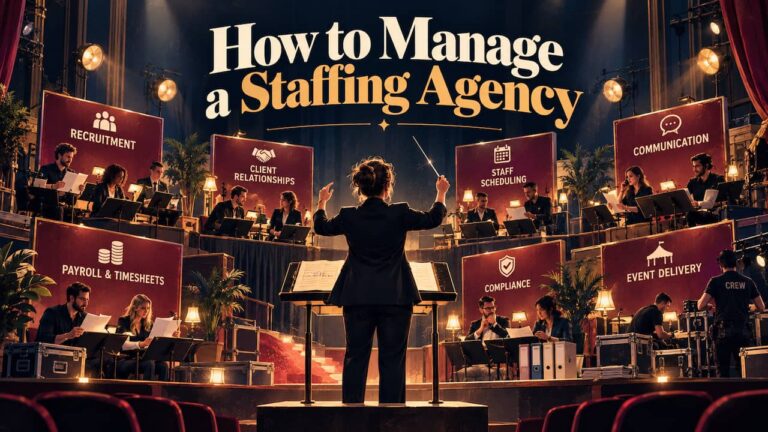
Most agencies operate with a small permanent internal team. That team handles planning, client management and operational oversight.
The actual event delivery is powered by temporary event staff.
This layered model creates flexibility. Agencies can scale up for peak seasons and scale down when demand slows. But it also introduces complexity.
Managing event staff means coordinating:
- Hundreds, sometimes thousands, of individuals
- Multiple events running at the same time
- Different end-clients with different rules
- Changing schedules and last-minute updates
So when someone asks what is event staff, the better question for agencies is:
How is that workforce structured and controlled?
Why Managing Event Staff Is More Complex Than It Looks
The operational challenge begins when agencies move from defining event staff to managing them.
Early on, spreadsheets often work. A small team. A handful of events. Limited overlap.
But as agencies grow, cracks appear.
Managing event staff across multiple projects introduces pressure in several areas.

Availability and Double Bookings
Temporary event staff often work with multiple agencies. Availability changes quickly. Without a central system, clashes happen.
Double bookings damage client confidence. They also damage staff trust.
Role Matching
Assigning the right person to the right role requires visibility of skills, certifications and past experience.
Manual records quickly become outdated.
Communication Gaps
Shift updates, briefings and last-minute changes are common in events. If communication relies on text messages or fragmented WhatsApp groups, information gets lost.
When managing event staff, consistency matters. Every team member must receive the same information at the same time.
Compliance and Documentation
Events often require proof of right to work, health and safety training, or specific qualifications.
If compliance data is stored across email threads and folders, risk increases.
Timesheets and Payment Records
Tracking hours worked must be accurate. Disputes drain time and create friction between agencies and their workforce.
When agencies first define what is event staff, they rarely anticipate how much administrative control is required behind the scenes.
From Definition to Workforce Structure
At this point, the answer to what is event staff becomes operational.
Event staff are not simply temporary workers. They are a dynamic workforce that must be structured.
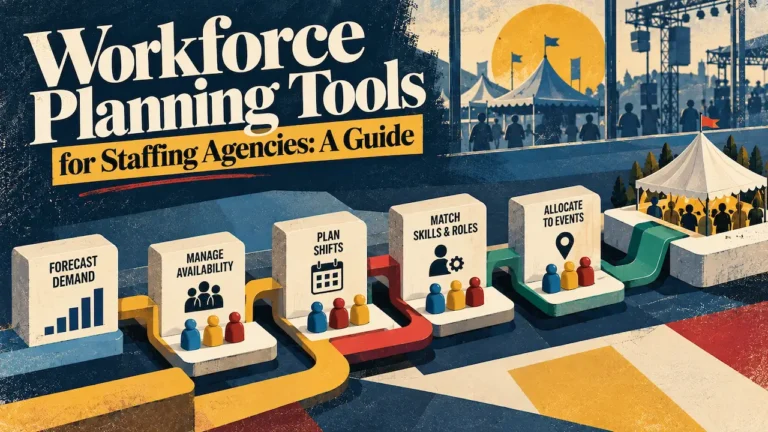
Agencies that manage event staff successfully build systems around four core areas:
- Scheduling
- Workforce database management
- Communication
- Work tracking
Each area replaces manual, disconnected processes.
Staff Scheduling at Scale
Scheduling is used when agencies are:
- Managing multiple events at once
- Assigning staff across different locations
- Filling role-specific positions
- Dealing with variable shift lengths
Manual spreadsheets cannot easily prevent clashes or highlight gaps.
Structured scheduling systems provide:
- Conflict checks
- Clear role allocation
- Real-time visibility
- Centralised control
For agencies delivering large events or multiple concurrent projects, scheduling becomes the backbone of managing event staff.
You can see how structured scheduling supports this on our Staff Scheduling Features page
Workforce Database Control
As agencies grow, maintaining a central database becomes critical.
A workforce database is used when agencies need to:
- Track accurate availability
- Store skills and experience
- Maintain up-to-date staff profiles
- Monitor compliance documents
Disconnected spreadsheets and personal contact lists do not scale.
A structured database creates clarity. It ensures that when agencies think about what is event staff, they are looking at a live, accurate workforce record.
More details on this approach can be found on our Staff Database page.

Structured Communication
Managing event staff means managing information.
Briefings, location updates, shift confirmations and emergency changes must reach the right people quickly.
Replacing fragmented text chains with a central communication system reduces:
- Missed updates
- Confusion
- Last-minute phone calls
Clear communication builds trust. It also improves consistency across teams.
Timesheets and Operational Tracking
After delivery, agencies need accurate records of hours worked.
Timesheet tracking supports:
- Clear payment processing
- Reduced disputes
- Faster admin turnaround
- Reliable client billing
Without structure, timesheet errors increase as workforce size increases.
This is often the moment agencies realise that managing event staff requires more than manual oversight.
The Difference Between Hiring Event Staff and Managing Them
It is important to separate the two ideas.
Hiring event staff and managing event staff are not the same thing.
An event staffing agency is responsible for:
- Recruiting staff
- Onboarding them
- Vetting and training them
- Paying them
Workforce management platforms such as Liveforce do not hire staff. They do not advertise jobs to the public. They do not match workers to employers.
Liveforce is the system agencies use to manage their workforce once that workforce exists.
Each agency remains responsible for hiring, onboarding and paying their staff. The platform supports operational control.
You can read more about how Liveforce positions itself on our Why Liveforce page.
This distinction matters. When agencies understand what event staff is, they must also understand the difference between recruitment and operational management.
When Agencies Realise Structure Is Necessary
There is often a turning point.
Agencies begin by answering what is event staff in simple terms. They focus on growth, client acquisition and delivery.
Then complexity increases.
Warning signs appear:
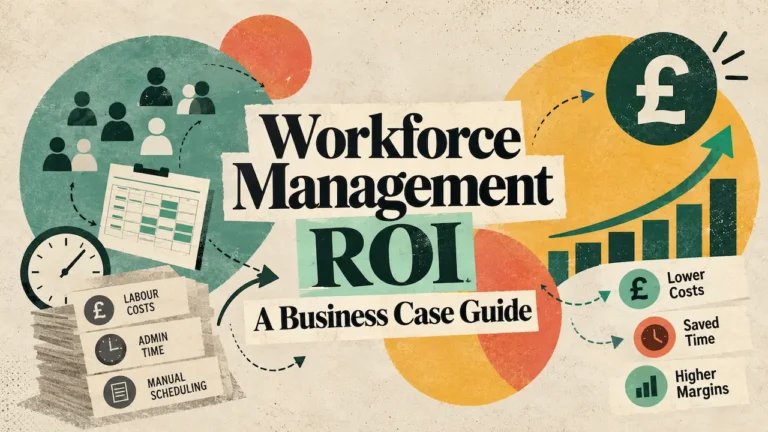
- Admin workload grows faster than revenue
- Double bookings increase
- Staff complain about unclear communication
- Client-specific requirements become harder to track
- Compliance documents are scattered
- Delivery feels reactive rather than controlled
This is not a people problem. It is a structure problem.
Manual systems were not designed to manage hundreds of temporary event staff across multiple clients and projects.
At this stage, agencies shift their thinking. They stop asking what is event staff and start asking:
How do we control this workforce predictably?

Event Staff as the Front Line of Delivery
Event staff are the face of the event. They interact with guests, represent brands and deliver client experiences.
If scheduling fails, guests notice.
If briefings are inconsistent, clients notice.
If compliance lapses, risk increases.
So the answer to what is event staff cannot stop at definition. Event staff are the front line of delivery. They require structure behind the scenes to perform confidently.
Agencies that treat event staff as an organised workforce, rather than casual labour, build stronger reputations and more reliable operations.
The Operational Shift
When agencies introduce structured workforce management, several shifts occur:
- Scheduling becomes predictable
- Availability data stays accurate
- Communication becomes consistent
- Admin time reduces
- Growth feels controlled rather than chaotic
Managing event staff stops being reactive.
It becomes repeatable.
This shift allows agencies to focus on:
- Client relationships
- Service quality
- Strategic growth
Instead of firefighting operational issues.
So, What Is Event Staff?
At a basic level, event staff are temporary workers hired to carry out roles at events.
On the ground, event staff are a structured, flexible team that needs clear systems to manage effectively.
For agencies and suppliers, the real question is not simply what is event staff.
The real question is whether your current systems can support that workforce as you grow.
If you manage large temporary teams across multiple projects, structure determines whether operations feel controlled or constantly under pressure.
Defining event staff is easy. Managing them well is what determines event success.
If your workforce complexity is increasing, it may be time to review how your systems support scheduling, communication and compliance.
Book a demo with Liveforce to see how structured workforce management supports agencies delivering at scale.
Frequently asked questions
What is event staff in the context of an agency?
Event staff are temporary or freelance workers engaged by agencies to deliver specific roles at events. This can include hospitality teams, brand ambassadors, production crew and technical specialists. Agencies are responsible for hiring and paying them.
How is event staff different from permanent employees?
Event staff are engaged for short-term projects or specific events, whereas permanent employees manage planning, coordination and client relationships. The event workforce expands and contracts based on demand, which increases the need for structured workforce management.
Why is managing event staff more complex than it seems?
Managing event staff involves tracking availability, assigning roles, communicating updates, maintaining compliance records and recording hours worked. As agencies scale across multiple events and clients, manual systems often struggle to keep pace.
What systems do agencies use to manage event staff?
Agencies use workforce management platforms like Liveforce to centralise scheduling, maintain a staff database, streamline communication and track timesheets. These systems replace disconnected spreadsheets and reduce operational risk as teams grow.
Does Liveforce hire or provide event staff?
No. Liveforce does not hire, recruit or supply event staff. It is the platform agencies use to manage their existing workforce, including scheduling, communication and operational tracking.