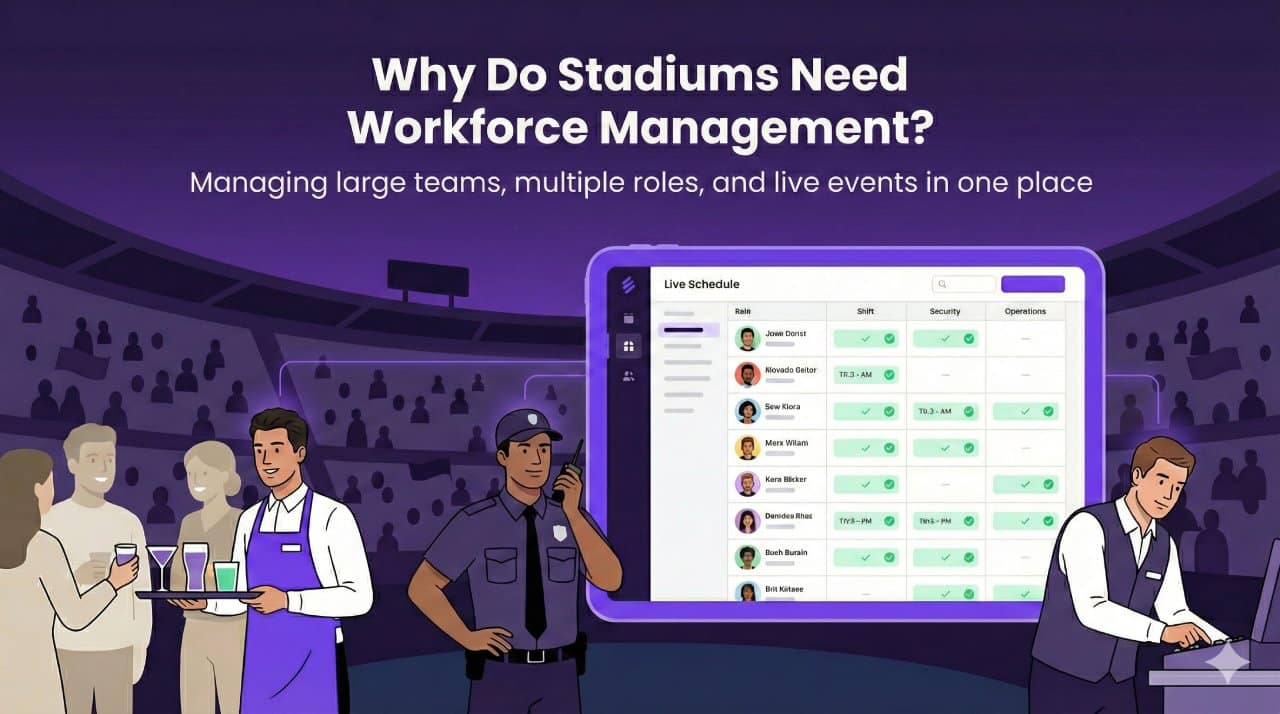
Stadiums are some of the busiest venues in the events industry, hosting everything from Premier League football matches and international rugby fixtures to sold-out concerts and festivals. Behind the spectacle, thousands of temporary staff ensure operations run smoothly.
From ushers and security guards to hospitality teams and cleaners, the workforce is vast and varied. But managing this workforce is no small task.
Without an effective system in place, staffing challenges can quickly spiral into chaos, risking safety, compliance, and customer satisfaction. This is where workforce management becomes essential.
In this article, we’ll explore why stadiums need workforce management, the unique challenges they face, and how technology like Liveforce helps venues run efficiently and compliantly while delivering a better experience for both staff and fans.
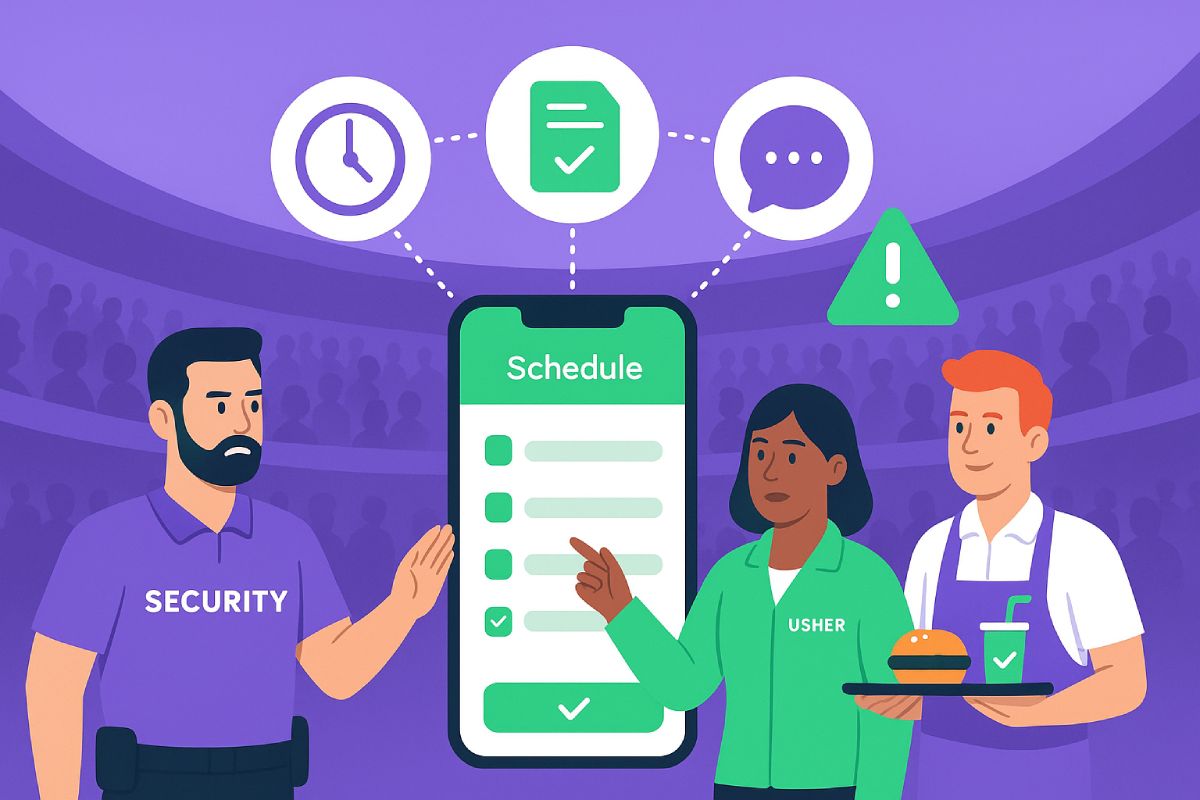
The Unique Staffing Challenges of Stadiums
Stadiums present a unique set of challenges that make workforce management critical:
High-volume workforce
On match days or during concerts, stadiums rely on hundreds or even thousands of staff. Hospitality staff serving food and drink, ushers guiding fans, cleaners maintaining facilities, and security staff managing crowd safety all need to be coordinated.
Complex scheduling
No two events are the same. Staffing needs vary depending on whether it’s a football match, a music concert, or a corporate event. Schedules must be flexible enough to cover multiple events per week, often at short notice.
Temporary and flexible staff
Most stadium staff are casual or temporary workers. They may work across multiple venues and need flexibility, making it difficult to keep track of availability and reliability using manual systems.
Regulatory compliance
Stadiums must comply with strict health and safety, crowd control, and employment regulations. Right-to-work checks, training certifications, and security clearances must be verified before staff enter the venue.
Communication gaps
With such a large workforce, communication is a challenge. Staff need real-time updates on shift times, last-minute changes, and role assignments. Without a streamlined system, miscommunication can lead to no-shows, overstaffing, or gaps in critical roles.
The Role of Workforce Management in Stadium Operations
Workforce management is the process of planning, scheduling, monitoring, and optimising staff. For stadiums, it means turning a logistical challenge into a structured, manageable process.
Effective workforce management ensures:
- Right people, right roles: Matching staff with the skills needed for specific jobs.
- Compliance and safety: Verifying right-to-work documents, certifications, and training.
- Seamless scheduling: Allocating shifts quickly across multiple events and locations.
- Transparent payroll: Tracking hours worked accurately for fair payment.
- Clear communication: Keeping staff updated with instant notifications.
Instead of juggling spreadsheets, phone calls, and email threads, workforce management software provides one centralised platform to oversee everything from hiring to payroll.
Benefits of Workforce Management for Stadiums
Efficiency
Automated scheduling tools drastically cut down on admin time. Shifts can be assigned at scale, with clear visibility over staffing levels for each event.
Compliance
Digitally storing documents and certifications means checks are always up to date. This reduces the risk of non-compliance and fines.
Reliability
Real-time communication reduces no-shows by allowing staff to confirm shifts instantly. Automated reminders help ensure attendance.
Cost savings
Preventing overstaffing saves money. Reducing administrative hours also cuts overhead costs.
Better experience
When staff are informed, supported, and managed effectively, they deliver better service. This creates smoother fan experiences, from shorter queues to enhanced safety.
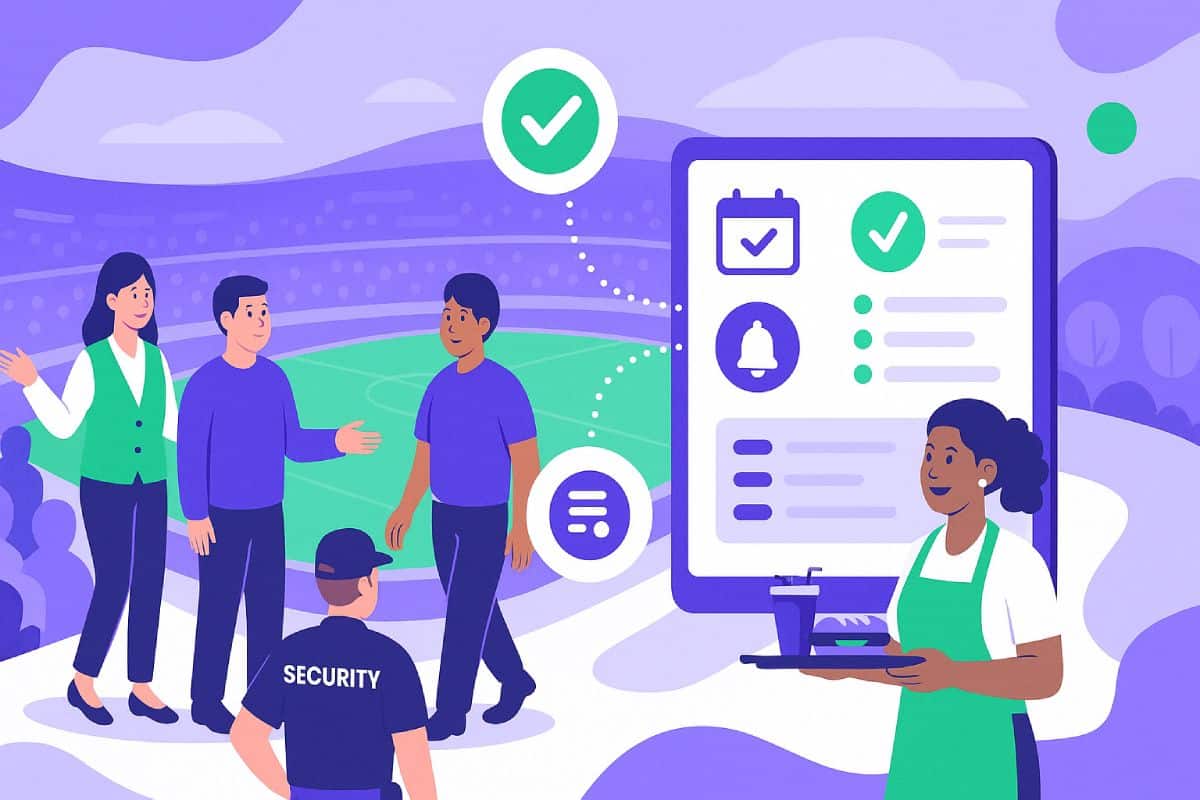
How Liveforce Helps Stadiums Manage Staff Seamlessly
Liveforce is designed to help venues, such as stadiums, manage large-scale temporary workforces with ease. Here’s how:
Scheduling at scale
Assigning shifts across multiple events, roles, and departments is simple. Managers have full visibility of staffing levels and can adjust instantly when needed.
Crew App
Temporary staff access everything through the Liveforce Crew App. They can view available shifts, accept or decline jobs, and track their earnings. This transparency builds trust and keeps staff engaged.
Real-time communication
Push notifications make it easy to update staff about schedule changes or role assignments. This reduces confusion and improves attendance.
Compliance checks
All right-to-work documents and certifications are stored digitally, ensuring compliance and reducing admin workload.
Reporting and insights
Managers can access detailed reports on hours worked, payroll, and workforce performance, enabling them to make informed, data-driven decisions.
Example scenario: On a match day, a stadium needs 1,200 staff across hospitality, security, and cleaning. With Liveforce, managers can fill all shifts, send real-time updates, and monitor attendance from one central dashboard.
Best Practices for Stadium Workforce Management
To get the most out of workforce management, stadiums should follow these best practices:
- Start planning early – Prepare schedules well ahead of major events to avoid last-minute shortages.
- Use one centralised system – Consolidate scheduling, compliance, and communication into one platform.
- Maintain transparent communication – Keep staff informed of updates to build trust and reduce confusion.
- Track compliance digitally – Store and verify documents online to reduce errors and speed up checks.
- Build a reliable crew pool – Create a loyal workforce by offering staff clear visibility, prompt payments, and easy job management.
| Stadium Staffing Challenge | How Workforce Management Solves It | Liveforce Advantage |
|---|---|---|
| High volume of temporary staff | Centralised scheduling for thousands of shifts | Assign staff at scale with one platform |
| Last-minute schedule changes | Real-time updates and notifications | Push notifications via the Crew App |
| Compliance requirements (right-to-work, safety) | Digital verification and document storage | Built-in compliance tracking and expiry alerts |
| Communication gaps with staff | Single app for updates, confirmations, and instructions | Liveforce Crew App keeps all staff connected |
| Admin-heavy scheduling and payroll | Automated scheduling and time tracking | Reports, payroll data, and analytics in one dashboard |
| Staff no-shows or poor attendance | Instant confirmations and reminders | Reduce no-shows with app-based job acceptance and reminders |
Real-World Example
Imagine a Premier League stadium managing staff for a Saturday match. They need:
- 500 hospitality staff
- 300 security personnel
- 200 ushers
- 100 cleaners
Traditionally, this would involve endless phone calls, spreadsheets, and paper contracts. With Liveforce, all roles are filled digitally.
Staff accept shifts via the Crew App, compliance is checked automatically, and managers can see live attendance on the day. The result? Less stress for managers, happier staff, and a safer, smoother fan experience.
Take Control of Stadium Staffing
Stadiums depend on temporary staff to deliver world-class events, but managing such a large workforce requires more than spreadsheets and phone calls. Workforce management ensures efficiency, compliance, and smooth operations, allowing staff to focus on delivering the best possible fan experience.
With Liveforce, stadiums can manage scheduling, compliance, communication, and payroll seamlessly in one platform. The result is reduced admin time, cost savings, and happier staff.
Book your demo with Liveforce today and see how workforce management can transform stadium operations.
Frequently asked questions
It ensures efficiency, compliance, and reliability by managing large numbers of staff effectively
High staff volumes, complex scheduling, temporary workforces, compliance requirements, and communication gaps
By preventing overstaffing, reducing admin time, and ensuring accurate payroll
Yes. Well-managed staff mean shorter queues, better service, and improved safety
Liveforce provides scheduling, compliance checks, real-time communication, and a Crew App that makes managing staff simple and transparent