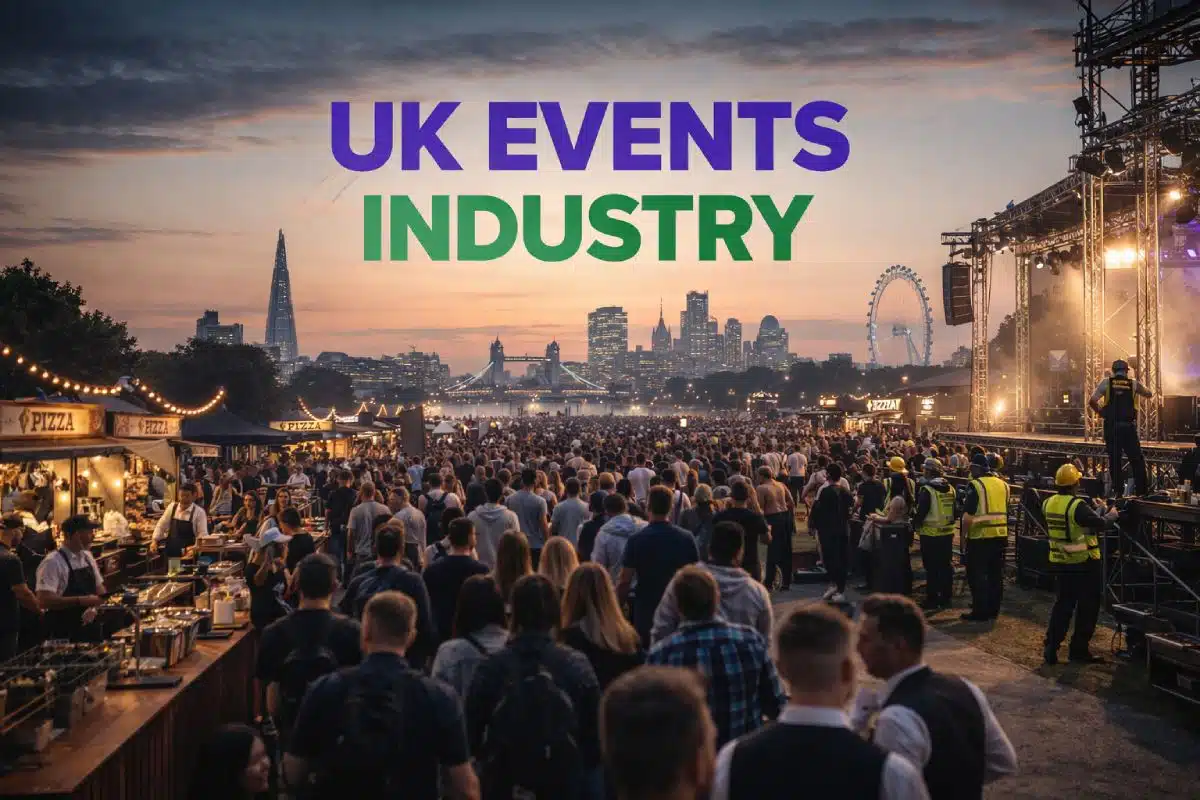

The UK events industry is now worth £68.7 billion. That figure, published in the UKEVENTS Report 2025, marks an 11.4% increase on the previous year and confirms the sector’s strongest period since before the pandemic. For event staffing agencies, the number tells only part of the story.
Growth at this pace means more events, more clients, and more temporary workers moving through agency books every week. The agencies feeling it most are those still running operations through spreadsheets, group messages, and disconnected contact lists.
This article breaks down the current size of the UK events industry, the issues shaping it in 2026, and what the data means for workforce management.
How big is the UK events industry right now?
The UK events industry is valued at £68.7 billion, according to the UKEVENTS UK Events Report published in December 2025. That represents growth from £61.6 billion the previous year. An 11.4% year-on-year increase.
The sector employs approximately 775,000 people across the country and generates around 85 million event attendances every year (UKEVENTS / Quadrant2Design). Conferences and business meetings make up the single most valuable sub-sector, contributing £20 billion to that total.
These are not abstract numbers for staffing agencies. They represent the volume of work flowing through the industry every month.
The scale matters because it directly affects how many temporary workers are being briefed, scheduled, managed, and paid across overlapping events. A £68.7 billion industry does not run on informal processes. It runs on operational infrastructure that can keep pace with the demand.
UK events industry value: 2019 to 2025
The figures below show how the UK events industry has moved from pre-pandemic peak to near-collapse and back again. Each figure comes from the UKEVENTS (formerly BVEP) national reports.
| Year | Industry Value | Context | Source |
|---|---|---|---|
| 2019 | £70 billion | Pre-pandemic peak. Business events contributed £31bn, leisure events £39bn. | BVEP UK Events Report |
| 2020/21 | ~£13 billion | The industry lost £57bn. Activity fell 84%. 17% of event businesses closed permanently. | BVEP Shape of Events Report (2021) |
| 2023 | £61.65 billion | Recovery to near pre-pandemic levels. Corporate events accounted for £33.6bn. | UKEVENTS Report 2024 |
| 2025 | £68.7 billion | 11.4% year-on-year growth. 775,000 employed. 85 million attendances per year. | UKEVENTS Report 2025 |
No full UKEVENTS industry valuation was published for 2021 or 2022. The 2023 figure is the first post-pandemic total from the renamed UKEVENTS body.
The recovery is real. But each billion added back into the sector creates staffing demand that agencies have to absorb, often with the same tools they were using before the pandemic hit.
What is driving growth in 2025 and 2026?
Three factors are pushing the sector forward.
- The post-pandemic recovery has moved past the rebound phase. The industry is no longer catching up to pre-2020 levels. It is growing on top of them. The UKEVENTS Report 2025 recorded the 11.4% uplift from £61.6 billion to £68.7 billion as structural growth, not a one-off correction.
- The UK is also increasingly positioned as a stable destination for international events. Geopolitical uncertainty in other regions has redirected corporate event spend towards countries with predictable infrastructure and fewer travel restrictions (UKEVENTS 2025). Major conferences and exhibitions that might previously have rotated through other European or Middle Eastern cities are now landing in the UK with greater frequency.
- Corporate investment in face-to-face events has increased as well. After several years of hybrid experimentation, organisations have returned to in-person formats for conferences, product launches, and experiential campaigns. The NCASS, citing the UKEVENTS 2025 Report, forecasts 3 to 5% annual growth for the UK events industry through 2027.
More events mean more staffing demand. More staffing demand means more operational complexity for the agencies filling those roles.
What are the current issues in the events industry?
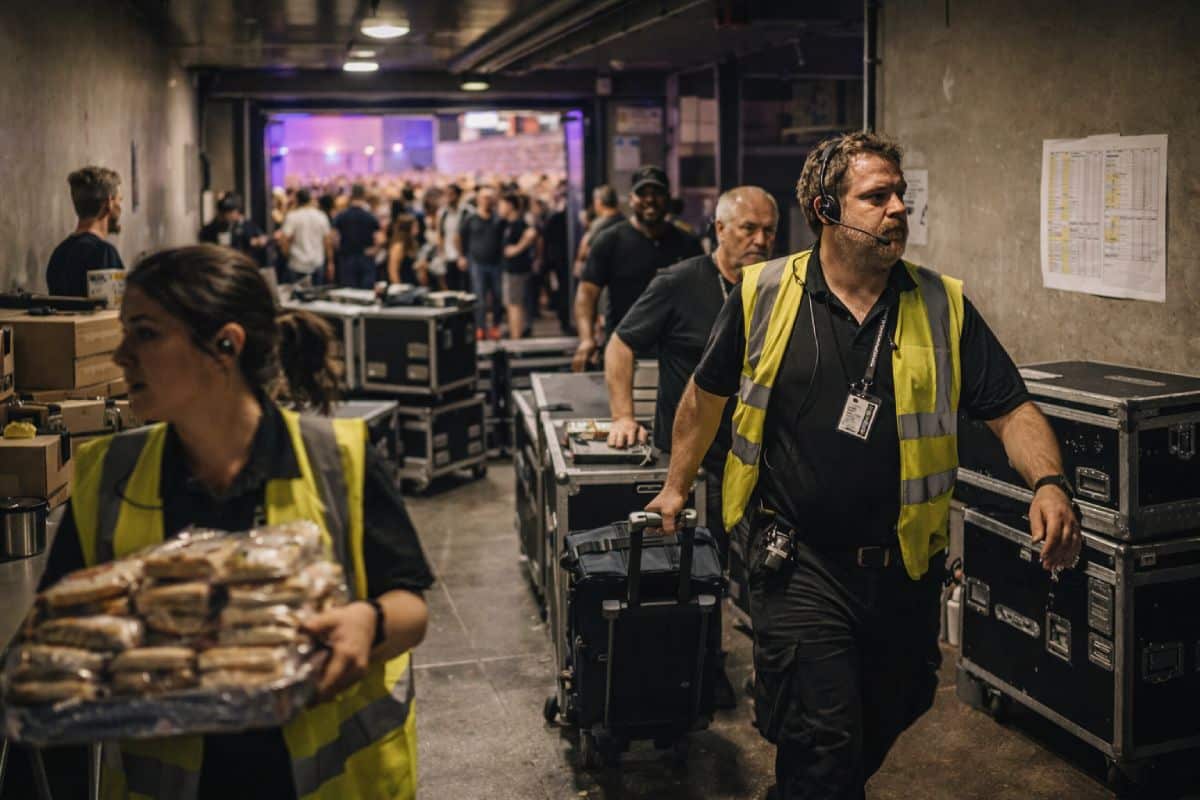
Growth brings pressure. The UK events industry is dealing with several overlapping challenges, and most of them hit staffing agencies hardest.
Talent shortages remain the dominant issue.
A survey by ESSA (the Event Services and Suppliers Association), reported in Event Industry News in November 2025, found that 73% of member companies had experienced recruitment challenges in the previous 12 months. Of those, 88% cited a shortage of available workers as the primary cause.
The gap is widest in operational and technical roles. The CEO of Identity Group, writing in business-sale.com in February 2026, identified production, AV, security, crew, and catering as the areas facing the most persistent shortages.
32% of ESSA members reported they were not operating at full capacity because they could not find enough staff.
Rising operational costs are compounding the problem. National Living Wage increases, higher insurance premiums, and supplier-side inflation are all squeezing agency margins. Staffing agencies absorb these costs directly because they sit between the end-client budget and the worker pay rate.
Visa complexity is affecting the supply of international attendees and, in some cases, international workers. For large-scale festivals and conferences that depend on overseas participation, the administrative burden has increased.
Geopolitical instability continues to disrupt long-haul corporate travel, affecting international conference and exhibition attendance. This creates unpredictable demand cycles for the agencies staffing those events.
The common thread across all of these issues is capacity. The UK events industry is generating more work than the current workforce and infrastructure can comfortably support.
How is workforce pressure changing the way agencies operate?
Event staffing agencies have always dealt with fluctuating demand. The difference now is the scale and frequency of that fluctuation.
An agency managing hospitality at Wimbledon across five service zones, or a festival supplier briefing 400 temporary workers across three stages, cannot afford communication gaps. A single missed shift update, duplicated booking, or outdated briefing creates a chain of problems that costs time, money, and client confidence.
The Event Industry Council, cited in ticketfairy.com in December 2025, reported that 89% of event professionals said staffing shortages had directly impacted event delivery during 2024 and 2025. The impact was not just about headcount. It was about coordination.
The operational challenge for most agencies is not finding people. They already have worker pools. The challenge is managing those pools reliably when the volume of work increases.
Manual tools break under this pressure. Spreadsheets do not update in real time. WhatsApp groups do not create auditable communication trails. Disconnected contact lists lead to duplicated bookings and missed availability.
Agencies running staffing for major sporting events or multi-day festival staffing operations across multiple sites need systems that hold up under operational load. The ones that do not invest in that infrastructure spend more time managing admin than managing events.
What does a well-run event staffing operation look like in 2026?
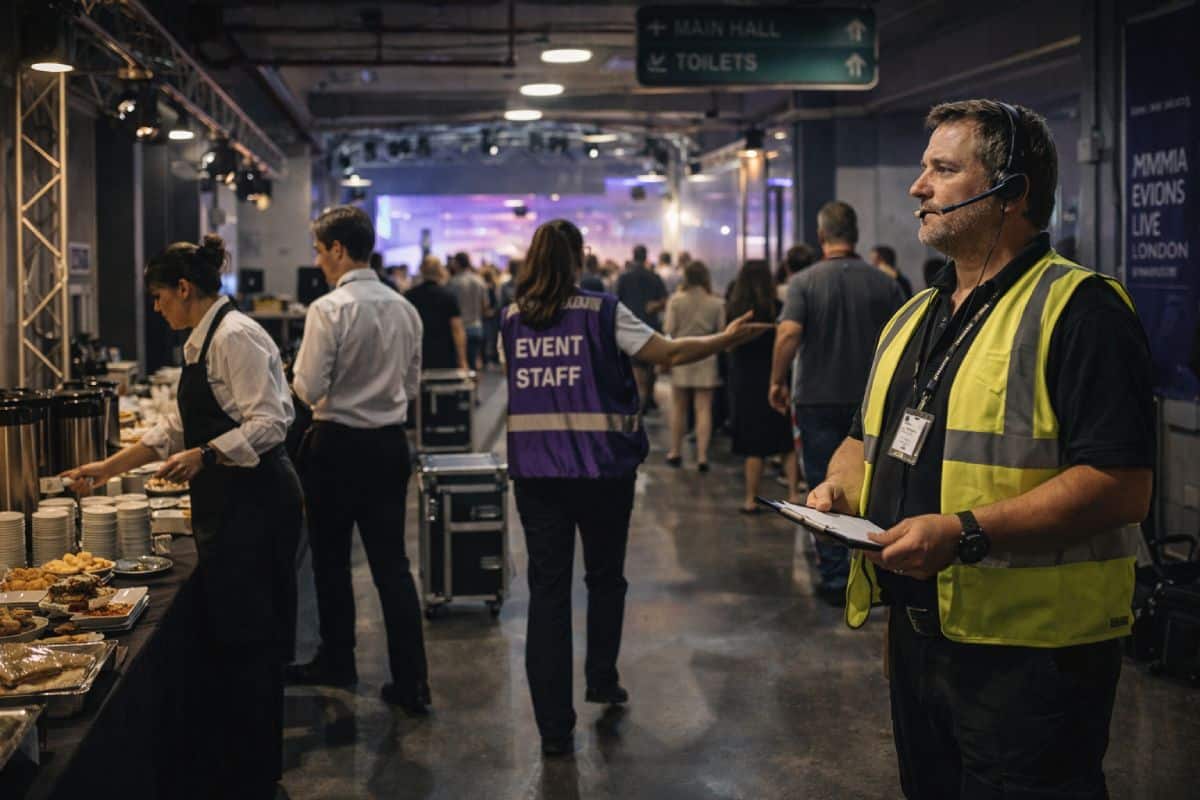
Experienced agencies share a set of common operational traits. They are not doing more work. They are doing the same work with less friction.
A well-run operation has one central database of workers, updated in real time with availability, skills, compliance status, and contact details. There is no version of the truth sitting in someone’s personal spreadsheet.
Scheduling happens in one system across every event, location, and client. Conflicts are caught before they create problems, not after. Changes are communicated once, to everyone affected, at the same time.
The agencies that run smoothly are the ones that removed the admin layer between a decision and its execution.
Compliance is built into the workflow. Right-to-work checks, certifications, and training records are tracked as part of the scheduling process, not chased separately before an event.
This is what Liveforce is built for.
Liveforce is a workforce management platform designed for event-led businesses that manage temporary and freelance teams across multiple projects, clients, and locations. It replaces the combination of spreadsheets, messaging apps, and disconnected tools that most agencies start with. It exists for the point at which basic rota tools stop scaling.
- Staff scheduling across multiple events and locations simultaneously, replacing disconnected spreadsheets and manual rotas.
- A centralised workforce database that replaces personal contact lists and outdated records, with instant visibility on availability.
- Automated shift communication that replaces WhatsApp chains and missed messages, so everyone receives the same briefing at the same time.
- Timesheet and payment tracking that reduces disputes and admin overhead after events close.
All of this is managed through event staff scheduling designed for the complexity of multi-client, multi-event operations.
FAQs
How much is the UK events industry worth?
The UK events industry is worth £68.7 billion, according to the UKEVENTS UK Events Report 2025. This represents growth from £61.6 billion the previous year, an 11.4% increase. Conferences and business meetings are the most valuable sub-sector, contributing £20 billion.
What industry is event management in?
Event management sits within the hospitality and service industries, with strong links to tourism, marketing, and business services. It covers conferences, festivals, sporting events, experiential marketing, and corporate events across the UK.
What are the current issues in the events industry?
The main challenges include talent shortages (73% of ESSA members reported recruitment difficulties in the last 12 months), rising operational costs driven by wage increases and supplier inflation, visa complexity affecting international participation, and geopolitical instability disrupting corporate travel.
What are the latest trends in the UK events industry?
Current trends include growing sustainability requirements across events of all sizes, continued adoption of hybrid formats, increasing use of technology in workforce management, and the UK’s rising status as a destination for international events. The NCASS forecasts 3 to 5% annual growth through 2027.
How do I get into the events industry?
Most careers in the UK events industry begin with temporary staffing roles in hospitality, festival crew work, or promotional events. Agencies recruit for these positions directly and manage their own workforce through scheduling platforms.