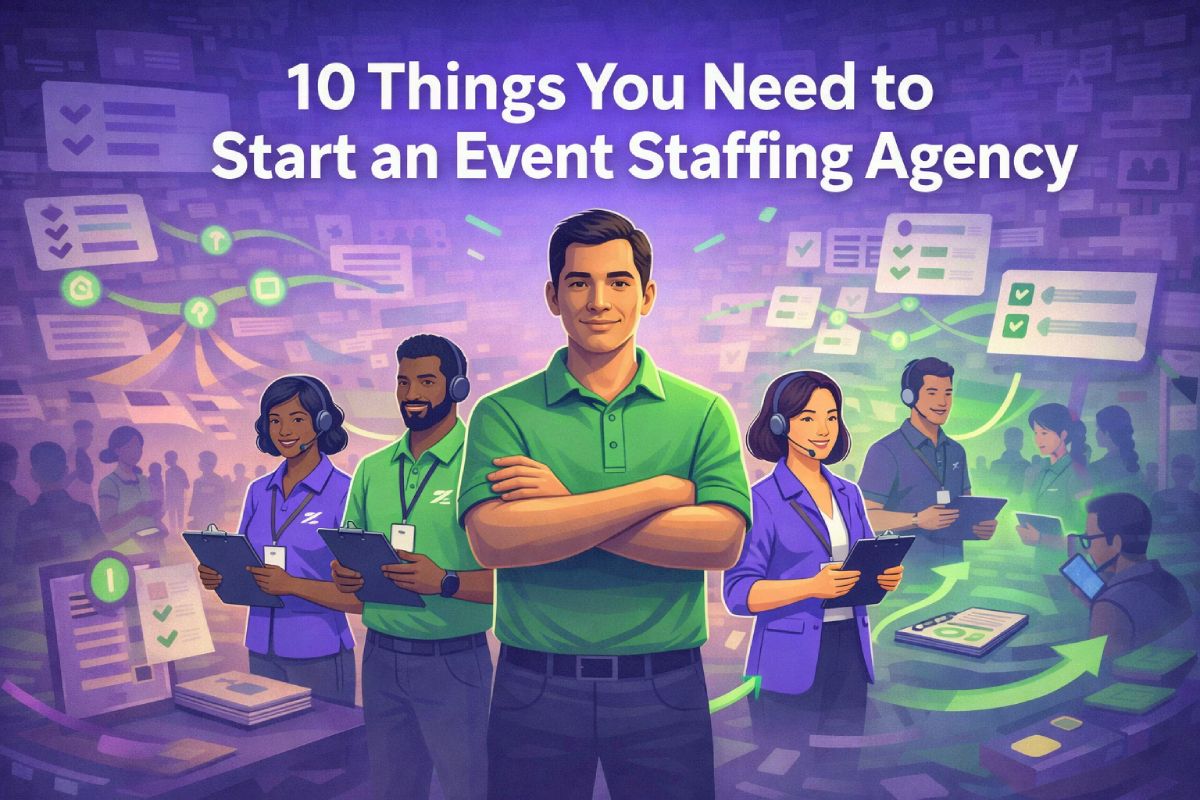
Starting an event staffing agency is very doable, but it is not simple.
On paper, it looks straightforward: find clients, find staff, fill shifts. In reality, it is one of the most operationally demanding businesses in the events industry, especially once jobs overlap and pressure builds.
The agencies that survive are not always the most ambitious. They are the ones who put the right foundations in place early, before volume, complexity, and expectations start to pile up.
This guide walks through the 10 things you genuinely need to start an event staffing agency, explained clearly and backed by real examples from how events actually run.
No fluff. No generic startup advice. Just what matters.
| # | What You Need | Why It Matters |
|---|---|---|
| 1 | A clear niche | Focus beats trying to serve everyone |
| 2 | Legal and compliance foundations | Protects your business and clients |
| 3 | A reliable workforce | Events fail without people |
| 4 | Strong client relationships | Repeat work keeps you alive |
| 5 | A scalable booking process | Manual systems break fast |
| 6 | Centralised staff communication | Prevents no-shows and confusion |
| 7 | Proper onboarding and compliance | Admin grows faster than you expect |
| 8 | Trusted timesheets and pay | Late pay destroys trust |
| 9 | Cash flow planning | Events are unpredictable |
| 10 | A mindset built for scale | Growth exposes weak systems |
Each of these looks simple. None of them is.
1. A Clear Niche Within the Events Industry
The biggest early mistake is trying to staff everything.
Festivals. Corporate events. Hospitality. Promo work. Stadiums.
It sounds flexible, but it is not.
What this looks like in the real world
An agency says yes to a corporate launch on Friday and a music festival on Saturday.
Different staff profiles. Different expectations. Different pressures.
By Sunday, the team is exhausted and quality drops.
Why does this become a problem
Without a niche:
- Hiring becomes unfocused
- Training is inconsistent
- Clients do not know what you specialise in
You end up being average at everything.
Getting this right from the start
Pick a lane you understand.
Build your first workforce, processes, and reputation around it.
You can expand later. Focus first.
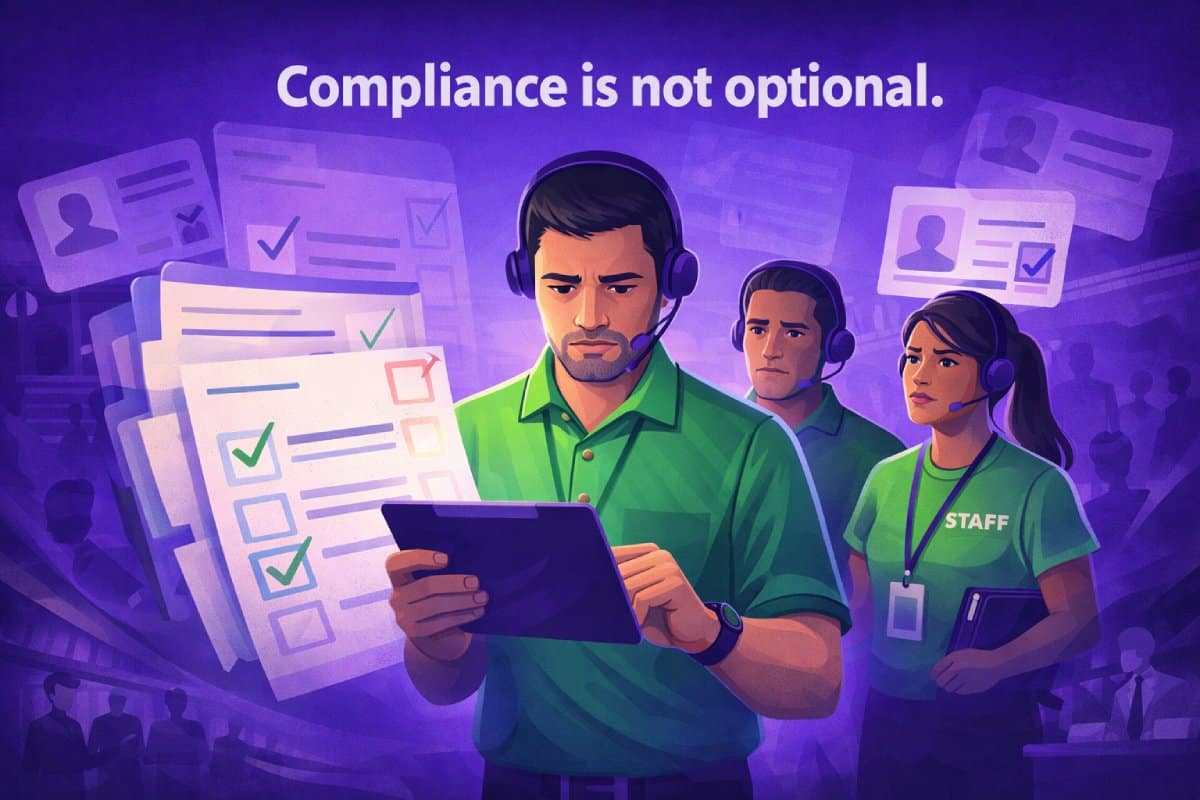
2. The Right Legal and Compliance Foundations
Compliance is not exciting.
But ignoring it is expensive.
What this looks like in the real world
A client asks for right-to-work confirmation two days before an event.
Documents are scattered across inboxes and folders.
Someone is missing. The client notices.
Why does this become a problem
Event staffing agencies operate under scrutiny.
Venues, councils, and brands expect compliance to be airtight.
If it is not:
- Contracts are delayed
- Events are at risk
- Trust disappears
Getting this right from the start
Set clear processes for:
- Contracts
- Right-to-work checks
- Insurance
- Data protection
Do this early, while volumes are manageable.
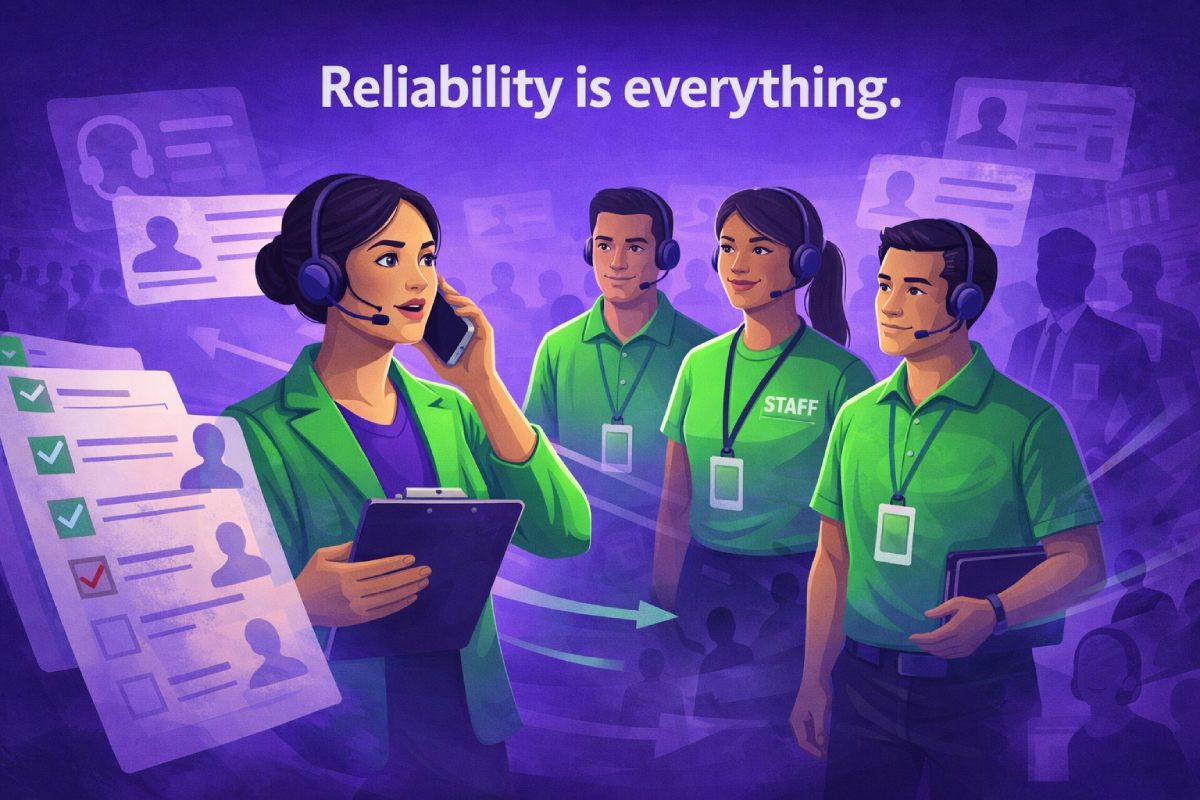
3. A Workforce You Can Actually Rely On
People are your product.
A database of names is not the same as a reliable workforce.
What this looks like in the real world
You book 30 staff for a Saturday event.
Five were cancelled the night before. Two do not reply. One turns up late.
Suddenly, you are firefighting.
Why does this become a problem
Availability changes constantly in events.
If you rely on goodwill alone, you will get burned.
Getting this right from the start
- Build relationships, not just numbers.
- Track availability properly.
- Reward reliability.
The strongest agencies know who they can trust under pressure.
4. Client Relationships Built on Trust, Not Price
Early on, it is tempting to compete on price.
That rarely ends well.
What this looks like in the real world
A client pushes for lower rates.
You agree, stretch your margins, and overpromise.
Why does this become a problem
Low-margin clients leave no room for mistakes.
Events always have mistakes.
Getting this right from the start
- Be clear about what you deliver.
- Set expectations early.
- Communicate clearly when things change.
Clients remember how problems are handled, not just outcomes.
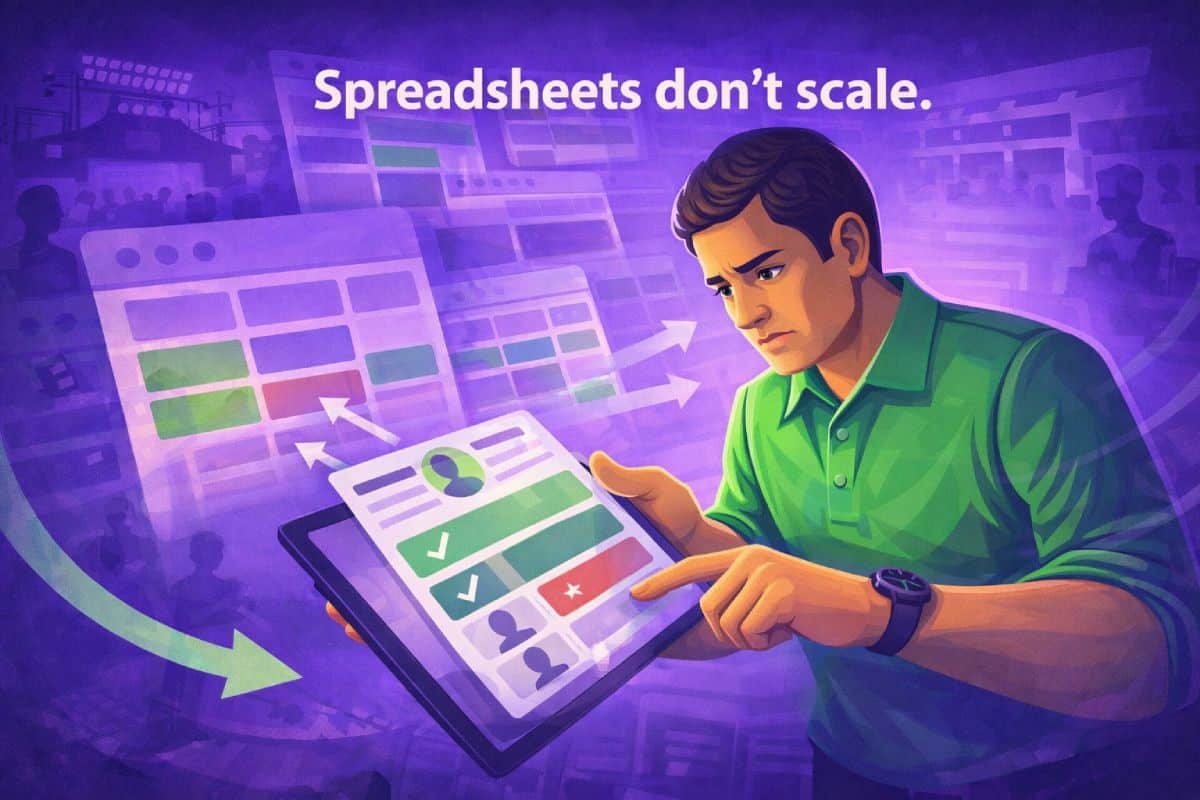
5. A Booking and Scheduling Process That Scales
Spreadsheets work.
Until they do not.
What this looks like in the real world
Multiple events. Multiple locations.
Someone double-books a staff member without realising.
You find out on the morning of the event.
Why does this become a problem
Manual scheduling creates:
- Errors
- Stress
- Lost time
As volume increases, mistakes increase too.
Getting this right from the start
Think about how bookings will work at:
- 10 staff
- 50 staff
- 200 staff
Systems that scale early save panic later.
6. Clear, Centralised Staff Communication
If communication is scattered, confusion is guaranteed.
What this looks like in the real world
Messages are sent via email, WhatsApp, and text.
Staff miss updates.
Call times change. Not everyone sees it.
Why does this become a problem
Events move fast.
Staff need one clear source of truth.
Multiple channels create noise, not clarity.
Getting this right from the start
- Centralise communication.
- Keep updates consistent.
- Make it easy for staff to know where to look.
This alone reduces no-shows significantly.
7. Onboarding and Compliance That Does Not Break Under Pressure
Onboarding one person is easy.
Onboarding fifty in a week is not.
What this looks like in the real world
A new client lands a big contract.
You need to onboard dozens of staff quickly.
Paperwork piles up. Admin slows delivery.
Why does this become a problem
Growth exposes weak onboarding fast.
Admin becomes the bottleneck, not sales.
Getting this right from the start
- Design onboarding as a process, not a task.
- Assume volumes will increase.
- Remove manual steps wherever possible.
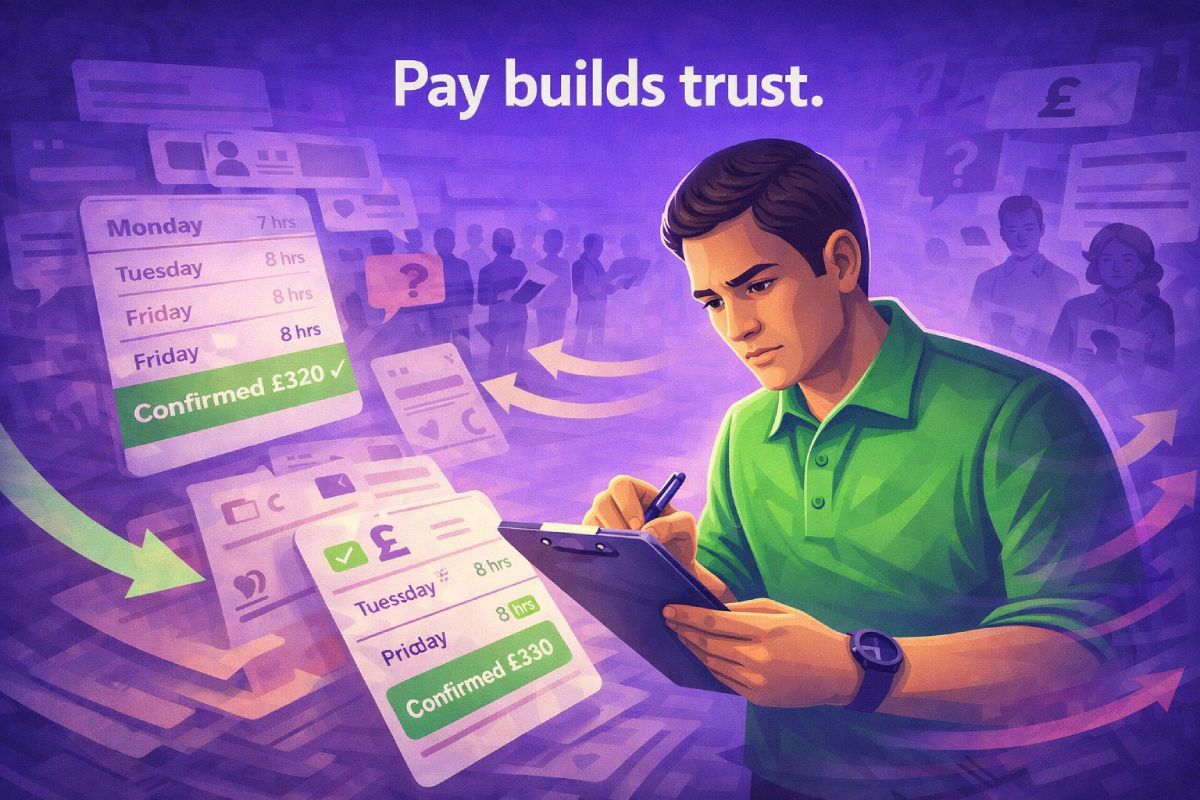
8. Timesheets and Pay That Staff Trust
Pay is emotional.
If it goes wrong, everything else suffers.
What this looks like in the real world
A busy weekend ends.
Timesheets are collected manually.
Errors creep in.
Staff chase payments all week.
Why does this become a problem
Late or incorrect pay damages trust fast.
Reliable staff stop accepting shifts.
Getting this right from the start
- Create clear timesheet rules.
- Confirm hours quickly.
- Pay on time, every time.
This is non-negotiable.
9. Cash Flow Planning for an Unpredictable Industry
Revenue does not equal cash.
This catches many agencies out.
What this looks like in the real world
You pay staff weekly.
Clients pay in 30 or 60 days.
A quiet month follows a busy one.
Why does this become a problem
Events are seasonal and unpredictable.
Without a buffer, growth creates risk.
Getting this right from the start
- Plan for gaps.
- Build reserves early.
- Avoid assuming every month will look like the last.
Cash flow keeps the doors open.
10. A Mindset Built for Scale, Not Survival
Hustle gets you started.
Structure keeps you going.
What this looks like in the real world
An agency grows fast.
Processes stay informal.
The founder becomes the bottleneck.
Everything depends on them.
Why does this become a problem
Growth magnifies inefficiencies.
What worked at a small scale collapses under pressure.
Getting this right from the start
- Build systems as if you will grow.
- Document decisions.
- Remove single points of failure.
This is how agencies move from survival to stability.
If you’re still in the early stages, this builds on our full guide to starting your own event staffing agency, which walks through the setup step by step.
Starting an event staffing agency is not about having the best idea.
It is about building something that works when events get messy.
Because they always do.
- The agencies that succeed focus less on shortcuts and more on structure.
They invest early in clarity, systems, and people. - If the plan is to grow beyond a handful of events, the foundations you choose now will shape everything that follows.
If you want to see how established agencies manage staff, communication, compliance, and scale without chaos, book your Liveforce demo now.
FAQs
What do you actually need to start an event staffing agency?
You need more than staff and clients. You need clear processes for booking, communication, onboarding, compliance, pay, and cash flow. Without systems, agencies struggle as soon as volume increases. Liveforce helps you put these foundations in place early.
Why do most event staffing agencies struggle to scale?
Most agencies grow faster than their systems. Manual processes, scattered communication, and unreliable scheduling create mistakes under pressure. Scaling works when structure is built before demand spikes, not after.
How important is having a niche in event staffing?
It is critical. Trying to staff every type of event leads to unfocused hiring, inconsistent training, and unclear positioning. Agencies that start with a clear niche build stronger teams and more reliable client relationships.
What causes no-shows and staffing issues at events?
The most common causes are unclear communication, last-minute changes, and reliance on informal processes. Centralised scheduling and a single source of truth reduce confusion and improve reliability. This is where platforms like Liveforce make a measurable difference.
When should you invest in systems like Liveforce?
Earlier than most people think. If you wait until the admin feels overwhelmed, you are already behind. Liveforce is designed to support agencies as they grow, helping you move from survival mode to scale with confidence.