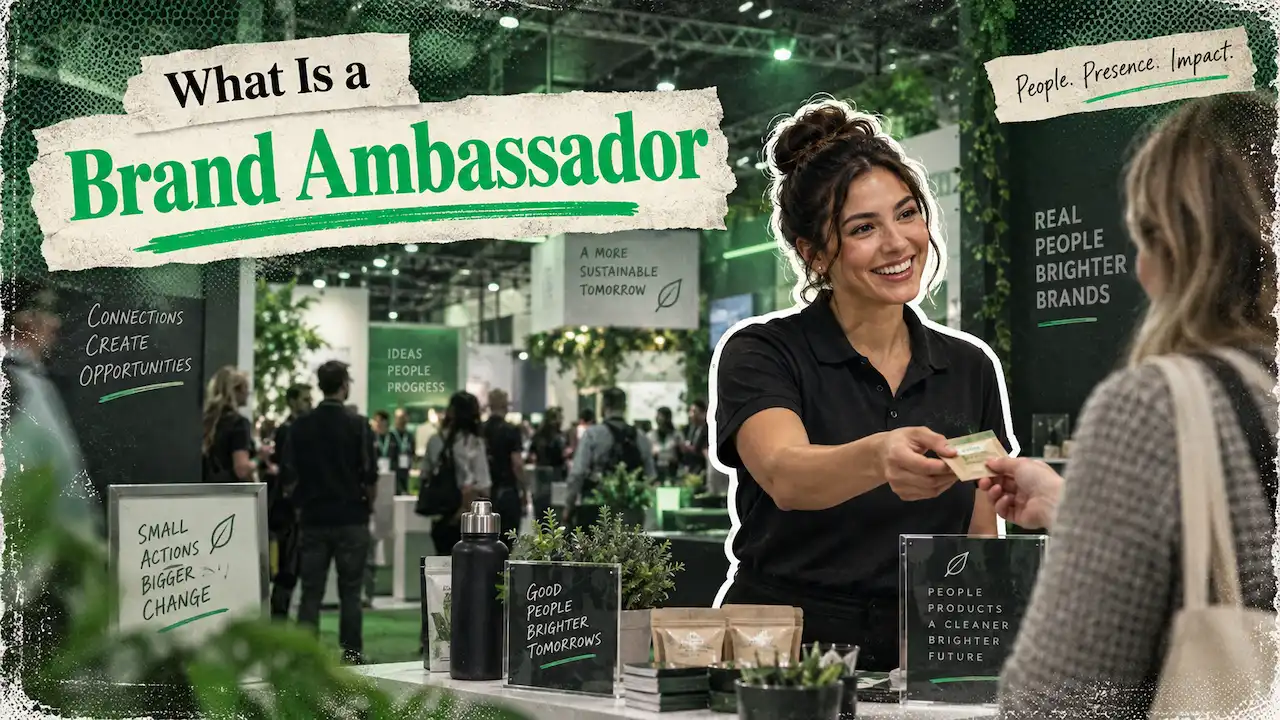
A brand ambassador is a person hired to represent a company at a live event, engaging directly with the public and communicating brand values face to face. They are the human layer between a brand and its audience at activations, trade shows, festivals, and promotional campaigns.
Brand ambassadors are deployed across many activation types
A brand ambassador is a person hired to represent a company at a live event, engaging directly with the public and communicating brand values face to face.
In experiential marketing, they are the human layer between a brand and its audience, the person who makes an activation feel real rather than staged.
So what is a brand ambassador in practice?
The role covers product demonstrators at trade shows, street teams at festivals, and promotional staff at retail activations, but the principle is consistent across all of them.
For event staffing agencies, the definition is the easy part. The harder question is what it takes to deploy brand ambassadors well across multiple clients and campaigns simultaneously.
Agencies running promo staffing solutions at scale know this well: briefing failures, availability gaps, and inconsistent performance are the operational problems that cost agencies client confidence.
They are almost never people problems. They are system problems.
This article covers what brand ambassadors do at events, what makes this type of staffing operationally demanding, and how experienced agencies build the processes that allow their ambassadors to perform consistently.
The ambassador’s performance on the day reflects the agency’s preparation before it.
Why does this question keep coming up in event staffing
Brand ambassador event staffing is one of the most common services experiential marketing and promotional agencies provide, but it is also one of the most inconsistently managed.
The role is well understood in general terms.
What agencies struggle with is the operational side: how to brief, schedule, and communicate reliably across a freelance pool that changes from campaign to campaign.
The volume of queries around brand ambassador meaning and brand ambassador staffing reflects a real gap in how the industry approaches the role. Most content defines what a brand ambassador is from the perspective of someone wanting to become one.
Agencies need the other perspective: what does it take to manage a team of brand ambassadors across five clients and twelve events in the same month.
The brief is the most important document in any brand ambassador campaign, and most agencies underinvest in it.
What most agencies get wrong
The most common operational failure in brand ambassador staffing is treating the briefing as an afterthought. Agencies select staff, confirm availability, and then send a document via WhatsApp the evening before the event.
By that point, there is no time to fix misunderstandings, confirm that the brief has been read, or make changes if the client has updated their requirements.
A second failure is not tracking campaign history.
- Which ambassadors have worked food and drink sampling before?
- Which ones have represented a technology brand at a trade show?
Without that information stored centrally, agencies default to booking whoever is available rather than whoever is best suited. Over time, that approach produces inconsistent results that are hard to diagnose because the agency does not have the data to see the pattern.
The third failure is managing multiple client campaigns through the same general communication channels.
When a group message serves five different clients, the risk of the wrong information reaching the wrong ambassador is constant.
Agencies that grow past a small freelance pool without changing their communication infrastructure tend to discover this problem through a client complaint rather than through their own monitoring.

What a brand ambassador brief needs to cover
Experienced agencies treat the brief as a structured document, not a quick message. At a minimum, it should include:
- The brand’s key messages and the specific talking points for this campaign
- The target audience at this particular event and how to approach them
- Visual presentation standards, dress code, and any brand guidelines
- What the ambassador should do if a question arises they cannot answer
- The on-the-day contact and what to do if something goes wrong
Distributing that brief through a system that confirms receipt changes the briefing from a task the agency completes to a process the agency controls.
What experienced agencies do differently
Agencies that manage brand ambassador staffing well at scale have three things in common: a central database, structured communication, and a scheduling process that accounts for campaign history, not just availability.
A database that does more than store names
A freelance workforce database becomes operationally useful when it holds more than contact details. Campaign history, skill sets, activation types worked, and compliance status should all be accessible from one place.
When an agency is building a team for a spirits sampling campaign, the ability to filter for ambassadors who have worked that category before and confirm their availability in the same step saves hours compared to working from a spreadsheet and a phone.
For agencies managing promotional staffing across multiple clients, that database is the foundation everything else is built on.
Rebooking ambassadors who performed well is the most reliable way to raise campaign quality without increasing recruitment cost.
Communication that reaches every ambassador
Brand ambassador campaigns fail at the briefing stage more often than at the delivery stage. Structured communication means briefings are sent through a channel the agency can track, confirmation of receipt is recorded, and updates reach every affected ambassador when plans change.
Liveforce’s communication tools replace the group message thread with a platform where briefings, updates, and confirmations are all logged. The agency knows who has read the brief and who has not, before the event starts rather than after.
Scheduling built around suitability, not just availability
When agencies manage multiple brand ambassador campaigns simultaneously, scheduling from a shared view of the workforce prevents double bookings and last-minute replacements that damage client relationships.
The benefits of brand ambassadors for events only materialise when the right people are assigned to the right campaign, which requires more information than a shared calendar can hold.

How Liveforce supports brand ambassador staffing
Liveforce is a workforce management platform built for event staffing agencies managing large freelance teams across multiple clients. For agencies running brand ambassador staffing, it addresses three areas where fragmented systems cause the most damage.
The staff database holds everything the agency needs to make informed scheduling decisions:
- Campaign history and activation types worked by each ambassador
- Skills, presentation standards, and sector experience
- Compliance documents and expiry dates, visible before deployment
- Availability across the full freelance pool in one view
It replaces the spreadsheets and personal contact lists that most agencies outgrow long before they replace them.
When briefings go out through Liveforce, the agency can see confirmation at the individual level.
Updates pushed through Liveforce’s communication tools reach every ambassador on the campaign, not just the ones who happen to check a group chat. That single change removes the most common cause of on-the-day briefing failures.
After the event, hours, performance notes, and compliance records sit in the same system, ready for the next campaign for that client. For agencies asking what is a brand ambassador operation supposed to look like at scale, the answer is straightforward: scheduling, communication, and workforce data held together rather than spread across four different tools.
Brand ambassador staffing: with and without a system
| Without a system | With Liveforce | The difference |
|---|---|---|
| Briefings sent via WhatsApp with no read confirmation | Briefings sent through the platform with tracking | Every ambassador arrives prepared |
| Availability checked by phone or text before each campaign | Availability visible centrally across the whole pool | Scheduling takes minutes, not hours |
| Campaign history stored in personal spreadsheets or lost | Campaign history held in each ambassador’s profile | Best performers get rebooked with confidence |
| Last-minute changes sent late, causing no-shows | Changes pushed instantly through the platform | Fewer surprises on the day |
| Compliance documents stored across email inboxes | Compliance held centrally per ambassador profile | Agencies can confirm status quickly when clients ask |
Swipe to see more →
The operational question behind the job title
Defining what is a brand ambassador takes one sentence. Building the operational infrastructure that makes brand ambassadors perform consistently across campaigns takes considerably more.
The agencies that invest in that infrastructure, centralised databases, structured briefings, and reliable communication, are the ones whose clients return, not because their ambassadors are inherently better, but because the system behind them is.
For agencies still running brand ambassador staffing through spreadsheets and group messages, the question is not whether the current approach works. It probably does, up to a point. The question is where that point is, and what a single briefing failure at the wrong moment costs in client confidence.
Liveforce is built for the point where manual systems start costing more than they save. Find out more about how it supports brand ambassador event staffing operations by booking a demo.
Frequently asked questions
What is a brand ambassador in event staffing?
A brand ambassador in event staffing is a hired representative who engages directly with the public on behalf of a brand at live events, activations, or promotional campaigns. The role focuses on communication, brand representation, and creating positive audience experiences rather than general event logistics.
What do agencies look for when selecting brand ambassadors for a campaign?
Agencies prioritise communication confidence, relevant activation experience, and a track record of reliability. An ambassador who has worked the same type of campaign before needs less preparation and produces more consistent results. Compliance documentation and professional presentation standards are also standard selection criteria.
What is the difference between a brand ambassador and a promotional model?
A promotional model typically focuses on brand presence and visual representation, particularly in trade show and exhibition settings. A brand ambassador role places greater emphasis on direct communication, conveying specific messages, and building engagement with attendees. In practice the roles overlap, and many agencies manage both under the same operational system.
How many brand ambassadors does an event typically need?
It depends on the scale of the activation and the campaign objectives. A product sampling campaign at a large festival may require a team of ten or more across a full day. A focused trade show stand may need two or three. Agencies calculate staffing levels based on expected footfall and the depth of interaction required per visitor.
How do agencies manage brand ambassadors across multiple events?
Agencies managing brand ambassador staffing across multiple simultaneous campaigns need a central system for availability tracking, briefing distribution, and communication. Without that structure, the risk of briefing failures, scheduling clashes, and inconsistent delivery increases significantly as client volume grows.