Promotional staff are temporary workers hired to represent a brand at live events and public-facing campaigns. They sample products, run live demonstrations, hand out leaflets, capture data and talk directly to consumers.
The term covers a wide range of roles:
- Brand ambassadors at trade shows,
- Sampling teams in supermarkets,
- Promotional models at product launches.
If a brand wants a real person engaging a real audience face to face, promotional staff are the ones doing it.
Brands and experiential agencies rely on promotional staff because live interaction still beats passive advertising in terms of trust and recall. According to Freeman, 80% of consumers say in-person events are the most trusted way to find out about new products.
That puts the quality and management of promotional staff at the centre of whether a campaign lands or falls flat. The agencies supplying these teams often manage hundreds of freelancers across multiple clients, campaigns and cities at the same time.
This article covers the main types of promotional staff and what each role involves.
What Types of Promotional Staff Exist and What Does Each One Do?
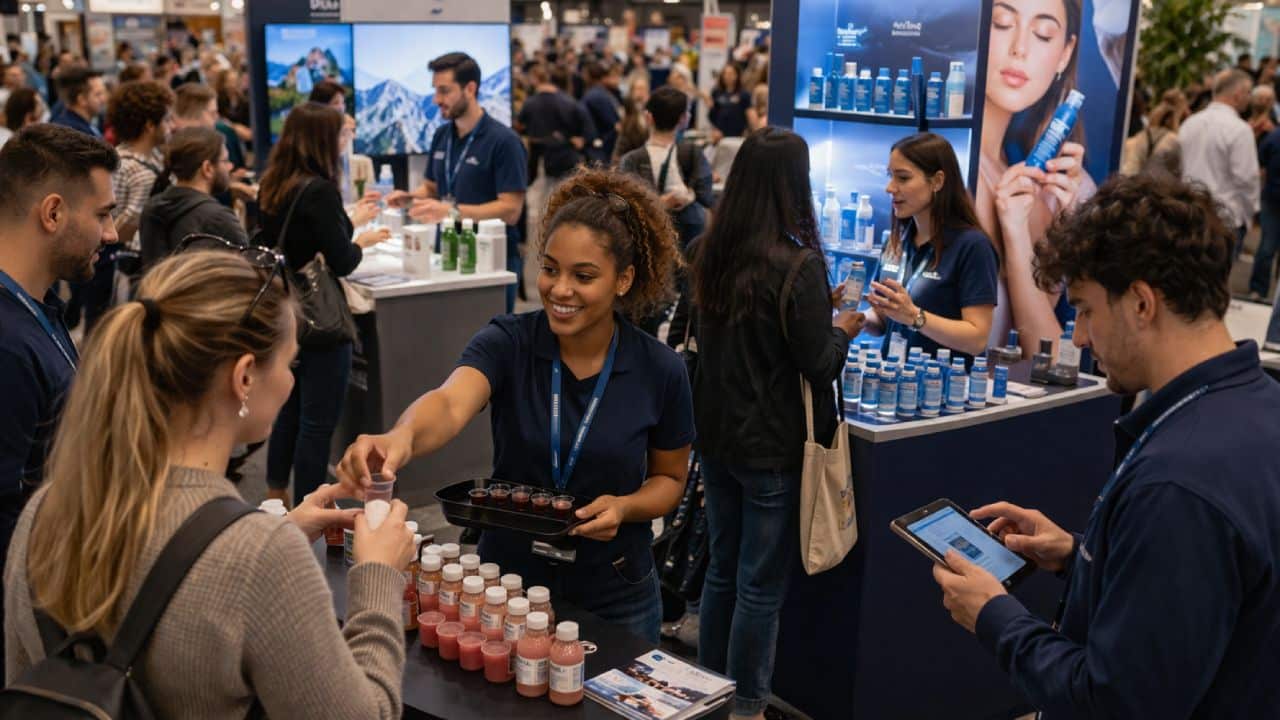
“Promotional staff” is a broad term. It covers several distinct roles, each suited to a different type of campaign, audience and setting. Understanding the differences helps brands write better briefs. It also helps agencies assign the right people to the right jobs.
Brand ambassadors are the most commonly booked type. Their job is to represent a brand in person at experiential activations, exhibitions or launch events. They need to communicate clearly, stay on message and hold a conversation with anyone who approaches the stand.
A strong brand ambassador knows the product, understands the campaign goals and adjusts their approach depending on who they are speaking to.
The right type of promotional staff for a campaign depends on the objective, not the budget.
Sampling staff focus on product distribution. Supermarket tastings, street-level giveaways and festival campaigns all use this role. These staff need to be approachable and fast. They have to stop people mid-stride and start a conversation within seconds.
In retail settings, they often work alongside store managers and must follow location-specific rules on placement and hygiene.
Exhibition staff work trade shows, conferences and industry expos at venues like ExCeL London, the NEC Birmingham and Olympia. Their role combines lead generation, product explanation and stand hosting. They need enough product knowledge to answer trade visitors’ questions and enough awareness to qualify leads quickly.
Data capture staff collect contact details and survey responses, usually in exchange for competition entries or product samples. They carry tablets or clipboards and need to be efficient without being pushy. This role appears at shopping centres, retail locations and large public activations.
Promotional models work at events where physical presentation is part of the brief. Automotive launches, fashion pop-ups and drinks promotions are typical settings. The scope of the role varies by client, but it sits within the broader promotional staff category.
Types of promotional staff at a glance
| Type of promotional staff | Primary role | Typical environment |
|---|---|---|
| Brand ambassador | Represent a brand through direct conversation and engagement | Experiential activations, product launches, exhibitions |
| Sampling staff | Distribute product samples and explain features to the public | Supermarkets, high streets, festivals, train stations |
| Exhibition staff | Host stands, generate leads and explain products to trade visitors | Trade shows, conferences, expos (ExCeL, NEC, Olympia) |
| Data capture staff | Collect contact details and survey responses from the public | Shopping centres, retail environments, large activations |
| Promotional model | Present products where visual presentation is part of the brief | Automotive launches, drinks promotions, fashion pop-ups |
| Leafleting staff | Distribute flyers and printed materials in high-footfall areas | City centres, train stations, event entrances |
Each role needs different skills. Brand ambassadors need product knowledge and conversational confidence. Sampling staff need speed and approachability. Briefing every role the same way is one of the fastest routes to a campaign that underperforms.
Where Do Promotional Staff Work and What Environments Suit Them?
Promotional staff work in a wide range of settings. The environment shapes everything: how a campaign is planned, how staff are briefed and what can go wrong. A team inside a controlled exhibition hall faces very different challenges to one working a busy high street in January.
- Trade shows and exhibitions are among the most common environments. Venues like ExCeL London, the NEC and Olympia draw thousands of trade visitors over multiple days. Staff at these events typically need formal dress, strong product knowledge and the stamina for long shifts. They are representing a brand that may have spent tens of thousands of pounds on a stand. Performance expectations are high.
Where promotional staff work determines how they need to be briefed, dressed and managed.
- Street-level and retail campaigns place promotional staff in supermarkets, shopping centres, train stations and city centres. These settings are far less controlled. Staff deal with weather, crowds, store policies and security rules that change by location. Agencies often run the same activation across 20 or 30 sites at once. That creates a scheduling and communication challenge most brands never see.
- Experiential activations and brand pop-ups are built around a single creative concept. They might appear at festivals, in car parks, on rooftops or inside empty retail units. Staff need to understand the mechanics of the activation and explain a product story that matches the creative. Festivals and outdoor events add another layer. Early arrivals, all-weather shifts, site safety rules and changing schedules are all part of the job.
- Corporate events, product launches and press days sit at the formal end. Promotional staff at these events act as hosts. They manage guest registration, direct attendees and keep the event running smoothly. The brief here prioritises presentation, reliability and discretion over sales energy.
What Makes a Promotional Staffing Campaign Succeed or Fail?
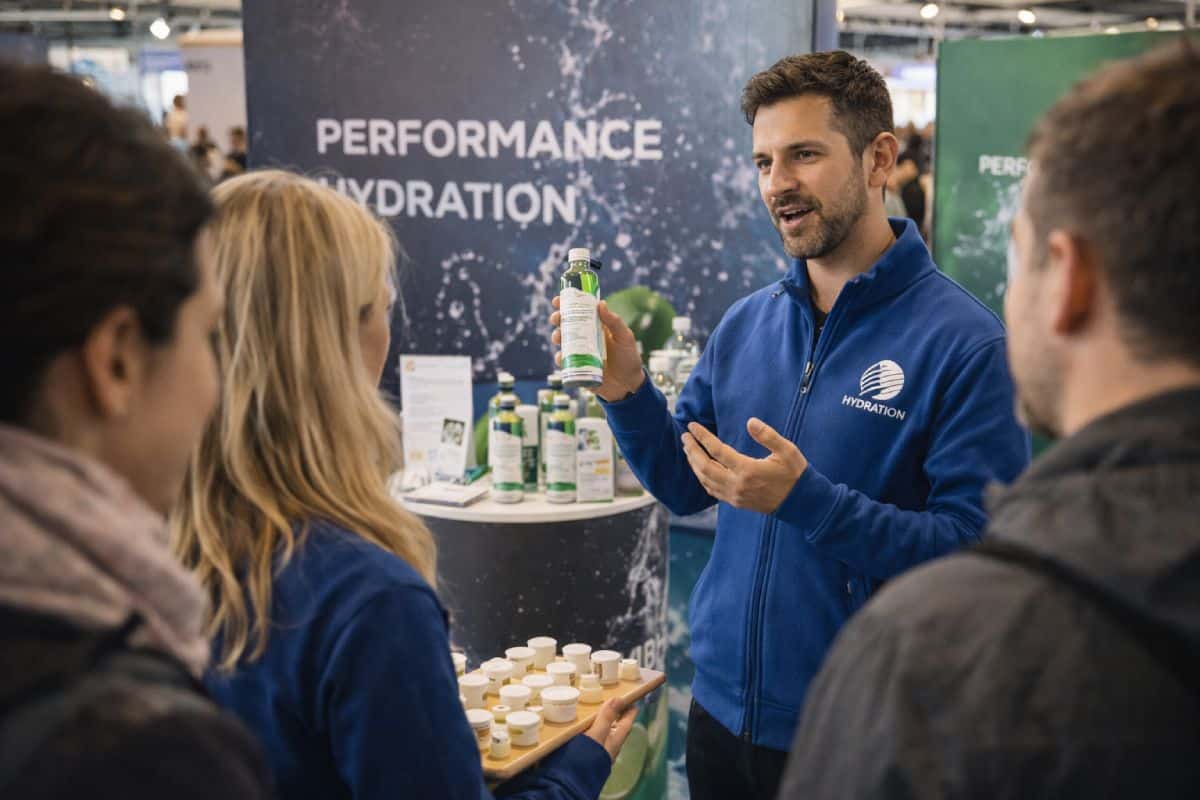
Most brands assume the success of a promotional staffing campaign comes down to finding the right people. That matters. But the operational side of running the campaign is where things most often go wrong.
How staff are briefed, scheduled, communicated with and tracked makes or breaks the result.
Briefing quality is the single biggest factor. A clear brief gives promotional staff everything they need to represent a brand with confidence. At a minimum, it should cover:
- The key messages staff need to communicate and the language they should use.
- A do-and-don’t list covering behaviour, claims and competitor mentions.
- The dress code, including whether branded clothing will be provided on site.
- Location details, site access instructions and local contact information.
- Expected outcomes: samples distributed, leads captured or conversations held.
When briefings are vague or arrive too late, staff turn up unsure of what to say. They guess the dress code. They wing the product message. The brand pays for it.
A campaign with great staff and a weak brief will always underperform one with average staff and a strong brief.
Scheduling is the second pressure point. A promotional staffing agency running a nationwide sampling campaign might need 40 people across 15 cities in a single weekend. Every location has a different start time, different site contacts and different access rules. Manage that through spreadsheets and the risk of double-bookings and coverage gaps grows with every location added.
Communication during the campaign is where many agencies struggle most. On live campaigns, things always change. A venue moves the activation area. A client adds a last-minute location. A team member drops out the night before. Without a centralised communication channel, these updates travel through WhatsApp groups, phone calls and text chains. Nobody has the full picture.
Confirmation and tracking close the loop. The agency needs to know that staff received their brief, confirmed their shift and arrived at the right place at the right time. For agencies billing clients on confirmed attendance and hours worked, this is the foundation of their revenue. Manage it manually and disputes are almost guaranteed.
How Do Agencies Manage Promotional Staff Across Multiple Campaigns?
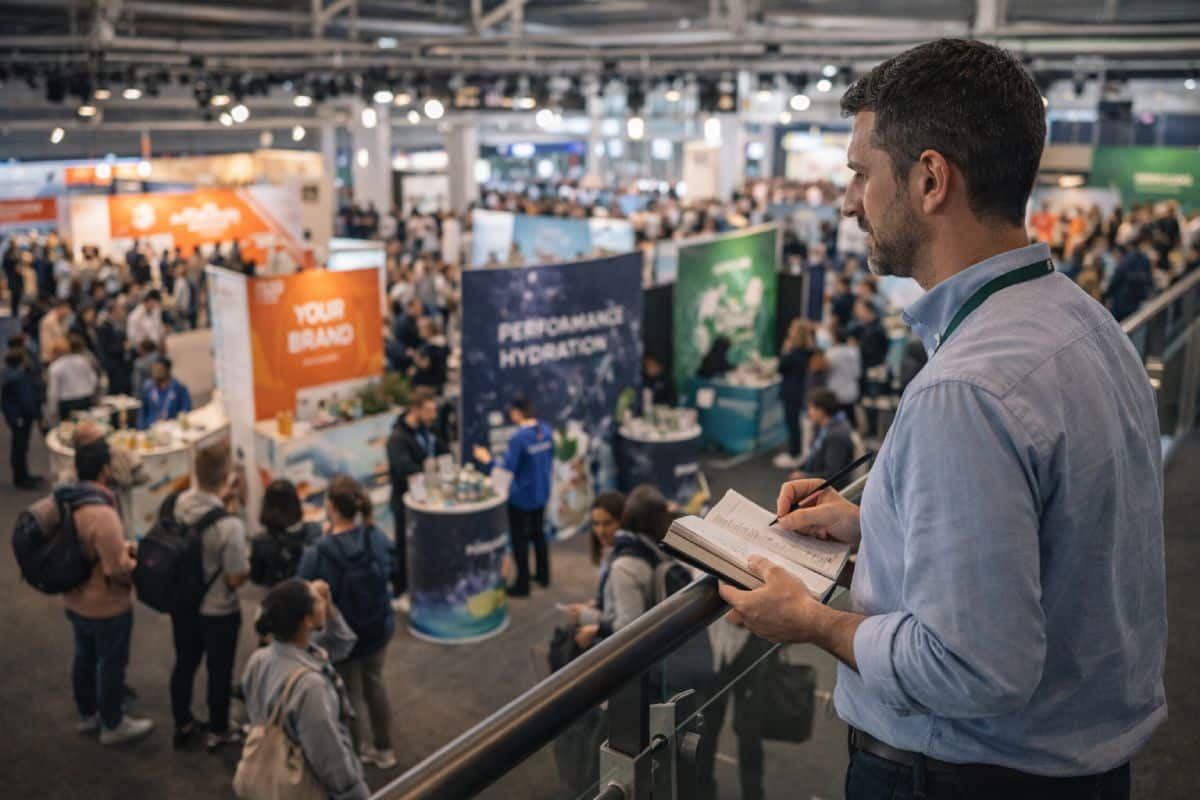
From the outside, promotional staffing looks simple. Book a team, write a brief, show up on the day. But the agency behind that team is usually running several other campaigns at the same time.
- Different clients.
- Different cities.
- Overlapping schedules.
- Shared staff pools.
This is the operational layer that most content about promotional staff ignores entirely. The agency needs to know who is available on which dates, who has the right skills for each campaign, who has been briefed and who has not. They also need to catch double-bookings before two clients end up short-staffed on the same morning.
The agencies that deliver consistent results are the ones that have replaced scattered tools with one operational system.
Most agencies start with spreadsheets, WhatsApp groups and email.
These tools work when the operation is small. Once the agency is running five or six campaigns at once, the spreadsheet becomes unreliable. The WhatsApp group becomes noisy. The email trail becomes impossible to follow. A staff member confirms in one thread and cancels in another, and nobody spots it until the morning of the event.
This is the problem that workforce management platforms solve.
Promo staffing agencies use platforms like Liveforce to bring scheduling, briefing, availability tracking and shift confirmation into one central system. Instead of bouncing between spreadsheets and messaging apps, the agency runs everything from one place.
When a promotional staffing agency uses Liveforce, the day-to-day workflow changes in four specific ways:
- Scheduling is handled from a central schedule book showing every campaign, shift and staff assignment in one view.
- Staff receive briefs through the platform, not through forwarded emails or PDFs in group chats.
- Availability is tracked in real time, so the operations team sees who is free, experienced and already booked.
- Shift confirmations come back through the system, not through WhatsApp replies buried in a thread.
The communication tools built into the platform replace scattered group chats and phone trees. When a location changes or a shift time moves, the update reaches the right people through one channel. The Crew App gives staff a single place to view shifts, confirm availability and receive updates.
That cuts the volume of inbound messages the agency has to handle.
For agencies billing by the hour, the timesheet and payment tracking removes the manual reconciliation that causes delays and disputes. Hours are recorded against shifts, approved by managers and processed from the same system. Fewer errors. Faster payments. Less friction.
Promotional staff are the face of the brand. The agency behind them is the engine that makes it work.
The difference between an agency that delivers consistently and one that firefights constantly usually comes down to operations. Not the size of their roster.
Brands that ask the right questions about how an agency manages its workforce are far more likely to find a partner that delivers reliably across multiple campaigns.
What Brands Should Ask Before Booking Promotional Staff
Understanding what promotional staff are is the easy part. The harder question is how the agency behind them actually runs its operation.
Before booking:
- Ask the agency how they brief their teams.
- Ask how they handle last-minute changes.
- Ask how they confirm attendance and manage scheduling when multiple campaigns overlap.
An agency with clear answers has built a system around its workforce. One that hesitates or defaults to “we manage it by email” will run into problems as complexity grows.
The promotional staff standing in front of your audience are only as good as the system that prepared them, scheduled them and got them there on time. That operational layer is where the real value of a staffing agency sits.
It is the part worth paying attention to.
Frequently asked questions
What is the difference between promotional staff and event staff?
Promotional staff focus on brand representation, product engagement and direct audience interaction. Event staff focus on operational logistics: registration, guest management and venue support. Many campaigns use both, but their objectives are different.
What does a brand ambassador do at a live event?
A brand ambassador represents a company by engaging the public, communicating key messages, demonstrating products and answering questions. They are briefed on the brand, the campaign goals and the target audience before the event.
How do promotional staffing agencies brief their teams before a campaign?
Agencies issue a written brief covering the brand, campaign objectives, dress code, location details, key messages and any rules. Strong agencies distribute briefs through a centralised platform rather than relying on email attachments or group chats.
What types of events use promotional staff?
Trade shows, exhibitions, product launches, sampling campaigns, brand activations, experiential pop-ups, festivals, retail promotions, corporate events and press days. Any event where a brand wants face-to-face engagement is a candidate.
How do agencies manage promotional staff across multiple campaigns at the same time?
They use workforce management platforms to schedule staff, track availability, distribute briefs and confirm shifts from one system. This replaces the spreadsheets, emails and messaging apps that most agencies start with but outgrow as they scale.