Good event sponsorship ideas give attendees something useful and give the sponsor proof that it worked.
Here are 15, grouped by event type:
- Conferences suit hosted lounges, workshops, registration desks and coffee bars.
- Trade shows suit demo stages, stand trails and meeting pods.
- Festivals and sports events suit sampling, named stages, water stations and finish lines.
- Ambassador teams, content studios, virtual lounges and livestream segments complete the list.
These event sponsorship ideas are for organisers selling sponsorship at conferences, trade shows, festivals and sports events. The sponsor’s agency will recognise the delivery side too.
Personal “sponsor me” fundraising is a different task. Every idea here is a promise of people on the day: hosts, samplers, marshals and moderators.
Running them takes the same habits as staffing for festival and event sites. You build rotas early and send briefings that reach the right crew before doors open.
How to Choose Event Sponsorship Ideas You Can Deliver
Choose event sponsorship ideas that the sponsor wants, attendees will use, and your team can run on the day.
A logo on a banner is passive placement and needs almost nobody. An activation puts something live in front of attendees, and someone has to run it all day. Sell the ideas you can staff, brief and prove, and sponsors come back.
Test every idea against three questions before it goes into a package:
- The sponsor’s goal: Is the sponsor buying awareness, leads, sampling or content? The answer decides what you count on the day.
- The attendee’s reason to stop: People stop for something useful or fun. An idea nobody stops for leaves the sponsor with an empty report.
- The delivery load: Who runs it, who briefs them and what gets counted? Put a name against each answer.
Practical needs belong in the package from the first draft. Power, Wi-Fi, build time, insurance and waste all change what an idea costs to deliver. The staffing cost belongs in the package price too, since hosts and crew are part of what the sponsor buys.
Keep one plan per sponsor per event date. The sponsor calendar and the shift plan then agree on what happens when.
Event Sponsorship Examples by Event Type
The planner below sets out all 15 event sponsorship ideas by event type. Filter by the events you run, then check who usually delivers each idea and how heavy its staffing load is.
Conference Sponsorship Ideas That Give Attendees Something Useful
Conference sponsors want time with decision-makers. The strongest event sponsorship ideas at a conference give attendees a reason to sit down and talk.
1. Hosted Networking Lounges
A hosted lounge gives attendees a quiet place to sit, charge a phone, and meet people. The organiser runs the space with its own hosts, and the sponsor brings product specialists. A custom-built lounge needs more build time than a shell-scheme stand, and more hosting hours.
Agree the opening hours in the package, because a lounge left unstaffed reflects badly on the sponsor.
On the day, plan a host rota that covers every open hour, plus a door count. Brief the hosts on who the sponsor wants to meet, so introductions happen on purpose. The sponsor gets visits counted, meetings booked, and photos of the lounge in use.
2. Sponsored Workshops and Breakout Sessions
Hands-on workshops give sponsors visibility without turning the room into a sales pitch. That works when the content stays educational, and the organiser approves it in advance. The sponsor supplies the speaker, and the organiser checks the session against the programme. Each room needs a host, an AV technician and a timekeeper who keeps sessions to schedule.
Academic and scientific events can offer sponsored poster sessions or a named session chair. Attendance per session and feedback scores go into the report. These rooms sit inside the wider plan for staffing a conference or networking event.
3. Registration Desk and Badge Sponsorship
Every attendee passes the registration desk, so the sponsor’s name is the first one people see. The registration crew often wears the sponsor’s colours on the day. That means a uniform brief and sizes collected weeks before the event.
Lanyard sponsorship works the same way, with even less crew time. Count badges issued and photograph the branded desk.
4. Coffee, Charging and Wellness Bars
Utility sponsorship is the kind of sponsorship attendees thank the sponsor for. A coffee bar or charging station solves a real need between sessions. A wellness space, such as a stretch area or quiet room, needs a host who keeps it calm.
Plan a barista or attendant for every shift, set restock times and agree on where the queue forms. Count serves or charges, and take photos at the busiest hour.
Trade Show Sponsorship Ideas Built for Footfall and Leads
Trade show sponsors measure leads and conversations. Good trade show event sponsorship ideas move people towards stands and record who stopped.
5. Demo Theatre and Stage Slots
Scheduled product demos on a shared stage give each sponsor a fixed slot and a seated audience. The organiser’s stage crew runs the stage, and the sponsor presents. Plan a stage manager, a host, and an AV technician for the whole stage day.
Also have someone fill seats between slots, because an empty front row looks bad on camera. Report the number of seats filled per slot, and hand over the recordings.
6. Stand Trails and Prize Draws
A stand trail sends attendees across sponsor stands with a passport card or QR code. Completed trails go into a prize draw at the end of the day. The organiser needs a desk to validate entries and someone who knows the draw rules.
In the UK, CAP Code rule 8.17 says promotions must state their significant conditions (ASA, 2026). Print them on the trail card itself.
For a trail draw, that means:
- how to enter
- the closing date
- what the prizes are, and how many
- who can and cannot enter
Winners must be chosen at random, and you need evidence that they were. A draw that charges for entry can become an unlawful lottery, so take legal advice first. In the US, check federal and state sweepstakes rules before running a draw. Completed trails and the draw record become the evidence.
7. Hosted Meeting Pods With Consent-Based Lead Capture
Bookable meeting pods give sponsors private time with buyers who choose to come. A host books the slots, greets each visitor and keeps the pods running to time.
Under PECR, marketing emails and texts to individuals need consent, unless a narrow soft opt-in applies (ICO, 2026). That consent has to name the sponsor, so attendee lists should never pass to sponsors without it.
In the US, the CAN-SPAM Act requires a clear opt-out in commercial email, including business email (FTC). The sponsor takes away meetings held and leads with consent records attached.
Festival and Sports Event Sponsorship Ideas for Big Crowds
At festivals and sports events, sponsors buy presence and sampling at volume. The event sponsorship ideas that work outdoors are the ones a team can keep running for a whole day.
8. Product Sampling Zones
Sampling carries the highest staffing load on this list. It needs a briefed sampling team on its own rota, with stock and restock runs planned. Where a product is age-restricted, plan who checks ID and how.
Food samples still need allergen information. In the UK, non-prepacked food needs allergen information covering the 14 regulated allergens (Food Standards Agency, 2026). That includes food given away. Staff can give it verbally, with a visible written notice telling people to ask.
Samples packed on site before handing out count as prepacked for direct sale and need a full label (FSA). Brief the team on where the spare allergen notice is kept. In the US, check state and local health department rules for sampling.
Samples counted, check-in records and photos make up the proof. Paper tally sheets often come back late or not at all. In Liveforce, crew can complete task lists that count samples during the shift. The Task Module behind this is in beta, with full release planned for early 2027.
9. Named Stages, Tents and Zones
Naming rights put the sponsor’s name on a stage, tent or zone for the whole event. Compared with a booth, naming keeps the sponsor visible all day with a far lower staffing load. The load rises when the sponsor adds its own content to the stage, such as hosted sets or giveaways.
A golf day can sell hole or tee naming in the same way. Photos, programme and app mentions, and counted footfall fill the sponsor report.
10. Water Refill and Welfare Stations
Water refill stations are useful, sustainable, and easy for one sponsor to own. They suit organisers looking for eco-friendly sponsorship at outdoor events. Site crew run refill and cleaning rotas throughout the day.
On hot days, hydration points are a welfare duty first and a sponsor asset second. Keep the sponsor’s branding off the safety signage. Log refills and photograph the station in use.
11. Start Lines, Mile Markers and Finish Areas
Running series, triathlons and community tournaments can sell the whole course. Start gantries, mile markers and finish areas can each carry a sponsor. On race day, marshals and volunteers wear sponsor kit and hand out finish-line goodie bags. Every marshal point needs its own briefing, and safety comes before the sponsor’s message.
Finisher numbers and photos of branded kit being worn go back to the sponsor. On longer courses, crew plans for sports events keep every marshal point covered.
Event Sponsorship Activation Ideas That Need a Trained Team
Some sponsor activations depend on the people more than the set. These event sponsorship ideas need a briefed, trained team on its own rota. Brand-owned formats away from events, such as pop-ups and roadshows, sit in a separate list of brand activation ideas.
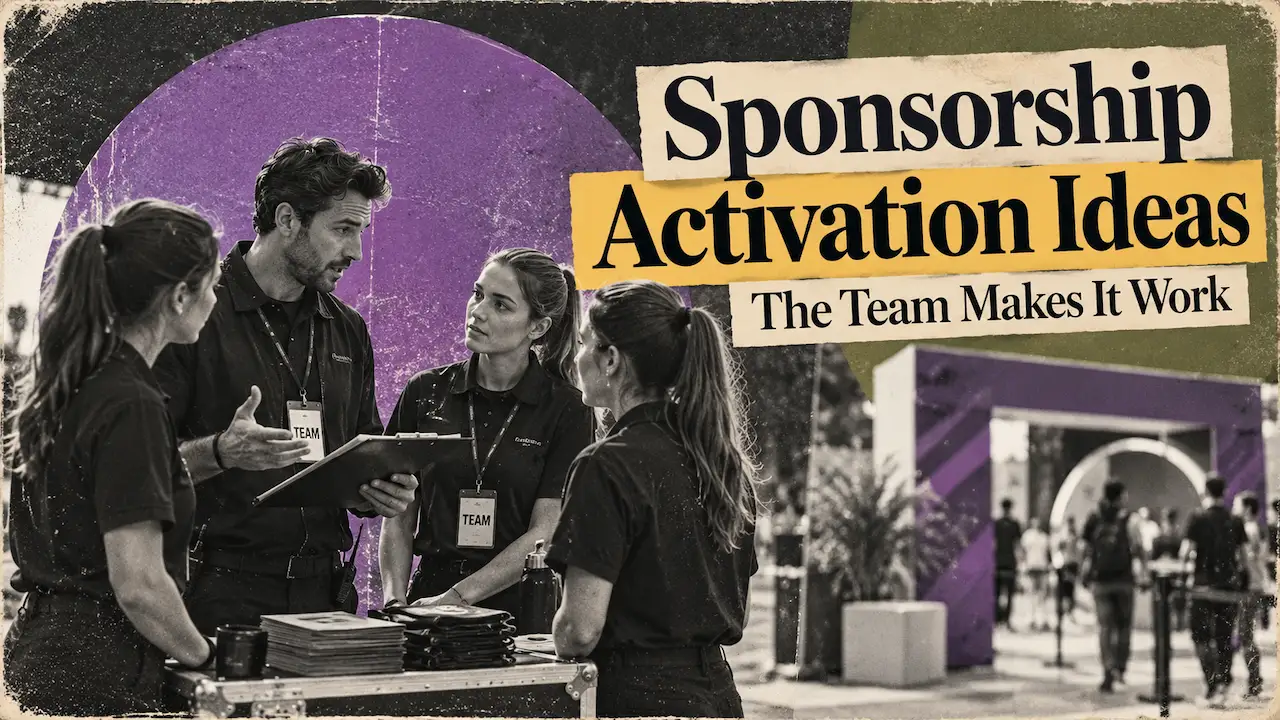
12. Roaming Brand Ambassador Teams
Brand ambassadors in sponsor kit work the crowd, start conversations and hand out offers. The sponsor’s agency often supplies the team, or the organiser uses its own pool. Agencies that run promotional teams across activations start with the brief.
The activation brief should cover:
- the sponsor’s main messages, and the claims staff must not make
- who the team reports to on site
- what to count, and how to record it
- kit, uniform and where to collect it
- what to do when the queue grows
Rotate ambassadors through breaks on long days, so the last hour looks like the first. The brief only works if it reaches every person on the team. StreetPR, a London promotional agency, used to contact staff individually about each upcoming campaign.
Its staffing manager said that approach “would increase our workload tenfold“. Logged interactions, plus check-in and hours records, show the team was there.
13. Immersive Experiences and Content Studios
VR and AR booths, photo moments and content studios give attendees something to share. The sponsor’s agency usually builds and runs them, with site support from the organiser. Each one needs a tech host, a queue marshal and a reset between groups. Time each guest’s turn before the event, because dwell time sets the queue and the rota.
Name one owner for technical support in the sponsor agreement, before the kit arrives. Influencer content works when someone on site owns the filming schedule. Count participants and save the content for the sponsor’s report.
Virtual Event Sponsorship Ideas for Online and Hybrid Events
Online sponsorship still needs people, with moderators, producers and tech support in place of the stand crew. Virtual event sponsorship ideas fail when nobody owns the session.
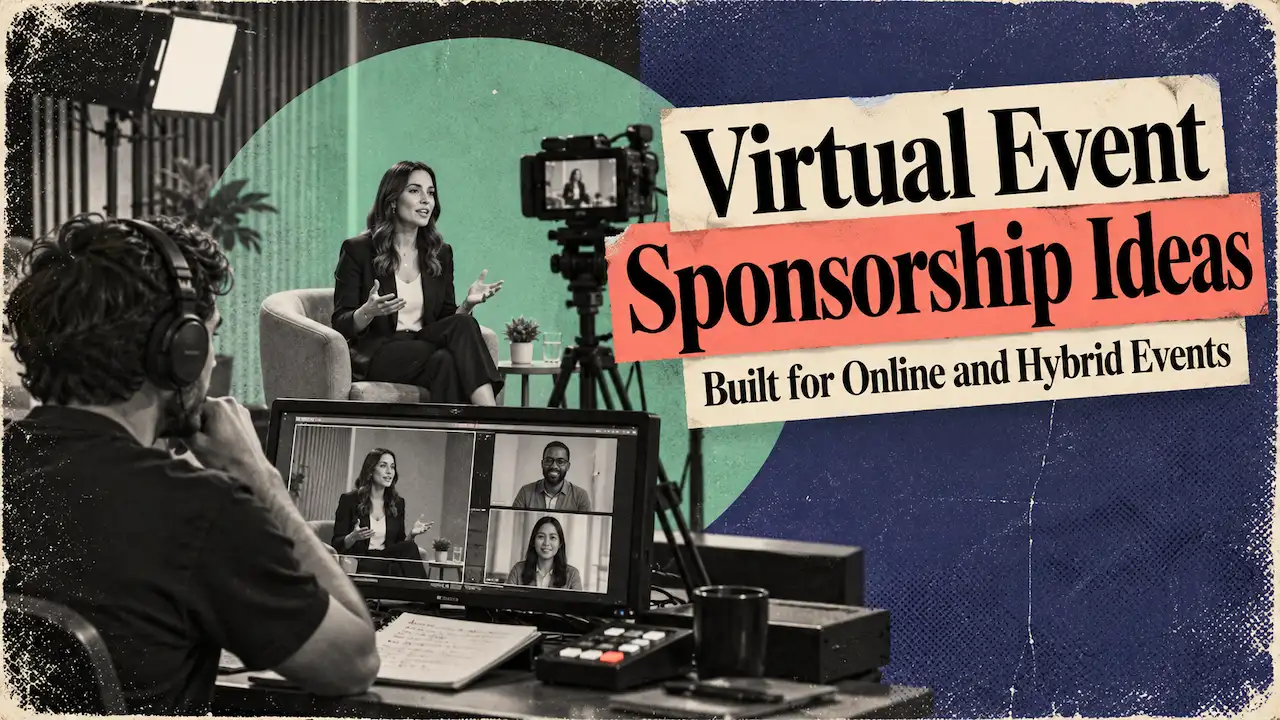
14. Hosted Virtual Lounges and Breakout Rooms
A sponsor-hosted room with a live moderator gives online attendees a place to ask questions. The moderator opens the room, keeps the chat moving and passes questions to the sponsor’s speakers. Run a tech check with those speakers before the room opens.
Busy sessions need a second moderator, so no question goes unanswered. The sponsor gets attendance, chat activity and recordings.
15. Sponsored Livestream Segments
A sponsored segment from a hybrid studio reaches people in the room and online. It needs a producer, a presenter and a floor manager. Rehearse the segment once in the studio, with timings agreed in advance. Agree a backup plan for a failed stream, with one named owner who makes the call. The sponsor report shows viewer numbers, replays and the segment recording.
Online formats record more data per visitor, while in-person ones allow longer conversations. Most sponsors want both, so plan each on its own terms.
What Sponsors Expect Back After the Event
Sponsors renew when the report proves the promises were kept. Build that report from records made on the day.
Demand for live-event sponsorship is still rising. Live Nation’s sponsorship and advertising revenue rose 20% to $258.6 million in Q1 2026 (Live Nation Form 10-Q, 2026). Sponsors are also paying more and checking harder. In Canada, sponsorship spending reached a record C$4.68 billion in 2025 (Canadian Sponsorship Landscape Study, 2026).
Brands there committed 17% more to rights fees than in 2024. Activation spending stayed relatively flat. Spending on evaluation is at its highest in the study’s 20 years (CSLS, 2026). When activation budgets stay flat, the people you put on the day carry more of the result.
A sponsor report that holds up includes:
- Deliverables met: Every promise in the package, ticked against what happened. Note anything that changed, and why.
- People on the day: Staffing delivered against what was contracted. Take it from time-stamped check-in records, which show who arrived and when.
- Counts: Visits, samples, meetings and draw entries, recorded during the event.
- Consent-based leads: Only leads whose consent names the sponsor.
- Photos and content: Branded spaces in use, with dates and locations.
The strongest event sponsorship ideas have their proof planned from the start, so the counts exist before anyone asks. Add one line on what you would change next time. The report then becomes the first page of next year’s package.
One Staffing Plan for Every Sponsor Promise
Sponsor deliverables often end up as shifts scattered across spreadsheets and group chats. The sponsor sees one package, while the team works from several lists. Event sponsorship ideas that looked simple in the prospectus get hard to track on the day.
Liveforce is a workforce management platform built for event-led businesses. These businesses manage large temporary or freelance teams across multiple projects, locations and clients. In Liveforce, each sponsor deliverable becomes a job, with sponsor shifts planned by role and zone. You can copy last year’s event in, so the plan starts from what worked.
Briefings go to the role that needs them, with confirmation and check-in reminders before the shift. That replaces the group chat and the night-before phone round. Crew check in with location and photo on arrival, so nobody rebuilds hours from memory on Monday. Hours approved after each shift give you the attendance record for the sponsor report and a payroll-ready export. Crew see all of it in the Crew App.
Before You Sell the Next Sponsorship Package
Take every idea in the next package and ask who delivers it, who briefs them and what you will count. If any answer is blank, the idea is not ready to sell.
The same test works for all 15 event sponsorship ideas on this list. Put the delivery line into the prospectus and the sponsor agreement, with one named owner per deliverable.
Organisers running a season of events with returning sponsors can reuse that plan from one date to the next. If that is your calendar, see how organisers plan sponsor shifts in Liveforce.
FAQs: Event Sponsorship Ideas
What are good sponsorship ideas for a small or community event?
The best event sponsorship ideas for small events start with in-kind support, such as water, prizes or kit. A named start line or stage is simple to sell. A sponsored refreshment point staffed by volunteers is easy to deliver and easy to count. For charity galas, choose sponsors whose work fits the cause.
Should sponsorship packages be tiered or sold à la carte?
Tiers from bronze to platinum are simple to sell and compare. À la carte suits sponsors with one clear goal, such as sampling or leads. Many organisers offer tiers plus add-ons. Price event sponsorship ideas on what each one costs to deliver, including people.
Is in-kind sponsorship as useful as cash sponsorship?
It can be, when it replaces a cost you would otherwise pay. Write down its value, the delivery dates and who handles it on the day. In-kind goods still need people to receive, store and hand them out.
Should the organiser or the sponsor's agency deliver an activation?
Venue-run assets such as stages, desks, signage and naming usually sit with the organiser. Brand-run experiences usually come with the sponsor’s agency. For shared activations, name one owner per deliverable in the sponsor agreement.
How do you stop sponsor branding spoiling the attendee experience?
Choose event sponsorship ideas that give attendees something useful. Keep branding out of safety, wayfinding and welfare messages. Brief sponsor staff on the event’s rules before doors open.
External sources
- Live Nation Form 10-Q, Q1 2026 (SEC)
- Canadian Sponsorship Landscape Study 2026, reported by The Canadian Press
- Canadian Sponsorship Landscape Study 2026, reported by Retail Insider
- Food Standards Agency, Allergen guidance for food businesses (GOV.UK)
- Food Standards Agency, Introduction to allergen labelling for PPDS food (GOV.UK)
- ASA, Promotional marketing: prize draws
- ICO, How do we comply with the PECR electronic mail marketing rules?
- FTC, CAN-SPAM Act: A Compliance Guide for Business