The fastest way to break an event staffing operation is to design a shift patterns calendar around a template.
Most online guides teach DuPont, Pitman, 4-on-4-off, and continental rotations as universal solutions. These patterns assume permanent teams, fixed locations, and steady daily demand.
Event agencies have none of those things.
This article is written for operations managers at large staffing agencies and hospitality suppliers running concurrent venue contracts. These teams manage 200 or more freelance crew across multiple venues, where every client carries its own shift structure. If you build rotas in a spreadsheet designed for one location, template thinking is costing you money every week.
Below is a practical breakdown of what most shift pattern guides get wrong, and what actually works in event operations.
You will see why standard rotating rotas collapse under multi-client work. You will also see how to design a shift patterns calendar that reflects real workload.
- Staff scheduling built for events approaches this problem differently. The difference shows up in the numbers.
What Most Shift Pattern Guides Get Wrong About Event Shift Patterns
DuPont, Pitman, 4-on-4-off, 2-2-3, and continental rotations dominate most shift pattern advice.
These rotations work in manufacturing, security, and shift-based healthcare, where permanent teams hold fixed locations with predictable daily demand. A shift patterns calendar built on those rotations breaks the moment it meets a live operational week.
Event shift patterns operate on different rules.
A hospitality agency staffing three hotel contracts does not need one repeating pattern across all sites. It needs three different shift structures running concurrently. It also needs to absorb weekend bookings without rebuilding every rota from scratch.
Template thinking treats demand as constant. Event demand never is.
Why Standard Rotating Rotas Do Not Transfer to Project-Based Work
Standard rotating rotas assume a fixed daily load. A 4-on-4-off pattern presumes the work on day five matches the work on day one. In events, that assumption fails the moment a client confirms a new booking.
Shifts are dictated by load-in times, live event hours, and load-out windows. These vary by event, venue, and client.
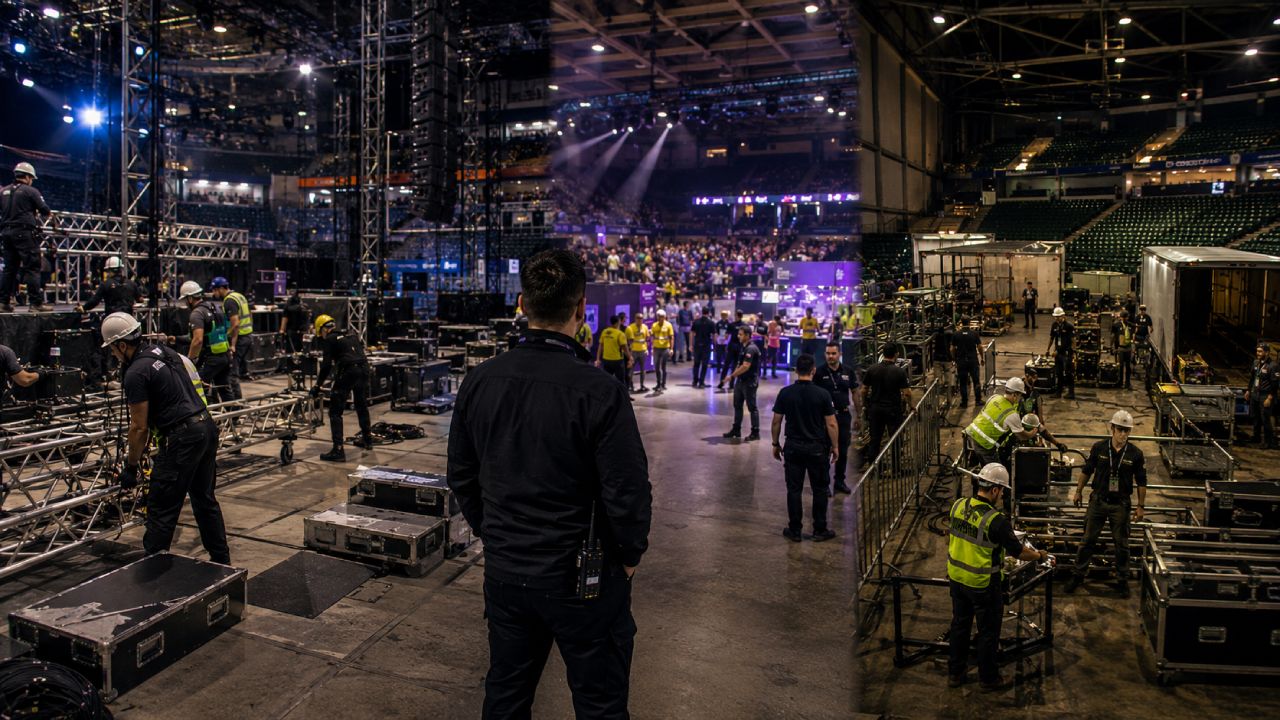
A festival weekend illustrates the problem. Build days run 12-hour shifts. Show days fragment into split shifts driven by sound, security, and bar service hours.
Teardown collapses into short, high-intensity shifts. The same crew may work three different shift structures inside one week. No template covers this.
How Shift Patterns Actually Work in Hospitality and Event Operations
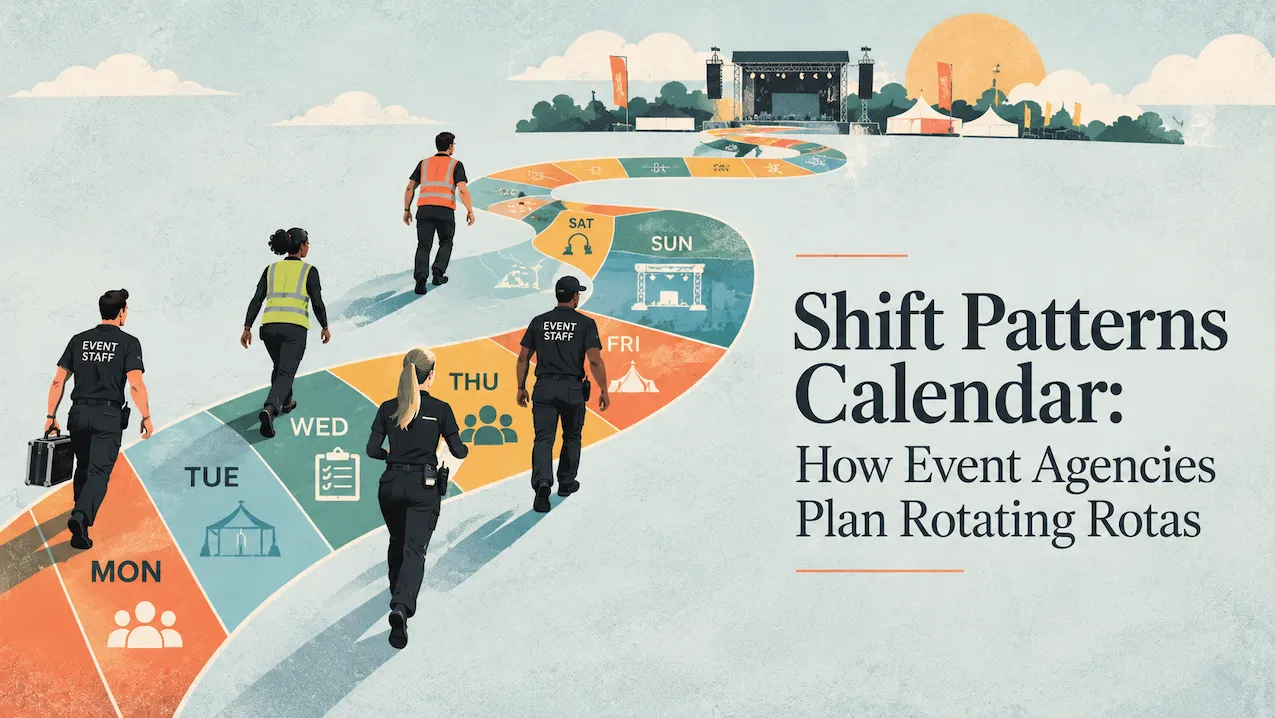
A shift patterns calendar in event staffing is a scheduling framework. It maps crew assignments across projects, clients, and time periods based on confirmed demand. The pattern is not selected up front and then applied. It emerges from existing bookings, workforce availability, and the compliance constraints attached to each role.
This is the central inver
Demand-Led Scheduling vs Template-Led Scheduling
Template-led scheduling starts with a rotation and forces the work to fit. Demand-led scheduling starts with confirmed bookings and assigns crew based on real requirements. The difference is operational, not philosophical.
A demand-led shift patterns calendar pulls data from three sources before any shift is published. It reads client-confirmed event details, including dates, times, roles, and crew counts.
It checks the workforce database for availability, certifications, and prior performance. It applies compliance flags for working time, breaks, and minimum rest. The shift only exists once those checks pass.
What Changes When an Agency Runs Multiple Clients on Different Shift Structures
Multi-client operations expose the weakness of template-based scheduling immediately. One client may require split shifts with a four-hour break. Another may insist on continuous 10-hour cover. A third may need rolling four-day cycles aligned to a venue licence. A single rotating rota cannot serve all three.
Workforce scheduling built for events separates pattern logic per client.
The whole agency is never forced onto one rotation. Each contract keeps its own rules. The operations manager sees the full picture across every client and every event in one view.
The Cost of Applying the Wrong Shift Pattern to Event Teams
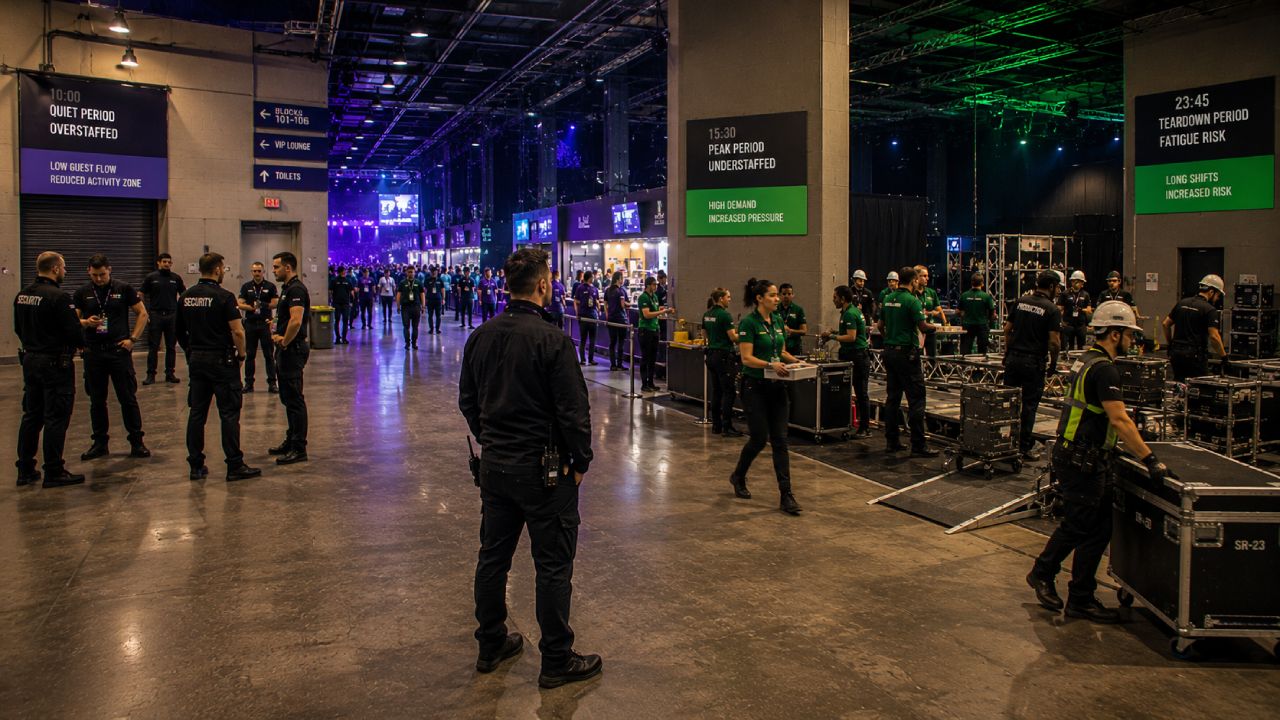
The financial cost of template-based scheduling is rarely visible on a single rota. It accumulates across the season in three predictable ways. Overstaffing during quiet periods erodes margin.
Understaffing during peaks triggers last-minute booking premiums. Repeated mismatches push experienced crew toward burnout, and replacing them costs more than retaining them.
For a large hospitality supplier running multiple venue contracts, these costs reach tens of thousands of pounds per quarter.
Most of it sits in line items: last-minute crew surcharges, dropped shifts, overtime corrections, and lost SLA margin. Agencies running peak season without structured workforce planning for seasonal demand carry these costs every quarter.
Overstaffing, Understaffing, and Crew Burnout in the Same Week
The most common failure mode is all three happening at once. A template puts six crew on a Tuesday lunch shift where four would cover demand.
The same template undersupplies a Saturday corporate event by three. A panic booking lands at premium rates. The crew who worked Tuesday’s overstaffed shift are then asked to cover Saturday. The next week’s rota lands while they are still owed rest.
This is not a hypothetical pattern. It is what happens when a template meets a week of variable demand.
Building a Shift Patterns Calendar Around Real Operational Demand
A shift patterns calendar built around real demand starts with structured intake of every confirmed booking.
The booking carries the operational data: dates, times, roles, crew counts, client rules, and compliance flags. From there, scheduling logic applies each client’s contract and each crew member’s availability and qualifications.
This approach replaces three broken systems at once. It removes the rota spreadsheet rebuilt every Monday. It removes the WhatsApp groups used to chase availability. It removes the personal contact list each operations manager keeps.
The Liveforce event staff schedule book holds this logic in one place. The same data drives every shift decision.
What a Shift Planning Calendar Needs to Account for in Events
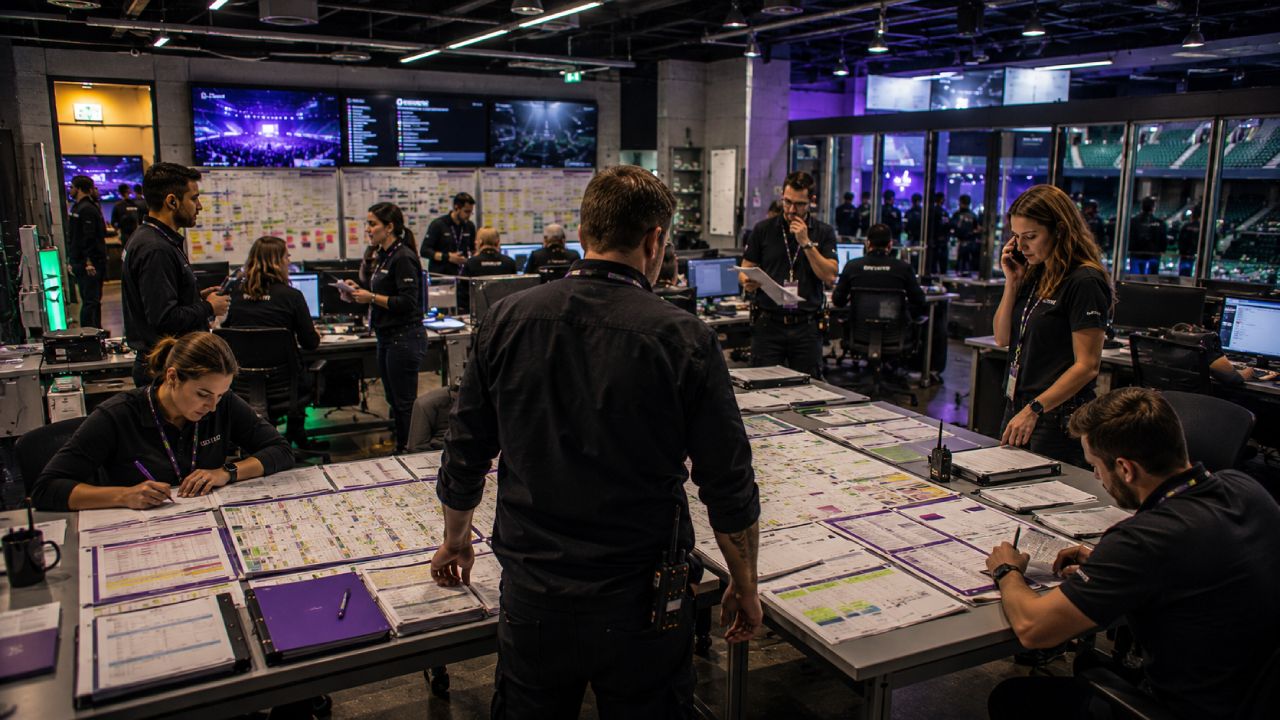
A working shift planning calendar for an event agency needs to handle five operational realities at once:
- Variable demand per client: Each contract has its own shift structure, hours, and crew requirements that do not align with a fixed rotation.
- Real-time availability: Crew commitments shift daily and sometimes hourly during peak season.
- Compliance constraints: Working time rules, minimum rest periods, and role-specific certifications flag at the scheduling stage.
- Last-minute changes: Add-on bookings, cancellations, and crew swaps update without rebuilding the rota.
- Cross-team visibility: Operations, finance, and account managers see the same data without separate spreadsheets.
When all five are handled together, the shift patterns calendar becomes a live operational document, not a static template.
Template-Based vs Demand-Driven Shift Patterns
A Staff Calendar for Events That Replaces Template-Based Rotas
A staff calendar for events should function differently to a calendar for a fixed-location workforce. It handles multiple clients, multiple venues, and a freelance pool that changes weekly.
The starting point is not a rotation pattern. It is the data that defines each event and each crew member’s agreement with the agency.
When the calendar reads from confirmed booking data and a current workforce database, the rota reflects operational reality. The operations manager publishes shifts that already account for compliance, availability, and client rules. Changes no longer trigger a rebuild. They trigger an update.
Replacing Template Rotas With Structured, Multi-Client Scheduling
Moving from template rotas to structured multi-client scheduling is the single biggest operational change a growing hospitality supplier can make.
CASE STUDY STORY:
The Frontline Company rebuilt its scheduling operation around demand-driven planning rather than fixed templates. The change reduced manual rota work and improved staffing reliability across concurrent venue contracts.
The result is not a tidier rota. It is a different operating model. The agency stops reacting to last-minute pattern failures. It starts publishing rotas it can actually deliver.
The pattern is no longer the constraint. The data is.
How Liveforce Supports Demand-Driven Shift Scheduling
Liveforce is a workforce management platform for event-led businesses managing large freelance teams across multiple clients, locations, and shift structures. It is not a generic rota tool. It is the operational backbone for agencies that have outgrown spreadsheets.
One system handles planning, assignment, communication, and compliance at scale.
Three capabilities matter most to shift patterns calendar design:
- Staff scheduling: Used when an agency runs multiple events, locations, or roles in parallel. It replaces spreadsheets, paper rotas, and generic rota tools that cannot hold multi-project work in one view.
- Workforce database: Used when tracking availability, skills, and compliance across a large freelance pool. It replaces disconnected contact lists, outdated profiles, and the personal knowledge each operations manager carries.
- Communication tools: Used when sending shift updates, briefings, and last-minute changes. It replaces WhatsApp groups, group texts, and last-minute phone chains.
For hospitality suppliers in particular, speed and repeat-shift reliability matter most. The platform holds high volume, repeat bookings, and the peak-season pressure that breaks generic rota tools.
Hospitality operators moving off spreadsheets and WhatsApp describe the change as a structural shift, not a software upgrade.
See How Demand-Driven Scheduling Works in Practice
The longer a hospitality agency runs on template-based rotas, the harder the operational debt becomes to clear. Every week of overstaffing, every panic booking, and every crew exit compounds into margin loss.
None of it appears on a single line item. A demand-driven shift patterns calendar removes the root cause before peak season starts.
Frequently asked questions
What is a shift patterns calendar in event staffing?
A shift patterns calendar in event staffing is a scheduling framework. It maps crew across confirmed bookings, clients, and time periods. It is built from real demand rather than fixed repeating cycles. The pattern emerges from the work, not from a template.
Why do standard rotating shift patterns fail for event agencies?
Standard rotating patterns assume permanent teams and fixed daily demand. Event agencies operate with freelance crew, variable workloads, and client-specific shift structures. The assumptions behind 4-on-4-off, DuPont, and Pitman rotations do not match how event work behaves.
How do hospitality agencies plan shift patterns across multiple venues?
Hospitality agencies plan patterns by reading confirmed bookings per venue. They then check crew availability and apply compliance rules at the scheduling stage. Each venue contract keeps its own shift structure inside one system that holds the full picture.
What should an event agency consider when designing shift rotas?
An event agency should consider variable client demand, real-time crew availability, compliance constraints, last-minute change handling, and cross-team visibility. A rota built around any one of these in isolation will fail. All five need to be handled together in one system.
How does demand-driven scheduling differ from template-based rotas?
Template-based rotas start with a fixed rotation and force the work to fit. Demand-driven scheduling starts with confirmed bookings and builds shifts from real operational data. One produces predictable patterns. The other produces accurate rotas.