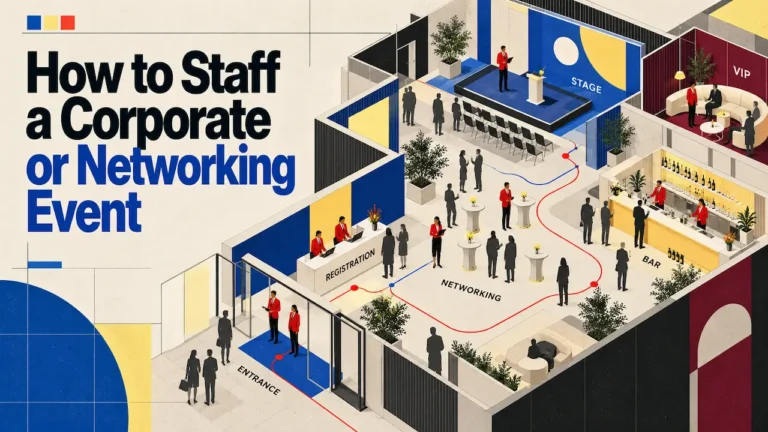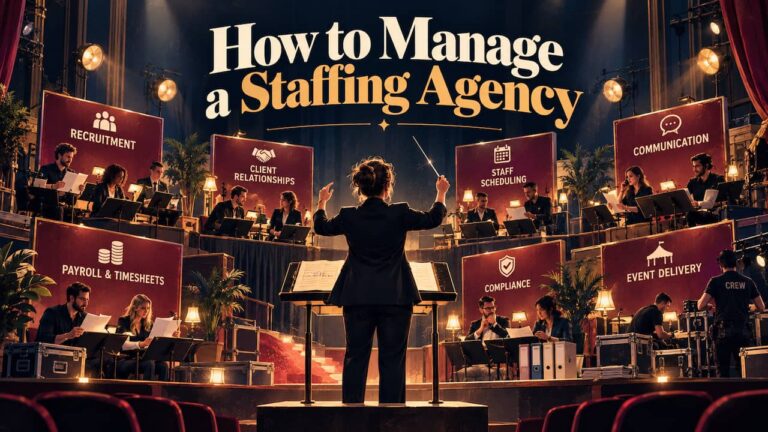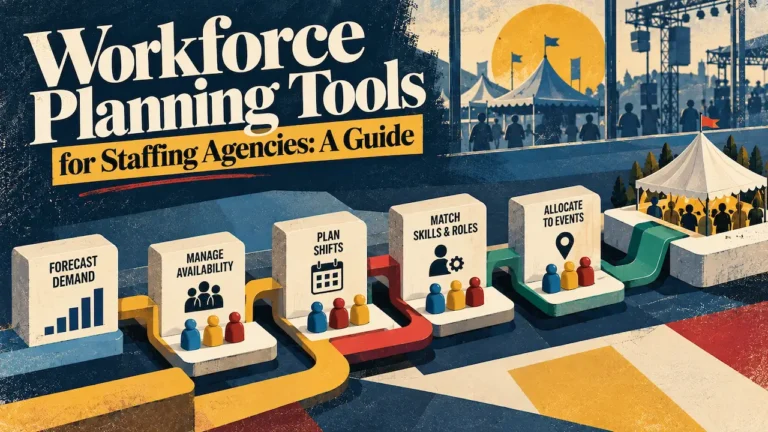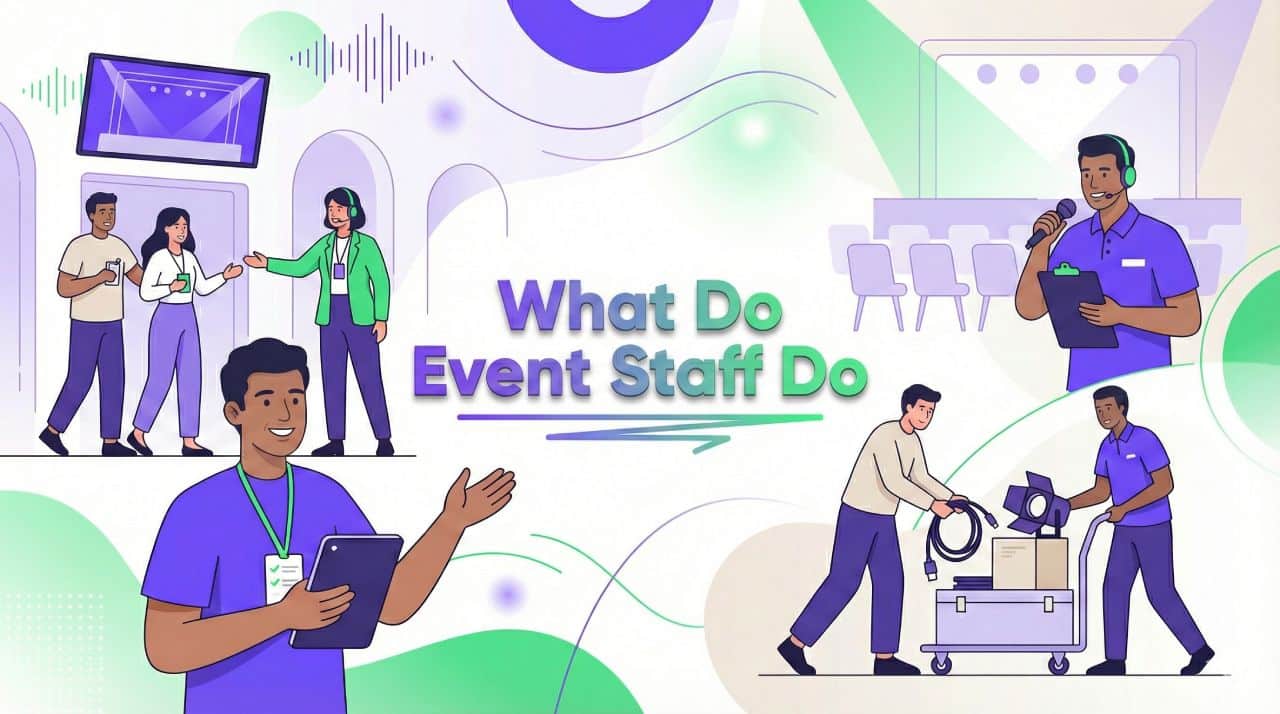
Event staff play a critical role in delivering live events by supporting setup, managing on-site operations, and ensuring a smooth breakdown once the event ends. At scale, their responsibilities go far beyond individual tasks.
Event staff operate as coordinated teams, deployed by agencies and suppliers to deliver safe, efficient, and professional events across multiple locations and timelines.
Understanding what event staff do is not just about listing duties. For agencies and suppliers, it is about knowing how roles fit together, how responsibilities shift across event phases, and how structured coordination prevents operational failure.
This guide explains what event staff do at live events through the lens of planning, deployment, and delivery.
What Do Event Staff Do Across the Event Lifecycle?
Event staff responsibilities change depending on the phase of the event. Successful delivery relies on having the right roles active at the right time.
Before the Event: Setup and Preparation
Before doors open, event staff focus on preparing the venue and ensuring everything is ready for attendees, clients, and performers.
Common responsibilities include:
- Setting up staging, seating, signage, and equipment
- Preparing registration and check-in areas
- Supporting technical teams with sound, lighting, or AV setup
- Coordinating logistics such as deliveries, storage, and access routes
- Carrying out safety checks and venue walk-throughs
At this stage, timing and coordination matter more than speed. Delays or missed responsibilities during setup often create problems that cascade throughout the event.
During the Event: Live Operations
During live operation, event staff are responsible for keeping the event running safely, smoothly, and on schedule.
Responsibilities typically include:
- Managing guest flow and providing directions
- Handling ticket checks or access control
- Supporting speakers, performers, or brand activations
- Monitoring crowd movement and safety risks
- Providing customer service and issue resolution
- Supporting technical operations in real time
This phase requires clear communication and role clarity. When staff are unsure of responsibilities, small issues quickly become visible to attendees.
After the Event: Breakdown and Close-Down
Once the event ends, event staff shift focus to a controlled breakdown and handover.
Typical tasks include:
- Dismantling staging, equipment, and temporary structures
- Managing loading and vehicle movement
- Checking equipment and inventory
- Clearing and resetting the venue
- Supporting final safety checks and sign-off
Breakdown is often overlooked in planning, yet it is one of the most labour-intensive phases. Poor coordination here increases costs and delays.
Core Event Staff Roles Explained
While responsibilities vary, most live events rely on several core role categories. Understanding these helps agencies plan coverage properly.
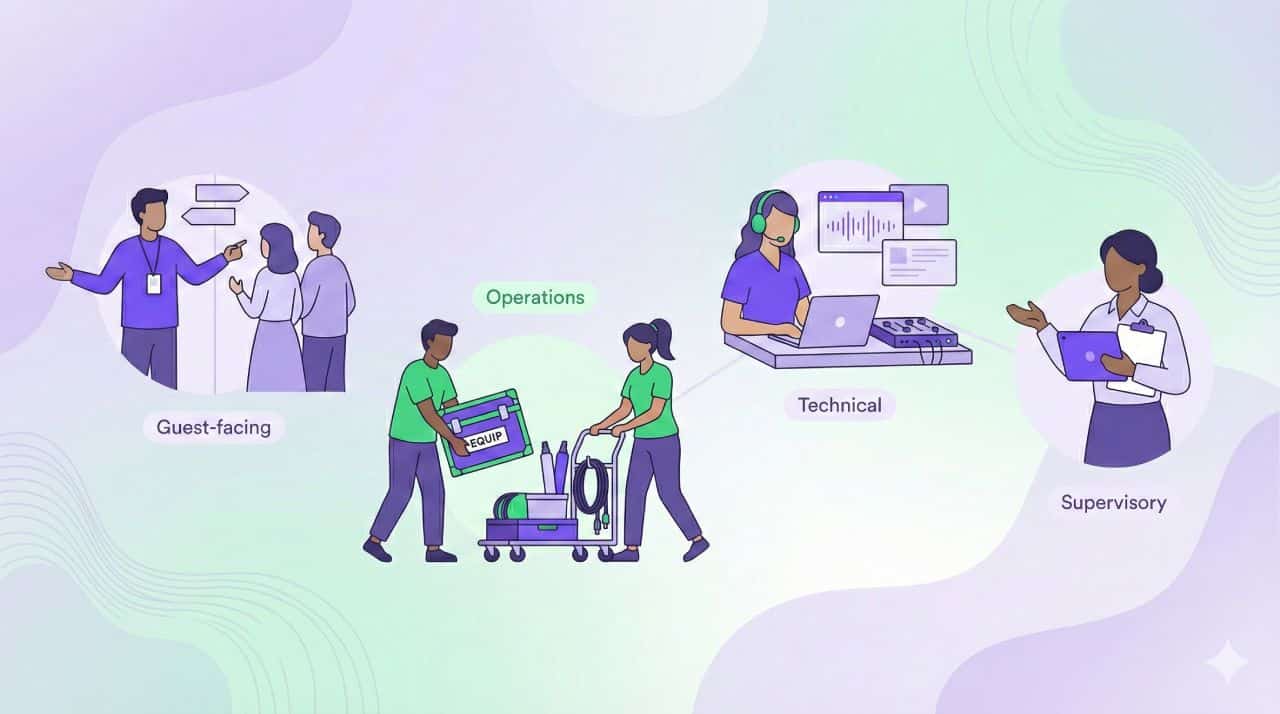
Guest-Facing Event Staff Roles
These are the most visible roles at any event and often shape the attendee experience.
Examples include:
- Ushers and stewards
- Registration and check-in staff
- Brand ambassadors and promotional staff
- Hospitality and front-of-house teams
These roles focus on interaction, guidance, and service. They require strong communication skills and clear instructions, especially during busy periods.
Operational and Logistics Roles
Operational roles support the physical delivery of the event.
Common responsibilities include:
- Venue setup and breakdown
- Equipment handling and storage
- Back-of-house coordination
- Managing access points and logistics zones
These roles are less visible but essential. When operational roles are understaffed, guest-facing teams are often forced to compensate, reducing service quality.
Technical and Production Support Roles
Technical event staff support the systems that power the event.
Responsibilities may include:
- Operating sound, lighting, or AV equipment
- Supporting production managers
- Managing live technical changes or troubleshooting
These roles require specialist skills and clear scheduling. Gaps here can halt entire event programmes.
Supervisory and Management Roles
Supervisory staff coordinate teams and act as the link between planning and delivery.
They are responsible for:
- Managing teams on site
- Resolving issues and reallocating staff
- Maintaining communication with organisers or clients
- Ensuring schedules and plans are followed
Without clear supervision, even well-staffed events can struggle.
How Event Staff Roles Change by Event Type
One of the biggest gaps in generic explanations of what event staff do is the lack of differentiation between event types. Responsibilities shift significantly depending on the format.
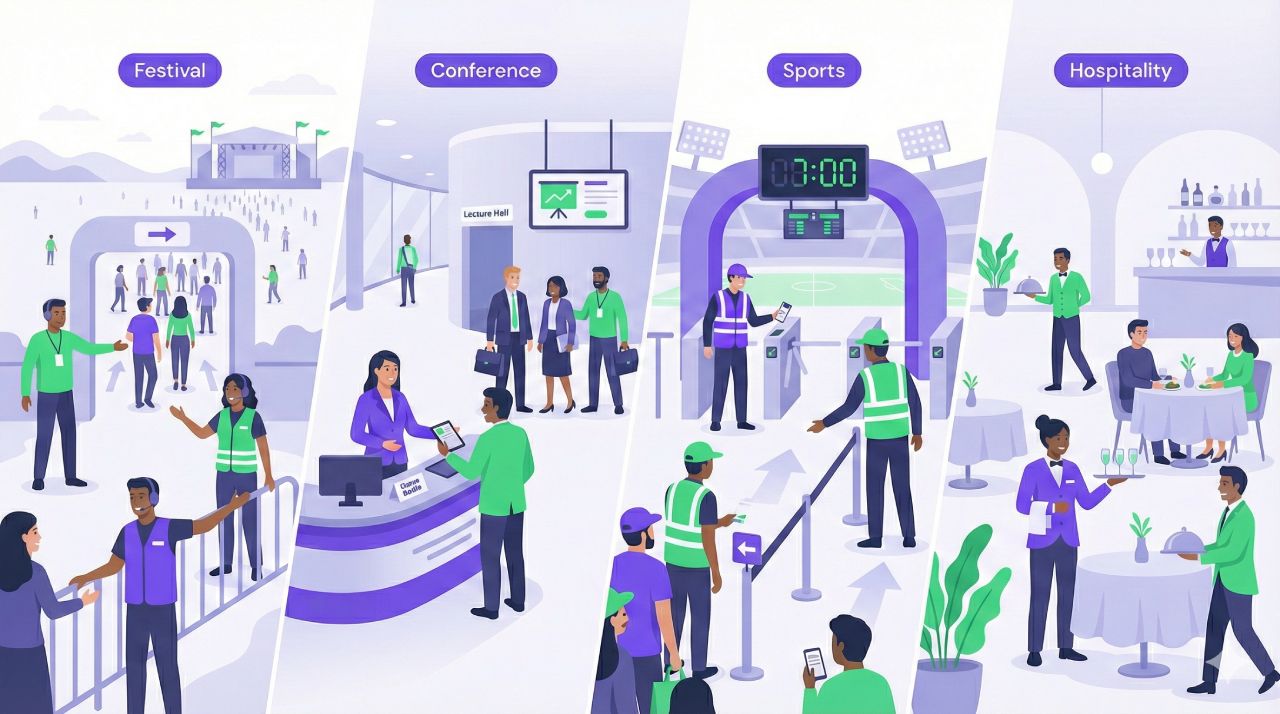
Festivals and Large Outdoor Events
Festival staffing focuses on:
- Crowd management and safety
- Access control and perimeter coverage
- Long shift rotations
- Coordination across large, open sites
Planning must account for scale, weather, and extended operating hours.
Conferences and Exhibitions
Conference event staff typically support:
- Registration and badge scanning
- Session management
- Speaker support
- Directional assistance within venues
Precision and professionalism matter more than volume, with less margin for disruption.
Sports Events
Sports events require:
- Strict access control
- Crowd flow monitoring
- Timing coordination around fixtures
- Strong communication between zones
Here, event staff responsibilities are tightly linked to safety and compliance.
Hospitality and Catering Events
Hospitality-focused events rely on:
- Service timing
- Coordination between kitchen and front-of-house
- Guest experience consistency
Even small staffing gaps can directly affect client satisfaction.
Visible Roles vs Behind-the-Scenes Roles
A common mistake is assuming that visible event staff are the most important. In reality, behind-the-scenes roles often determine whether visible teams can perform effectively.
Behind-the-scenes responsibilities include:
- Logistics coordination
- Equipment management
- Technical support
- Supervisor oversight
When these roles are unclear or understaffed, guest-facing staff are left dealing with problems they cannot solve.
| Event type | Key staffing focus | Typical role emphasis |
|---|---|---|
| Festivals | Crowd flow, safety coverage, long shifts, site logistics | Stewards, supervisors, logistics teams, access control |
| Conferences & exhibitions | Registration accuracy, session support, wayfinding | Front-of-house, registration teams, AV support |
| Sports events | Access control, timed entry, crowd movement | Stewards, supervisors, entry teams, safety roles |
| Hospitality & catering | Service timing, guest experience, back-of-house coordination | Front-of-house, runners, team leads, logistics teams |
How Agencies Coordinate Event Staff Roles at Scale
For agencies and suppliers, the challenge is not understanding what event staff do in isolation. The challenge is coordinating hundreds of people across roles, locations, and timelines.
Effective coordination relies on:
- Clear role definitions
- Accurate scheduling and availability tracking
- Centralised communication
- Visibility across multiple events
Without structure, agencies face last-minute changes, missed responsibilities, and increased risk.
This is why many agencies rely on dedicated platforms such as Liveforce to manage scheduling, communication, and workforce visibility across projects.
You can see how structured scheduling supports this on the Staff Scheduling Features page.
Common Problems When Event Staff Roles Are Unclear
When roles are not clearly defined or communicated, agencies often experience:
- Tasks being duplicated or missed
- Delays during setup or breakdown
- Staff turning up without clear instructions
- Supervisors spending time firefighting instead of managing
- Poor guest experience and client dissatisfaction
These issues are rarely caused by people. They are usually caused by process gaps.
How Structured Systems Improve Event Staff Delivery
Modern event delivery depends on systems that support clarity and coordination.
Structured workforce management helps agencies:
- Assign roles clearly before the event
- Communicate updates in real time
- Track changes without confusion
- Maintain visibility across multiple teams
Liveforce supports this by giving agencies a central place to manage staff schedules, roles, and communication, reducing reliance on spreadsheets and last-minute messaging.
Real-time updates and messaging are covered in more detail on the Event Staff Communication page.
Why Understanding What Event Staff Do Matters for Agencies
Knowing what event staff do is not about education for its own sake. It directly affects:
- Planning accuracy
- Cost control
- Risk management
- Client satisfaction
Agencies that clearly define roles and responsibilities can scale delivery without increasing chaos.
This becomes especially important when managing multiple events at the same time, where visibility and coordination are critical. Platforms such as Liveforce support this approach by bringing scheduling, communication, and workforce management into one system.
You can explore this approach further on the Event Staff Scheduling page.
What Event Staff Do Is About Coordination, Not Just Tasks
Event staff are responsible for delivering live events through setup, operation, and breakdown. However, their true value lies in how roles work together as part of a coordinated system.
For agencies and suppliers, success depends on:
- Clear role definition
- Structured planning
- Strong communication
- Reliable coordination
Understanding what event staff do is the foundation for delivering events consistently, safely, and at scale. With the right structure and systems in place, agencies can move from reactive firefighting to predictable delivery, supported by platforms like Liveforce.
Frequently asked questions
What do event staff do at live events?
Event staff support live events by carrying out setup, on-site operations, and breakdown across defined roles. Their work ensures events run safely, smoothly, and according to schedule.
What are the main roles of event staff?
Event staff roles typically include guest-facing roles, operational and logistics support, technical assistance, and supervisory roles. Each role contributes to a specific part of event delivery.
Do event staff do the same tasks at every event?
No, what event staff do varies by event type, size, and format. Responsibilities differ across festivals, conferences, sports events, and hospitality events.
Why is role clarity important for event staff?
Role clarity ensures responsibilities are not missed or duplicated during an event. It reduces operational risk and helps teams work efficiently under time pressure.
How do agencies manage and coordinate event staff roles?
Agencies coordinate event staff by assigning roles in advance, scheduling teams accurately, and maintaining clear communication throughout the event. Centralised workforce systems help manage this process consistently.