Planning an event means working through five phases in order. Define the event, sort the logistics, coordinate the team, run the day, then review.
The first two phases set the foundations. The middle phases decide whether the plan survives contact with reality. Knowing how to plan an event well means treating delivery as seriously as strategy.
Most guides stop at strategy. They cover goals, budgets, venues and marketing in detail. Then they go quiet on the people who actually run the event. That gap is where events fail. A strong plan still falls apart on the day if the team delivering it is not coordinated.
This guide follows the order an experienced organiser works in. Each phase builds on the last. The detail sits where it matters most: the staffing and delivery layer that most resources skip.
Anyone learning how to plan an event can follow the same sequence, from an independent event to a major festival.
- Use the event planning checklist to track early tasks.
- Then plan the people side with how to manage event staff.
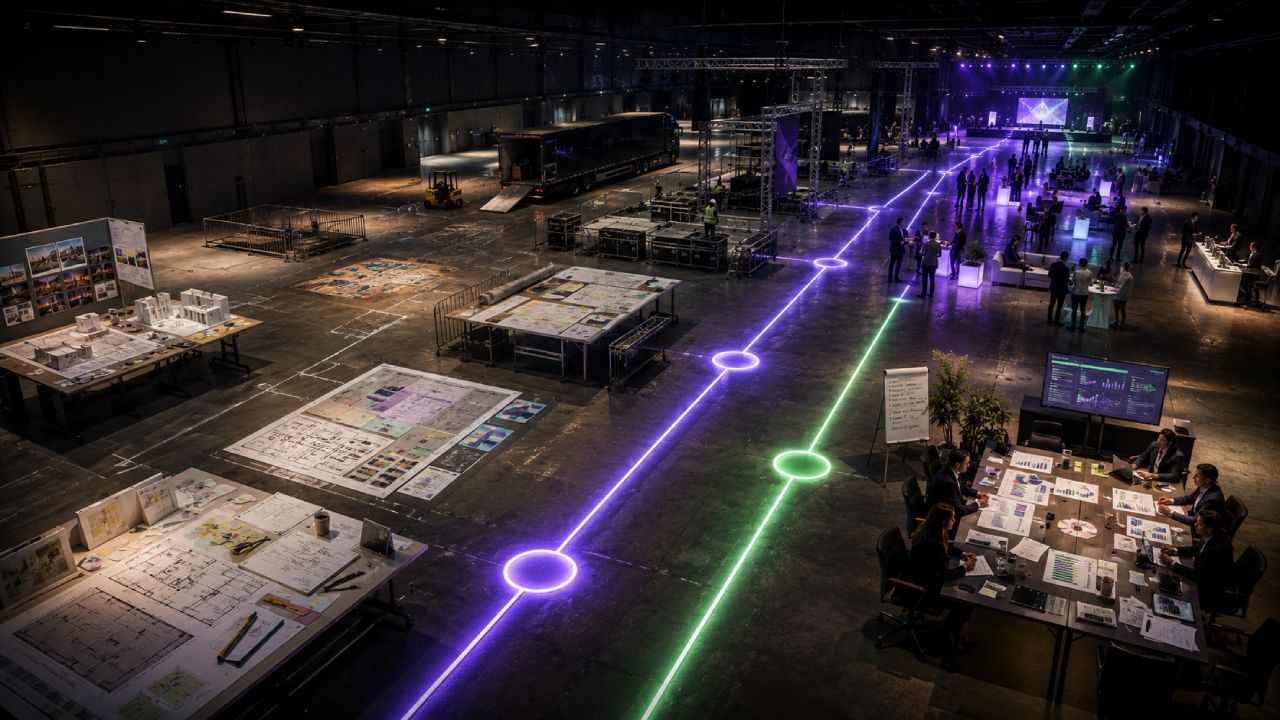
How to plan an event in 5 phases
A clear sequence keeps a complex event under control. The five phases run from first brief to final review. Each one has a clear output before the next begins.
Knowing how to plan an event starts with respecting that order.
The order matters more than the length of any single phase.
- Planning phase. Define the event, set objectives, confirm budget and date.
- Logistics phase. Lock the venue, suppliers, schedule and run sheet.
- Staffing and delivery phase. Assign roles, brief the team, plan cover.
- On-the-day operations. Coordinate the team and manage changes live.
- Post-event phase. Collect timesheets, review performance, record learnings.
What are the stages of event planning?
The stages of event planning are define, organise, staff, deliver and review.
- The first stage sets objectives and budget.
- The second arranges venue, suppliers and timeline.
- The third assigns and briefs the team.
- The fourth runs the event on the day.
- The fifth captures results and lessons.
Every stage feeds the next.
How far in advance should you plan an event?
Lead time depends on scale.
- A small or mid-size event needs around 8 to 16 weeks.
- A large or multi-day event needs 6 to 18 months.
Booking high-demand venues and suppliers sets the real start date. The table below shows typical UK lead times by phase and event size.
| Phase | What it covers | Typical lead time |
|---|---|---|
| 1. Planning define the event |
Objectives, budget, date and audience. | 8-16 weeks out (12-18 months for large events) |
| 2. Logistics venue and suppliers |
Venue, suppliers, run sheet and master timeline. | 6-10 weeks out (6-12 months for large) |
| 3. Staffing and delivery roles and briefings |
Assign roles, brief the team, plan no-show cover. | 2-4 weeks out (4-8 weeks for large) |
| 4. On-the-day operations live coordination |
Check-in, live communication and change management. | Event day(s) |
| 5. Post-event review close the loop |
Timesheets, debrief and recorded learnings. | Within 1-4 weeks after |
1. Planning phase: defining the event
The planning phase turns an idea into a brief. Objectives come first. A product launch, a charity gala and a music festival need different success measures.
Set the budget early, because it shapes every later choice. Confirm the date against venue availability and seasonal demand. For independent events, this phase often decides viability on its own.
A vague brief in week one becomes a crisis in delivery week.
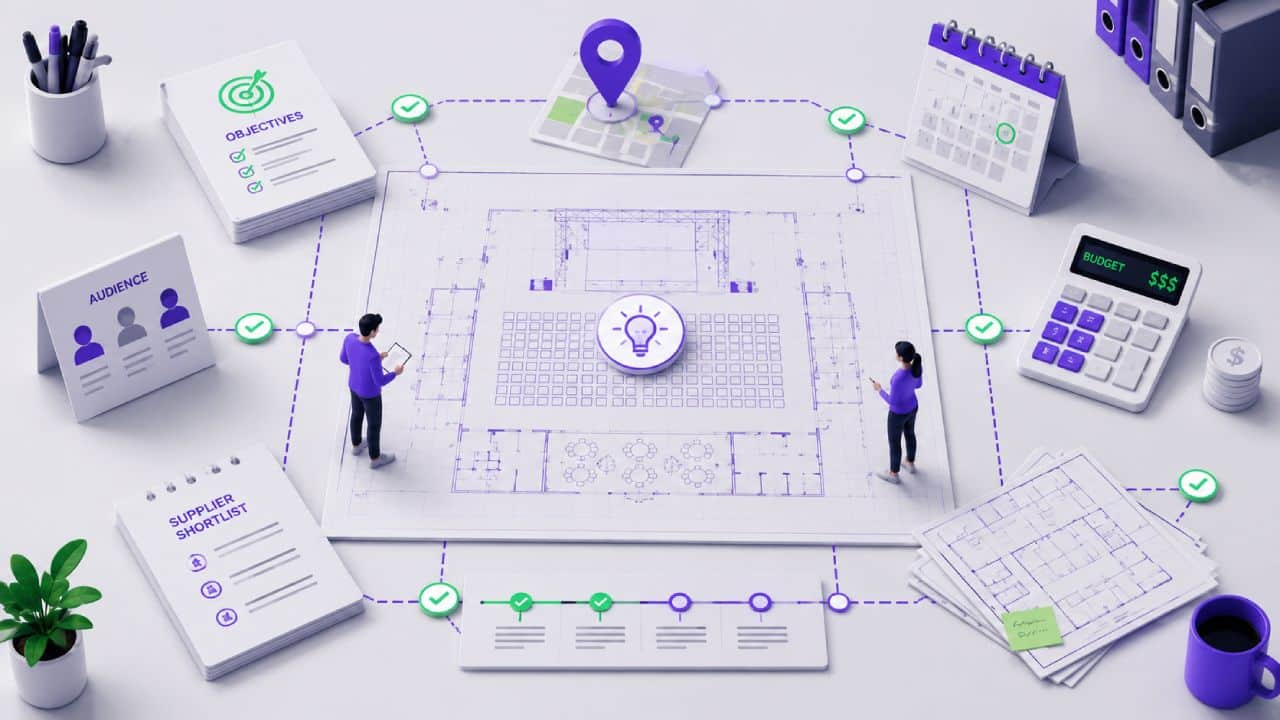
The core event planning steps in order
The core event planning steps follow a fixed logic. Define the goal. Set the budget. Confirm the date and audience. Shortlist venues. Book suppliers. Build the schedule. Assign the team. Brief everyone.
Each step depends on the one before it. Skipping a step moves the problem later. It rarely saves time.
How do you plan an event step by step?
To plan an event step by step, work outward from the objective.
- Decide what the event must achieve.
- Set a budget that matches that ambition.
- Lock the date and venue.
- Then move into logistics and people.
Knowing how to plan an event step by step is mostly about sequence. The detail is manageable once the order is right.
2. Logistics phase and the event planning timeline
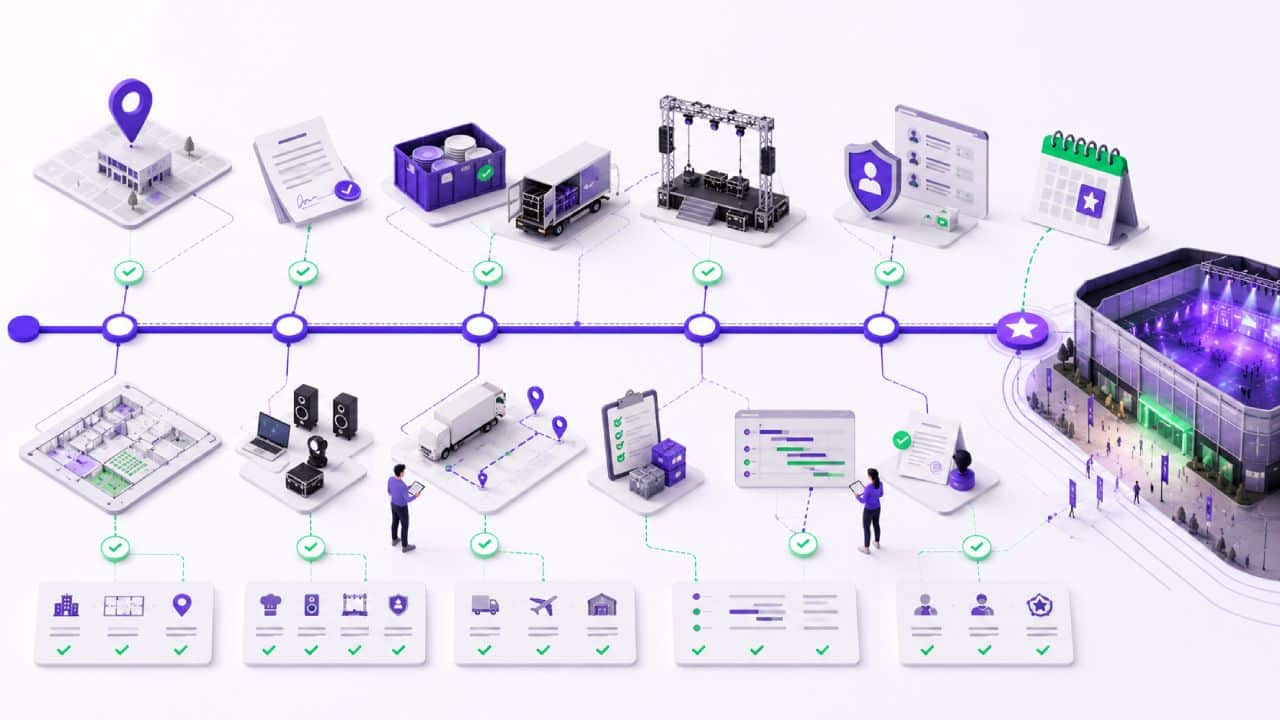
The logistics phase builds the event planning timeline backwards from the event date.
Venue, suppliers and the run sheet all sit here. Major venues need contracts and method statements months ahead. Caterers, AV and security need confirmed numbers to quote accurately. A clear budget keeps these decisions honest.
Track spend against the plan as suppliers confirm.
Use a single working timeline that everyone can see. Verbal agreements and scattered emails cause most logistics failures. Tie every supplier deadline to the master schedule.
- For help controlling spend, see how agencies manage the event budget without surprises.
Suppliers deliver to the timeline they were given.
3. Staffing and delivery: the part guides skip
Staffing and delivery is where most plans meet reality.
The organiser has booked a team. Now that team has to arrive, know their roles and respond to change.
This is the layer ranking guides skip. It is also the layer that decides the day. In 2024, 47% of event organisers expanded their teams (Bizzabo, 2024). Bigger teams raise the coordination cost sharply.
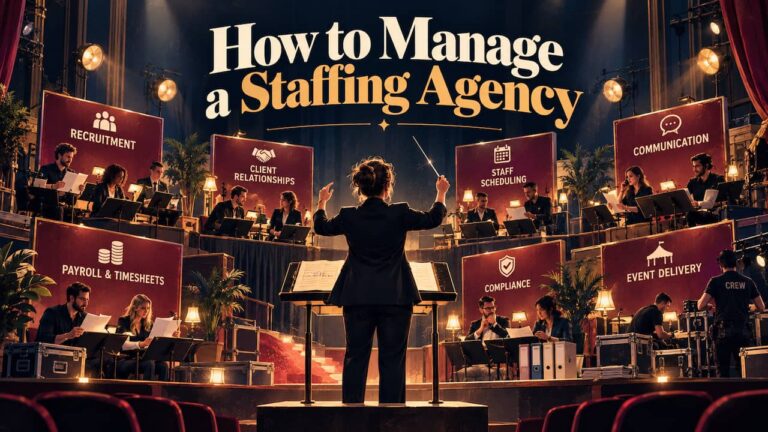
Coordination here covers a defined set of tasks. Each one is small. Together they decide whether the event runs.
- Role assignment. Every person knows their station and shift.
- Briefing. The team gets the same information before doors open.
- Check-in. Arrivals are tracked so gaps show early.
- Live communication. Changes reach the right people fast.
- No-show cover. A reserve plan fills gaps without panic.
Coordination is where good plans are won or lost.
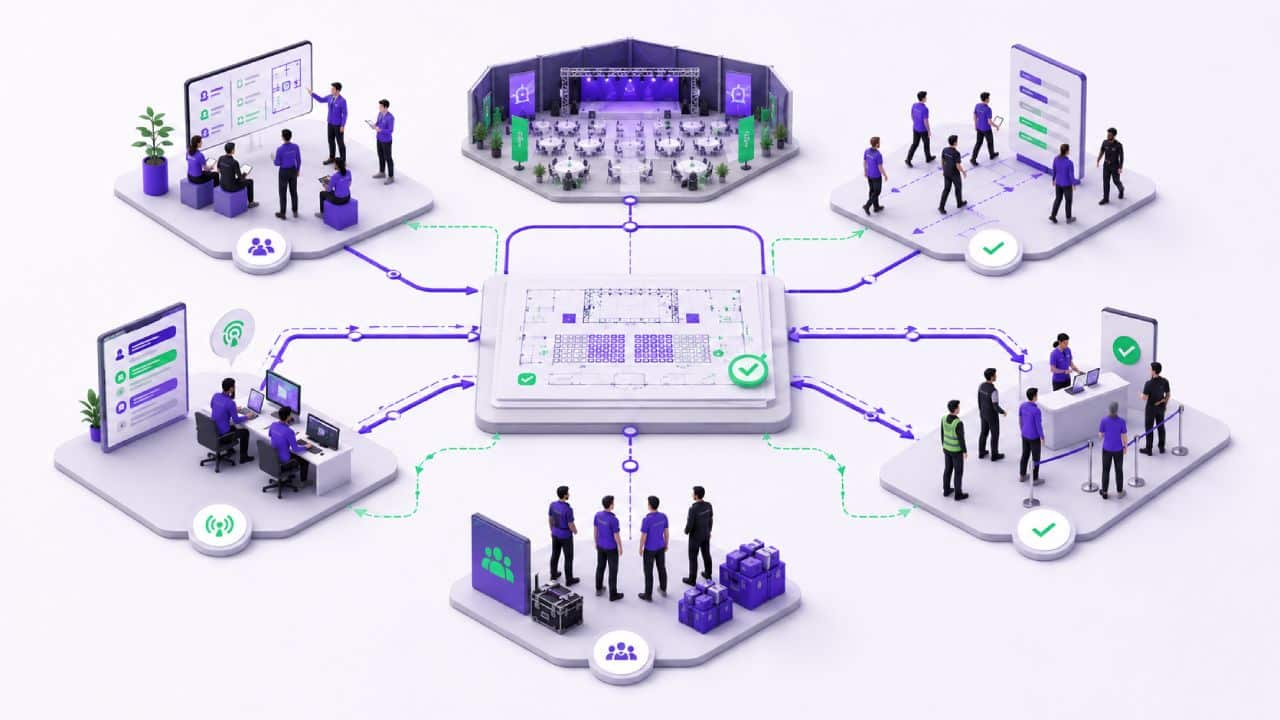
Where the event planning process breaks down
The event planning process rarely breaks during strategy. It breaks when a confirmed team is managed through spreadsheets and group chats. A festival with 200 crew cannot run on a single message thread. Updates get missed.
Check-in becomes guesswork. How to plan an event well means planning the people with the same care as the programme.
- Working out how many staff an event needs only helps if those staff are then coordinated.
Event planning vs event management: the difference
Event planning sets up the event. Event management runs it. Planning covers objectives, budget, venue and team. Managing an event covers the live decisions on the day.
The two overlap, yet they need different tools. Planning rewards structure and lead time.
Managing rewards speed and visibility. Most failures happen when planning is strong and management is improvised.
4. On-the-day operations: managing an event
Managing an event on the day is a coordination job. The plan exists. The team is booked.
Success now depends on visibility and speed. Who has arrived. Who is where. What changed in the last ten minutes.
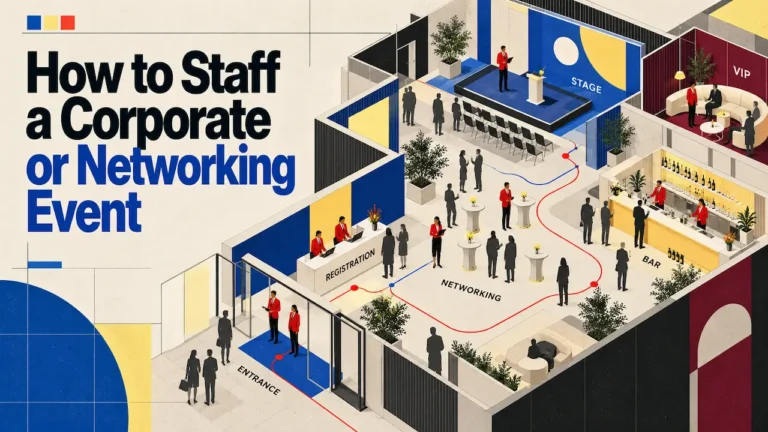
A major venue with multiple zones needs live check-in and clear comms. Without them, supervisors spend the day chasing people instead of running the event.
On the day, the organiser needs answers in seconds.
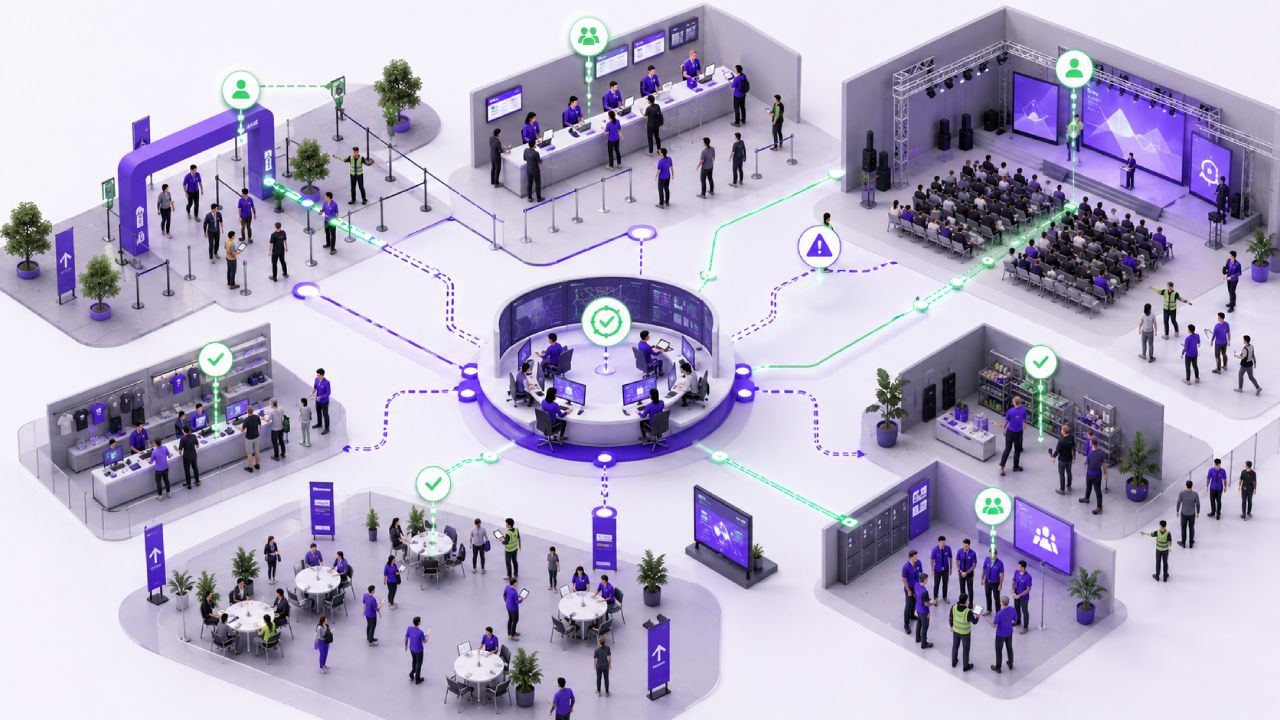
How to organise an event on the day
To organise an event on the day, centralise the live picture. Track arrivals against the schedule. Push briefings and changes through one channel. Keep a reserve list ready for no-shows.
- Strong event staff communication keeps everyone working from the same instructions.
The goal is simple: no one waiting and no role left uncovered.
5. Post-event phase: review and timesheets
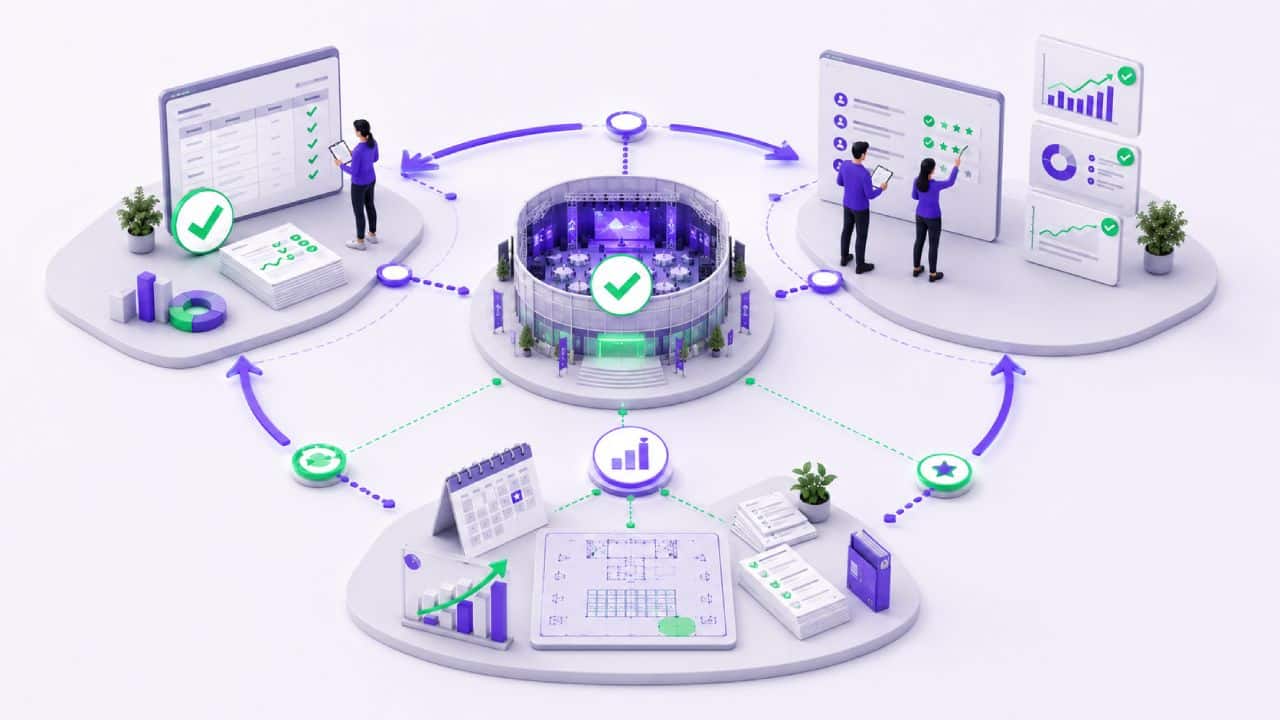
The post-event phase closes the loop. Timesheets confirm who worked and for how long. Accurate records mean faster payment and fewer disputes.
A short debrief captures what worked and what did not. Hospitality suppliers running repeat shifts gain the most here. Each event sharpens the next. Record the learnings while they are fresh.
The data from one event is the head start for the next.
How Liveforce supports event delivery
The hardest part of running an event is coordinating a team across roles, shifts and last-minute changes.
Spreadsheets and group chats stop working once the team grows past a handful of people. This is the operational problem Liveforce is built for.
Liveforce is the workforce management platform that agencies and suppliers use to coordinate a team they have already booked. It does not plan, host or staff the event. It gives the organiser one system to run the people layer with control.
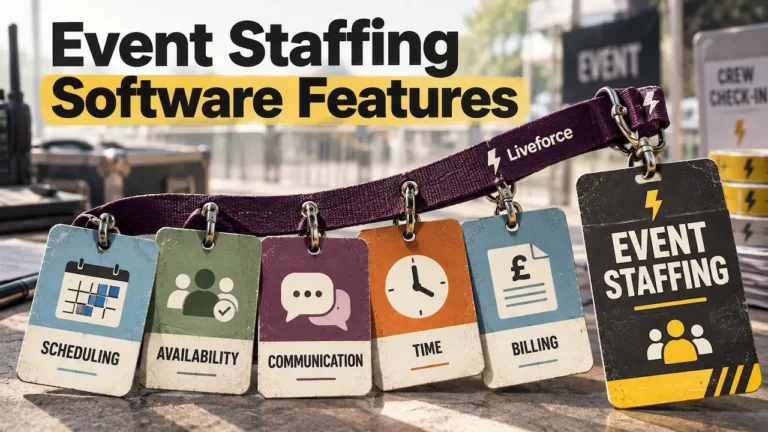
Its scheduling tools are used when staff work across multiple roles, zones or days.
- They schedule and book staff in place of spreadsheets and paper rotas that fall out of date.
- The workforce database holds availability, skills and compliance for the whole team. It replaces scattered contact lists and outdated records.
- The communication tools push briefings and changes to the right people. They replace group chats and last-minute calls.
- Timesheets record hours accurately for faster, cleaner payment.
One system replaces the spreadsheet, the rota and the group chat.
- For festivals, this means reliable festival staffing communication at volume.
- For venues, it means predictable check-in and compliance across every shift.
- The Crew App sits at the end of the chain. It lets booked staff view shifts, confirm availability and receive updates on their phones.
Where the next event is decided
Most organisers already plan the strategy well. The weak point is rarely the brief or the budget. It is the team on the day, run through tools that cannot keep up. The next event is decided less by the plan and more by how the people behind it are coordinated.
That is the part worth fixing first.
- The UK events industry is worth around £70 billion and supports over 700,000 jobs (BVEP, UK Events Report).
Most of that value is delivered by temporary teams on the ground. Learning how to plan an event well is mostly learning to coordinate the team that delivers it.
Plan the people with the same care as the programme, and the day looks after itself.
Frequently asked questions
What are the stages of event planning?
The five stages are planning, logistics, staffing and delivery, on-the-day operations, and post-event review. Planning sets objectives and budget. Logistics arranges venue and suppliers. Staffing assigns and briefs the team. Delivery runs the event. Review captures the results.
How far in advance should you plan an event?
A small or mid-size event needs about 8 to 16 weeks. A large or multi-day event needs 6 to 18 months. The real constraint is venue and supplier availability. Booking those early sets the rest of the timeline.
How is event planning different from event management?
Event planning prepares the event: objectives, budget, venue and team. Event management runs it on the day, handling live decisions and changes. Planning rewards structure and lead time. Management rewards speed and visibility across the team.
How do you plan an event step by step?
Start with the objective, then set the budget. Confirm the date and venue. Book suppliers and build the schedule. Assign and brief the team. Run the day, then review timesheets and learnings. Each step depends on the one before it.
What is the hardest part of planning an event?
The hardest part is coordinating the team on the day. The strategy is usually sound. Delivery fails when a booked team is run through spreadsheets and group chats. Clear roles, briefings and live communication keep the plan intact.