Event staff positions play a central role in how smoothly an event runs. From the first guest arrival to the final breakdown, every role contributes to safety, experience, and delivery.
For event staffing agencies and suppliers, understanding these positions is not about job titles alone. It is about building reliable teams, assigning the right skills, and delivering consistent results across multiple events.
This guide explains the most common event staff positions, what each role is responsible for, when they are needed, and typical UK pay ranges. It is designed to help agencies plan their workforce more effectively and reduce last-minute pressure when managing large temporary teams.
The Role Event Staff Positions Play in Event Delivery
For agencies working across festivals, conferences, sports events, hospitality, and brand activations, staffing decisions are rarely simple. Each event has its own layout, timings, risks, and client expectations.
Without a clear understanding of event staff positions, it becomes harder to forecast numbers, schedule accurately, and brief teams properly.
Clear role definitions help agencies:
- Match skills to event requirements
- Avoid overstaffing or under-resourcing
- Improve communication on site
- Reduce operational risk
- Deliver a better experience for clients and attendees
When event staff positions are clearly planned, agencies move from reactive staffing to structured delivery.
Core Categories of Event Staff Positions
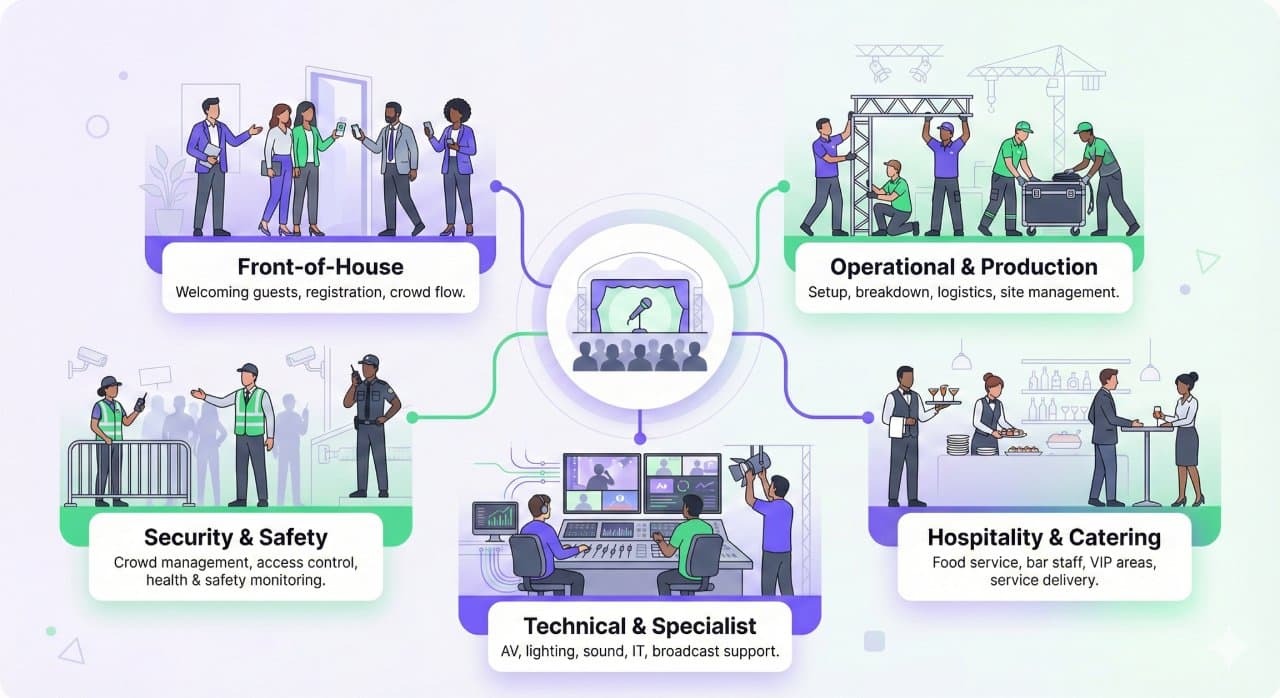
Event staff positions are often easier to manage when grouped by function rather than listed individually. While exact titles may vary between agencies, most roles fall into a small number of practical categories.
These categories include:
- Front-of-house positions
- Operational and production positions
- Hospitality and catering positions
- Technical and specialist positions
- Security and safety roles
Each category supports a different part of the event journey.
Front-of-House Event Staff Positions
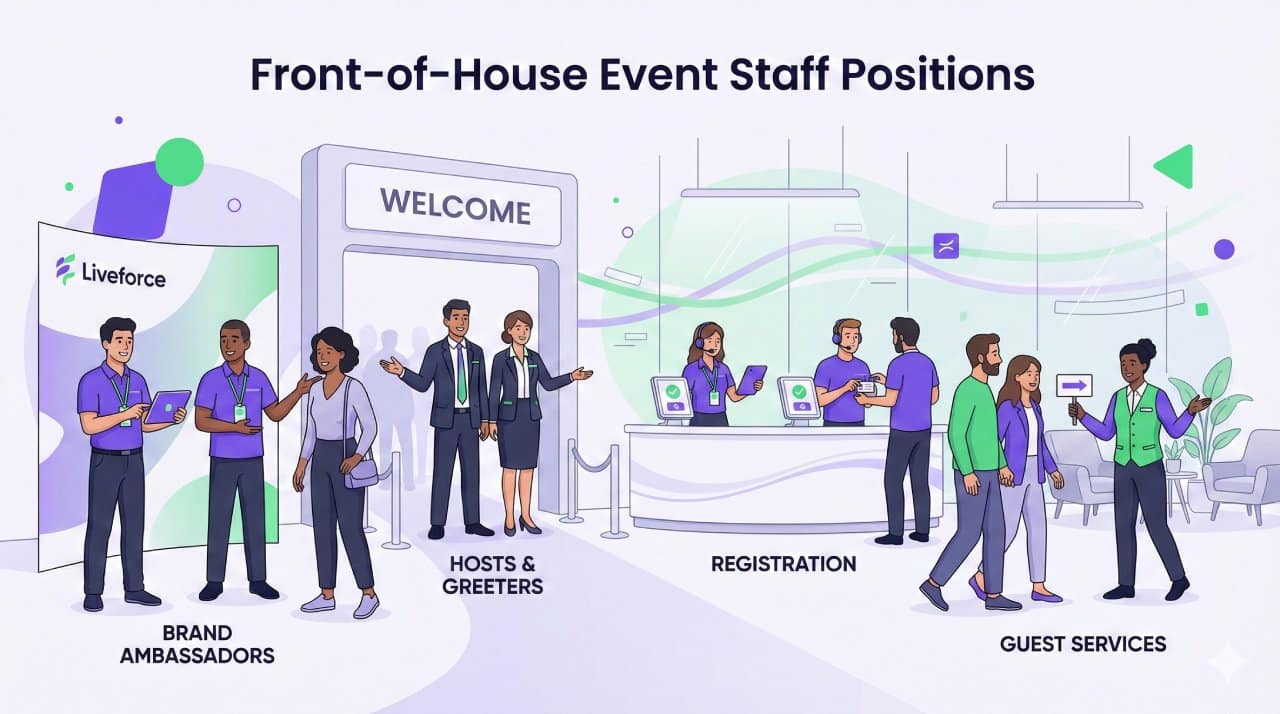
Front-of-house roles are often the first point of contact for guests. These event staff positions shape first impressions and influence how smoothly attendees move through the venue.
Brand Ambassadors and Promotional Staff
Brand ambassadors are commonly deployed at experiential marketing campaigns, product launches, and sampling events. While similar to hosts or greeters, these event staff positions focus more heavily on brand representation, product knowledge, and audience engagement.
Typical responsibilities include:
- Engaging attendees in conversations
- Delivering key brand messages
- Supporting product demonstrations or sampling
- Collecting feedback or data where required
Indicative UK pay range: £13 to £20 per hour
Rates tend to increase for experienced brand ambassadors, campaign leads, or London-based activations.
Event Hosts and Greeters
Event hosts and greeters welcome guests, provide directions, and answer basic questions. They are commonly used at corporate events, exhibitions, product launches, and ticketed experiences.
Responsibilities typically include:
- Greeting attendees on arrival
- Directing guests to registration or seating
- Supporting accessibility needs
- Representing the client brand professionally
Typical UK pay range: £12 to £15 per hour
Rates may increase for multilingual staff or high-profile events.
Registration and Check-In Staff
Registration staff manage guest lists, ticket scanning, badge printing, and access control. These event staff positions are essential for events with timed entry or large volumes of attendees.
Key responsibilities include:
- Managing registration desks
- Handling digital or paper check-in systems
- Resolving access issues
- Coordinating with event supervisors during peak arrival periods
Indicative UK pay range: £13 to £16 per hour
Rates trend higher for high-volume or tech-heavy events.
Ushers and Guest Services Staff
Ushers guide guests to seating, manage crowd flow, and assist during sessions. These event staff positions are common in theatres, conferences, award ceremonies, and sporting venues.
Responsibilities often include:
- Seating guests efficiently
- Supporting crowd movement during breaks
- Assisting with accessibility and safety guidance
- Responding to guest enquiries during the event
Indicative UK pay range: £12 to £15 per hour.
| Event Staff Position | Details | Indicative UK Pay Range |
|---|---|---|
| Brand Ambassadors & Promotional Staff | Engage attendees, represent brands, support sampling and activations. | £13–£20 per hour |
| Event Hosts & Greeters | Welcome guests, provide directions, support arrival flow. | £12–£15 per hour |
| Registration & Check-In Staff | Manage guest entry, ticket scanning, and registration systems. | £13–£16 per hour |
| Ushers & Guest Services Staff | Guide seating, manage crowd movement, assist attendees. | £12–£15 per hour |
Operational and Production Event Staff Positions
Operational roles focus on the physical setup, running, and breakdown of events. These event staff positions are critical for keeping schedules on track and ensuring infrastructure is in place.
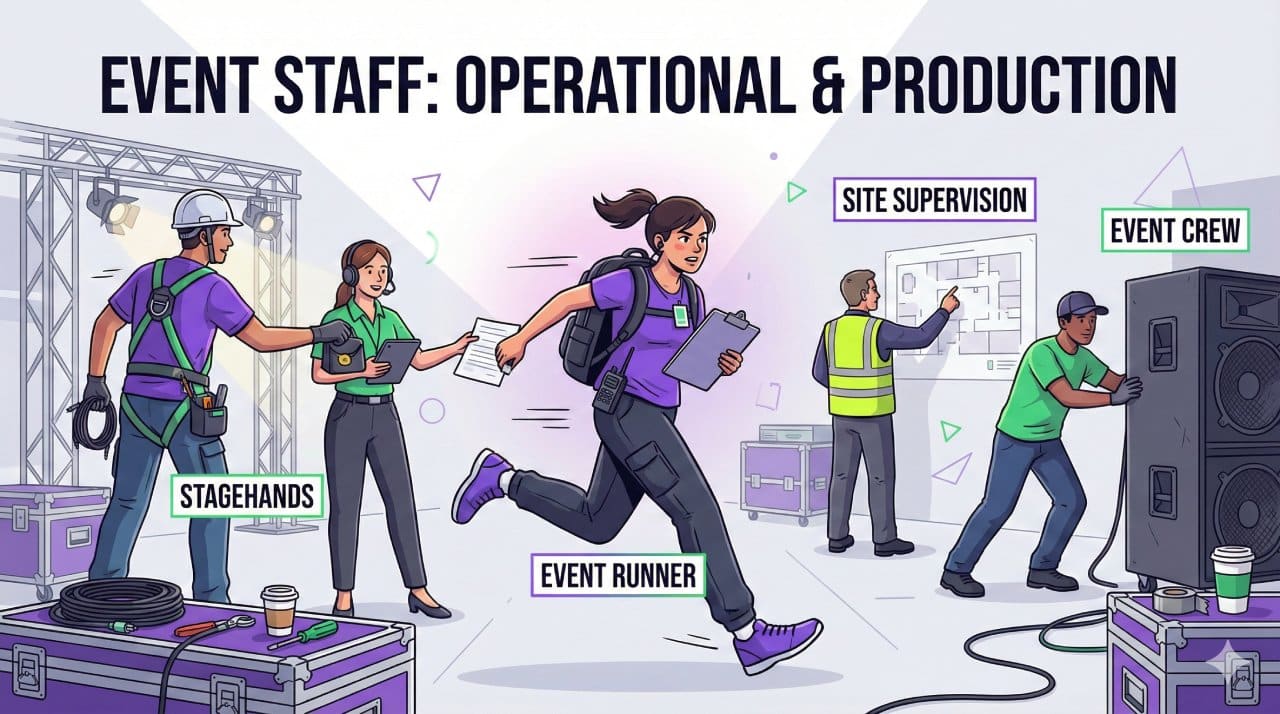
Event Crew
Event crew support the build and break phases of an event. This can include moving equipment, setting up staging, and assisting production teams.
Common responsibilities include:
- Loading and unloading equipment
- Setting up temporary structures
- Supporting production managers
- Assisting during live changes on site
Indicative UK pay range: £12.50 to £16.50 per hour
Overnight, unsociable hours, or physically demanding shifts may command higher rates.
Event Runners and Event Assistants
Event runners and assistants provide flexible on-site support, often acting as problem-solvers across departments. These event staff positions are widely used at conferences, exhibitions, and live productions.
Responsibilities may include:
- Supporting speakers, suppliers, or production teams
- Handling last-minute tasks and errands
- Assisting with logistics and setup changes
Indicative UK pay range: £12.50 to £16 per hour
These roles are particularly valuable on complex events where priorities shift quickly.
Production Managers and Technical Managers
Production managers oversee the technical and operational delivery of events, coordinating suppliers, crew, and schedules. While not always supplied in volume, these event staff positions are critical on large or technically complex projects.
Responsibilities include:
- Managing production timelines
- Coordinating technical teams
- Acting as the main point of contact for delivery
Indicative UK day rate: £280 to £450 per day
Rates vary significantly based on event scale and responsibility.
Stagehands
Stagehands work closely with production teams to manage stage setups, scenery, and equipment changes. These event staff positions are common in live entertainment, concerts, and conferences with staged content.
Responsibilities may include:
- Assisting with stage builds
- Managing quick set changes
- Supporting AV and lighting teams
- Ensuring safe handling of equipment
Indicative UK pay range: £14 to £19 per hour
Rates tend to increase with experience in live productions.
Site Supervisors
Site supervisors oversee teams of operational staff and act as a bridge between crew and event management.
Responsibilities typically include:
- Managing staff schedules on site
- Monitoring health and safety compliance
- Coordinating with suppliers
- Responding to issues during delivery
Indicative UK day rate: £160 to £230 per day
| Event Staff Position | Details | Indicative UK Pay Range |
|---|---|---|
| Event Crew | Build and break support, equipment handling, on-site setup assistance. | £12.50–£16.50 per hour |
| Event Runners & Event Assistants | Flexible on-site support, errands, and logistics assistance. | £12.50–£16 per hour |
| Production Managers & Technical Managers | Oversee delivery, coordinate teams, manage production timelines. | £280–£450 per day |
| Stagehands | Support stage builds, set changes, and live equipment handling. | £14–£19 per hour |
| Site Supervisors | Lead teams on site, manage schedules, monitor compliance. | £160–£230 per day |
Hospitality and Catering Event Staff Positions
Hospitality roles are essential for guest satisfaction at many events. These event staff positions require strong customer service skills and the ability to work efficiently under pressure.

Waiting Staff
Waiting staff support food and beverage service at corporate events, hospitality suites, weddings, and private functions.
Responsibilities include:
- Serving food and drinks
- Clearing tables
- Supporting bar and catering teams
- Maintaining presentation standards
Indicative UK pay range: £12 to £16 per hour
Premium corporate or London events may exceed this range.
Bar Staff
Bar staff manage drink service at festivals, sporting events, hospitality lounges, and private functions.
Key responsibilities include:
- Serving alcoholic and non-alcoholic drinks
- Managing queues efficiently
- Following licensing requirements
- Handling cashless payment systems
Indicative UK pay range: £12.50 to £17 per hour
Late-night and festival shifts often sit at the higher end.
Catering Assistants
Catering assistants support kitchen teams with food preparation, service logistics, and cleaning.
Responsibilities often include:
- Assisting chefs and catering managers
- Managing stock and supplies
- Supporting service during peak periods
- Ensuring hygiene standards are met
Indicative UK pay range: £12 to £15 per hour
| Event Staff Position | Details | Indicative UK Pay Range |
|---|---|---|
| Waiting Staff | Serve food and drinks, clear tables, support hospitality service. | £12–£16 per hour |
| Bar Staff | Serve drinks, manage queues, follow licensing and payment processes. | £12.50–£17 per hour |
| Catering Assistants | Support kitchen and service teams with prep, logistics, and hygiene. | £12–£15 per hour |
Technical and Specialist Event Staff Positions
Some event staff positions require specialist skills, certifications, or technical expertise. These roles are often booked earlier and paid at higher rates due to demand and responsibility.
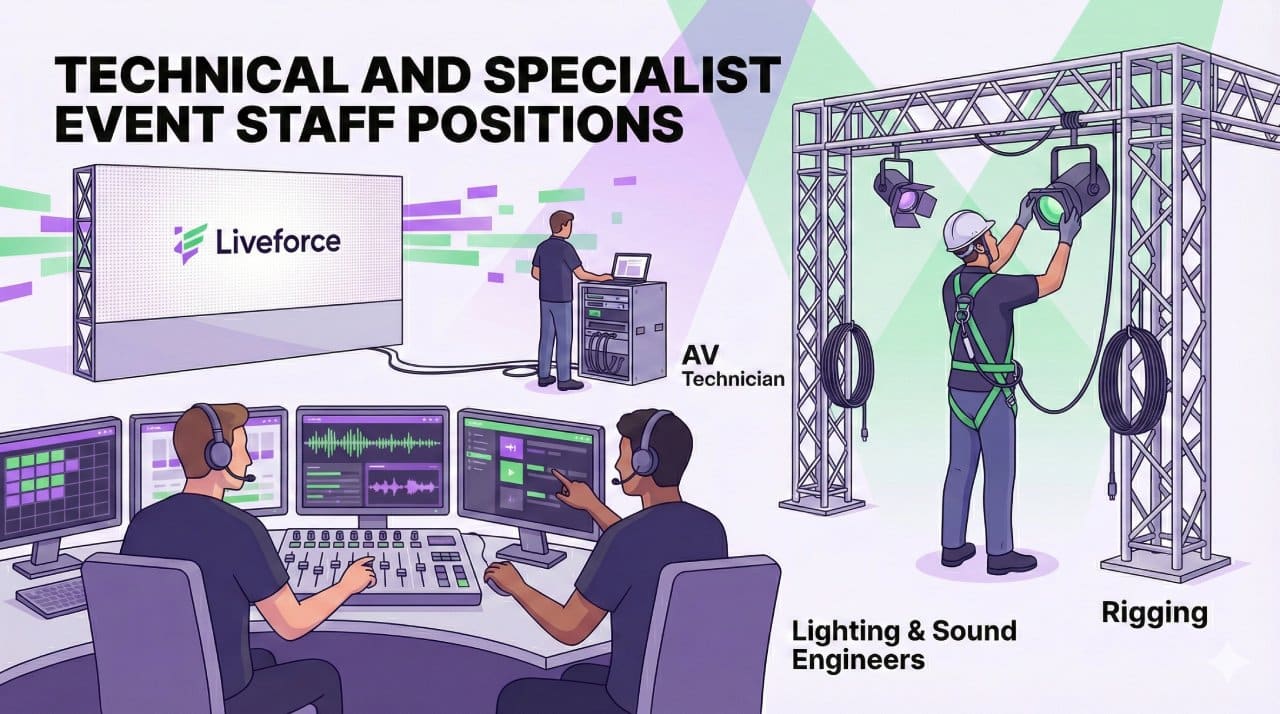
AV Technicians
AV technicians manage sound, visuals, and presentation technology. These event staff positions are essential for conferences, live broadcasts, and hybrid events.
Responsibilities include:
- Setting up audio and visual equipment
- Managing live presentations
- Troubleshooting technical issues
- Supporting speakers and performers
Indicative UK day rate: £180 to £300 per day
Highly experienced technicians may exceed this range.
Lighting and Sound Engineers
These specialists design and operate lighting and sound systems for live events, concerts, and performances.
Key responsibilities include:
- Programming lighting cues
- Managing sound balance
- Coordinating with production teams
- Ensuring technical safety standards
Typical UK pay range: £220 to £350 per day
Rigging Specialists
Rigging specialists handle the installation of trussing, lighting rigs, and suspended equipment.
Responsibilities include:
- Installing overhead structures
- Ensuring load safety
- Working at height
- Coordinating with production teams
Typical UK pay range: £250 to £400 per day
Certifications and experience heavily influence rates.
| Event Staff Position | Details | Indicative UK Pay Range |
|---|---|---|
| AV Technicians | Manage audio, visuals, and presentation technology for live events. | £180–£300 per day |
| Lighting & Sound Engineers | Design and operate lighting and sound systems for live delivery. | £220–£350 per day |
| Rigging Specialists | Install trussing, lighting rigs, and suspended equipment safely. | £250–£400 per day |
Security and Safety Event Staff Positions
Safety and compliance are critical at any event. These event staff positions help protect guests, staff, and organisers while meeting legal requirements.
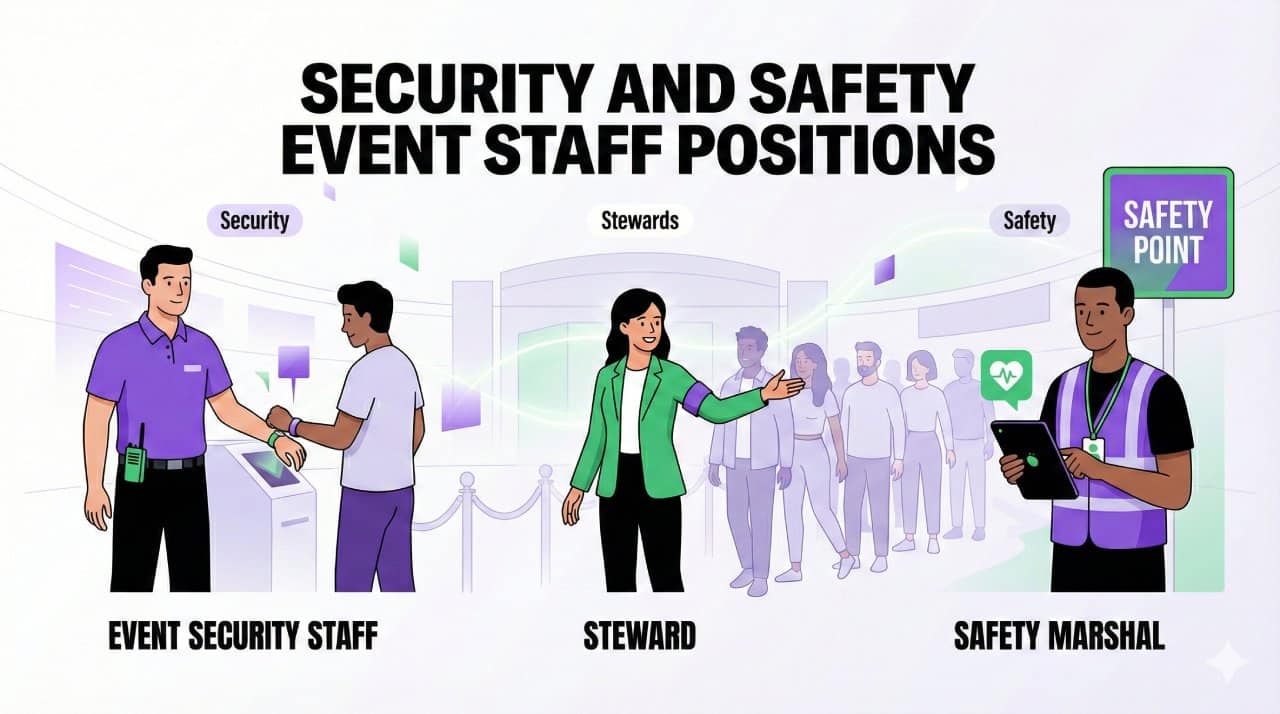
Event Security Staff
Licensed security staff manage access control, crowd safety, and incident response.
Responsibilities include:
- Monitoring entry points
- Managing crowd behaviour
- Responding to incidents
- Supporting emergency procedures
Typical UK pay range: £12 to £16 per hour
Valid SIA licensing is required.
Stewards
Stewards support crowd management and guest guidance, often working alongside security teams.
Responsibilities include:
- Directing crowds
- Monitoring seating and access areas
- Supporting safety briefings
- Escalating issues when required
Typical UK pay range: £11 to £14 per hour
Safety Marshals and Health & Safety Officers
Safety marshals focus specifically on risk management, crowd safety, and compliance rather than security enforcement. These event staff positions are increasingly common at festivals, outdoor events, and sporting fixtures.
Responsibilities often include:
- Monitoring crowd density and movement
- Identifying hazards and near-misses
- Supporting emergency procedures
- Liaising with event control
Indicative UK pay range: £14 to £20 per hour
Higher rates apply where formal health and safety qualifications are required.
| Event Staff Position | Details | Indicative UK Pay Range |
|---|---|---|
| Event Security Staff | Manage access control, crowd safety, and incident response. | £12–£16 per hour |
| Stewards | Support crowd management, guest guidance, and safety briefings. | £11–£14 per hour |
| Safety Marshals & Health & Safety Officers | Monitor risk, crowd safety, hazards, and compliance on site. | £14–£20 per hour |
Matching Event Staff Positions to Event Types
Different event formats require different combinations of event staff positions. Understanding these patterns helps agencies plan teams more accurately, allocate skills effectively, and reduce delivery risk.
For example:
- Festivals typically require large numbers of stewards, licensed security, bar staff, event crew, stagehands, safety marshals, and volunteer teams, supported by site supervisors and production managers.
- Corporate conferences focus on registration and check-in staff, event hosts, AV technicians, event assistants, supervisors, and production or technical managers to support structured schedules and live content.
- Sporting events rely on stewards, crowd marshals, licensed security, hospitality staff, safety officers, and operational crew to manage high footfall, crowd movement, and compliance.
- Brand activations often prioritise hosts, brand ambassadors, promotional staff, event runners, and operational support roles, with supervisors ensuring brand standards and smooth delivery.
Matching event staff positions to event type allows agencies to staff with greater confidence, reduce last-minute changes, and deliver more consistent outcomes across events.
Managing Event Staff Positions at Scale
As agencies grow, managing dozens or hundreds of event staff positions across multiple locations becomes more complex. Tracking availability, skills, compliance, and communication manually increases the risk of errors.
Agencies that manage event staff positions effectively benefit from:
- Clear role definitions
- Skill-based scheduling
- Better visibility across projects
Using structured workforce management processes allows agencies to scale confidently without losing control.
Event staff positions are the foundation of every successful event. When agencies understand each role, its responsibilities, and where it fits within delivery, staffing becomes more predictable and less reactive.
By clearly defining event staff positions, planning teams by function, and assigning the right skills to the right events, agencies can reduce pressure, improve client outcomes, and deliver events with confidence.
From front-of-house and promotional roles through to operational, technical, and safety-focused positions, agencies that understand the full spectrum of event staff positions are better equipped to plan, scale, and deliver with confidence.
You can book your demo now with Liveforce and take care of your event staffing operations.
Frequently asked questions
What are event staff positions?
Event staff positions are the defined roles required to plan, deliver, and manage live events, such as hosts, crew, hospitality staff, technicians, and safety roles. Clear definitions help agencies assign the right skills to each event.
How do event staff positions differ by event type?
Event staff positions vary depending on the event format, size, and risk level. Festivals, conferences, sporting events, and brand activations each require different role combinations to support delivery and safety.
Why is it important to define event staff positions clearly?
Clear event staff positions improve scheduling accuracy, reduce staffing risk, and help teams understand their responsibilities on site. This leads to more consistent delivery and fewer last-minute issues.
What are typical pay ranges for event staff positions in the UK?
Pay for event staff positions varies by role, experience, location, and event type. Entry-level roles often start around £12 per hour, while specialist and management positions are typically paid at higher hourly or daily rates.
How can agencies manage multiple event staff positions more effectively?
Agencies manage event staff positions more effectively by centralising staff data, tracking skills and availability, and scheduling roles clearly across events. Liveforce supports this by providing structured workforce planning and communication tools.