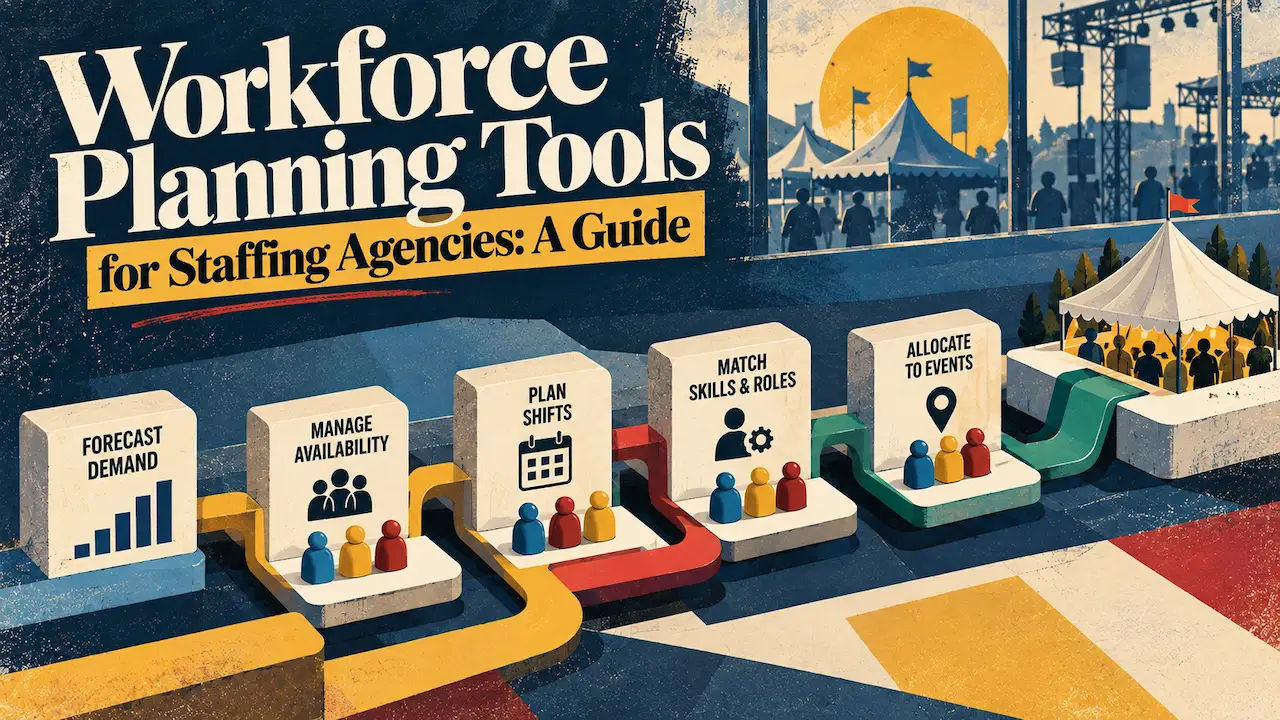
Workforce planning tools for staffing agencies fall into three categories of software.
- Recruitment systems find candidates and place them with clients.
- Enterprise suites model a large employer’s headcount years ahead.
- Operational workforce management platforms schedule, deploy and track a live workforce. Event-led agencies run on that third kind.
Owners and operations leads usually reach this choice while outgrowing a spreadsheet that no longer matches the week. Growing agencies, large agencies, festival suppliers and catering teams all meet the same problem. The same phrase covers all three categories, so the wrong fit is easy to buy. Choosing well starts with the four tool types. Then come the criteria that matter and the weekly jobs a tool must cover.
Where Liveforce fits: Liveforce is an operational workforce management platform for event-led staffing agencies. It schedules, deploys and tracks temporary crew across events and clients. It does not source candidates, advertise jobs publicly or match workers to employers. It is not an enterprise strategic-planning suite either.
What Workforce Planning Means for a Staffing Agency
For a staffing agency, workforce planning means putting qualified, available people on every shift a client has booked. The horizon is days and weeks, and the plan changes whenever a booking moves. Handling that at volume is the usual starting point when agencies weigh the benefits of workforce management software.
The plan has to absorb drop-outs, extra covers and venue changes every week.
The same two words cover three different jobs. In recruitment, planning means the pipeline: sourcing candidates, screening them and filling placements.
In corporate HR, it means modelling headcount, skills and labour cost across several years. An event staffing agency does a third thing. It deploys a pool of people it already has across events, clients and sites, often at short notice.
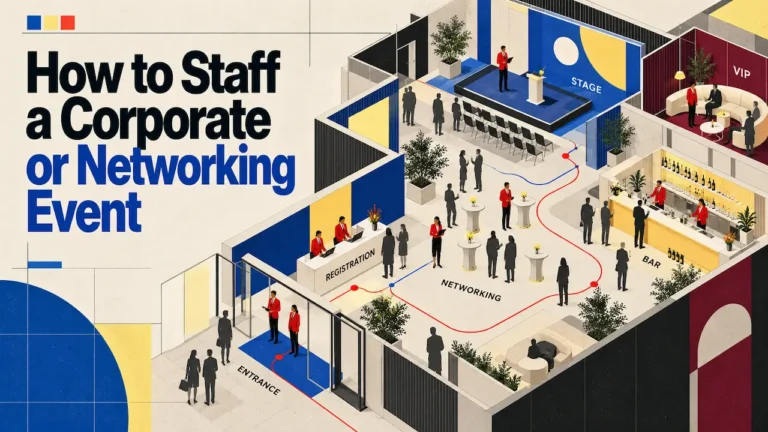
A catering agency covering 40 bookings over a bank holiday weekend shows the difference. Its planning work is matching availability, skills and compliance records to each shift, then covering drop-outs. None of that involves sourcing new candidates or building a five-year headcount model. The coordinator needs to see who is free and qualified, then confirm them fast. That is the job workforce planning tools for staffing agencies have to do.
An agency whose main work is sourcing candidates needs an applicant tracking system or recruitment CRM. A large employer planning its permanent headcount needs an enterprise planning suite. Everything below concerns agencies and suppliers running a live, shift-based event workforce.
An agency that recruits as well as deploys still needs a home for its shifts.
Types of Workforce Planning Tools and Which One an Agency Needs
Workforce planning tools for staffing agencies come in four types. Three are specialist categories of software. The fourth is the spreadsheet or basic rota tool many agencies start on. Only one type is built to run event shifts. Table 1 sets out what each is built for and where it stops.
Table 1 · The four types of workforce planning tool
What is your team's main job? Pick one to see the tool built for it.
Recruitment systems (ATS and staffing CRMs)
- Built for
- Sourcing candidates, tracking applications, and managing placements and client relationships.
- Best suited to
- Agencies whose main work is finding people and placing them with clients.
- Where it falls short for an event agency
- Records usually end at the placement. Multi-event rotas, shift changes, check-in and hours sit somewhere else.
Enterprise planning and HR suites
- Built for
- Modelling headcount, skills gaps and labour cost for large organisations over several years.
- Best suited to
- Corporate HR and finance teams planning a permanent workforce.
- Where it falls short for an event agency
- Plans roles across years. An agency plans named people onto shifts days or weeks ahead.
Operational workforce management platforms
- Built for
- Scheduling, deploying, communicating with and tracking a temporary or freelance workforce across events and clients.
- Best suited to
- Event staffing agencies, festival suppliers, hospitality and promotional agencies, and venues with large temporary teams.
- Where it falls short for an event agency
- Built to run the work. Candidate sourcing and long-range corporate strategy sit outside its job by design.
Spreadsheets and basic rota tools
- Built for
- Simple rotas for a small, fixed team.
- Best suited to
- Small agencies or venues with a stable team and a few regular sites.
- Where it falls short for an event agency
- Breaks under volume, frequent change and compliance records. Double bookings and out-of-date availability follow.
Operational workforce management is the category built for event-led staffing agencies.
How a Workforce Planning Tool Differs From an ATS
An applicant tracking system manages people until they join the pool. An operational workforce planning tool manages them from that point on, across every shift and event.
The ATS holds applications, interviews and placements. The operational tool holds availability, skills and compliance records, then builds rotas, sends updates and records hours.
Agencies that recruit at volume often run both, passing new starters from one system into the other. Problems start when an ATS is asked to plan a festival weekend. Its records usually end at the placement. The rota, the shift changes, and the hours then end up in spreadsheets.
An ATS fills the pool, and an operational platform runs the work that follows.
Why Enterprise Planning Suites Miss Agency Operations
Enterprise suites model headcount, skills gaps and labour cost for large organisations over several years. That suits a corporate HR or finance team planning a permanent workforce.
An agency asks a different question: who can cover Saturday’s late shift at the stadium? The suite plans a role across a year, while the agency plans a named person onto a shift.
The scale is wrong in both directions. These suites carry more strategy modelling than an agency will use, and less shift-level control than it needs.
When a Spreadsheet Is Still Enough
A spreadsheet or basic rota tool works for a small, stable team across a few regular sites. It struggles once an agency adds clients, temporary crew, and short-notice changes.
The risks are double bookings, out-of-date availability and compliance records nobody can find quickly. For an agency that has outgrown one, the operational category is the fit.
A spreadsheet tends to fail on the busiest weekend, when there is least time to fix it.
How to Choose Workforce Planning Tools for Staffing Agencies
Choose the shape of your operation first and the feature list second. The five checks below apply whether you run 20 crew or 2,000.
- Volume, variety and rate of change. Count the people, roles and events in a typical week. Then note how often plans change once set. A tool built for fixed weekly rotas strains when half the shifts move on the day. If you plan for seasonal peaks, check how forecasts feed the rota.
- Multi-client and multi-event structure. Each client brings its own sites, briefs and rules. The tool should keep them separate while showing one view of who is working where. Ask to see three events running on the same day.
- Compliance records and data security. Compliance tracking should keep the agency’s right-to-work records, certifications and expiry dates against each person. For security, look for UK GDPR compliance, a data processing agreement and role-based access.
- Integrations with payroll, HR and timesheets. Hours should flow from the shift record to payroll without re-keying. Ask how integrations with payroll and timesheets work today, whether through a public API, webhooks or pre-built connectors.
- Mobile access, onboarding and cloud delivery. Crew on site need shifts, briefings and check-in on their phones. The office needs a cloud system it can reach from any site. Ask what onboarding and training come with the account, because adoption decides whether the tool gets used.
Ask every vendor to run one of your real weekends in the demo.
Workforce planning tools for staffing agencies should clear all five checks without workarounds. A tool that fails the first two will not be rescued by anything further down the list. Where a gap exists, ask how the agency would cover it today. Then price that workaround in admin time.
The business case follows the same logic. The return shows up as admin hours saved and shifts filled on time. Pay runs also match the hours worked.
The Operational Jobs Your Workforce Planning Tool Must Handle
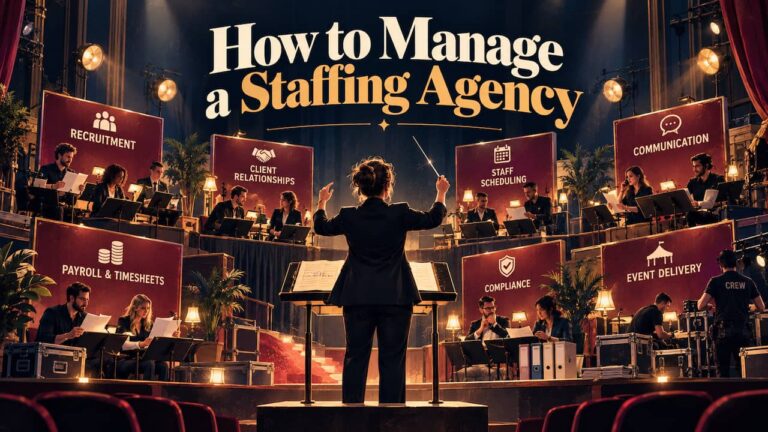
Four planning jobs repeat every week in an event agency. A strong tool supports each one, and each has its own detailed guide.
- Forecasting busy periods. Summer festivals, Christmas parties and sports seasons need a headcount plan weeks ahead. The guide to workforce planning for seasonal demand covers building that plan from past bookings.
- Working out how many staff an event needs. Headcount depends on guest numbers, service style and venue layout. How to calculate staffing needs sets out the method and the ratios.
- Planning and rostering crew across events. Turning a headcount into named people on shifts is the core daily task. The shift planning guide covers rotas that hold up when plans change.
- Tracking a temporary workforce. Coordinators need to know who is confirmed, who has arrived and what hours they worked. The guide to temp workforce tracking covers check-in, timesheets and records.
A forecast feeds the headcount, the headcount feeds the rota, and the rota feeds the timesheets.
A tool that handles one job well and the others badly pushes the gaps back into spreadsheets. That chain is the fairest test of workforce planning tools for staffing agencies. Run a recent event through each shortlisted tool, from forecast to timesheet, and note where it breaks.
How Liveforce Helps Agencies Plan Their Workforce
Agencies comparing software keep meeting tools built for someone else’s job. Recruitment systems stop at the placement, and enterprise suites plan roles across years. The agency still needs a system to run a live, changing workforce this week.
Liveforce is the operational workforce management platform event-led agencies use for that work. It replaces the spreadsheets, WhatsApp groups and paper timesheets that many agencies juggle today.
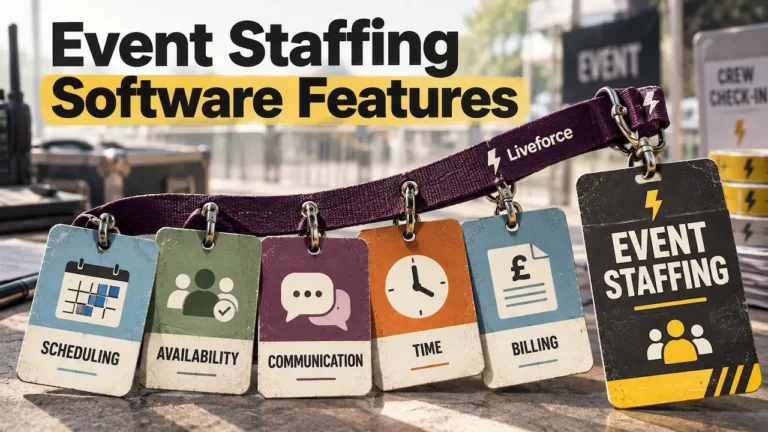
Scheduling is where most of the planning happens. Coordinators build a schedule for each event side by side and copy shifts across days. Jobs can be imported from a previous event, so no plan starts from scratch. The workforce database holds availability, roles, skills and compliance records. Before booking anyone, a coordinator can filter for people who are free and qualified.
When plans change, shift updates and briefings go out through the platform in place of group chats. Timesheets tie to shifts and record hours as crew work. That data reaches payroll through Liveforce’s public API and webhooks. Liveforce is not a payroll provider, so pay runs stay in the agency’s own payroll system.
Hours recorded against the shift are the hours that reach payroll.
Liveforce runs operational planning for the crew an agency has brought into its own pool. Candidate sourcing and corporate headcount modelling sit outside it.
CASE STUDY EXAMPLE:
THA Staffing, an event staffing agency in Dubai, faced this decision in 2020. Its Group Director of Operations, Erika Lahssini, saw two options. THA could stay on Excel sheets and WhatsApp groups, or use technology to set itself apart. It now confirms who is on site through geofenced check-in and pays from automated timesheets.
Liveforce is built for event, festival, hospitality and promotional staffing agencies, and for venues running large temporary teams. The page on workforce management software for staffing agencies shows how it works across clients and events. Crew see their shifts and updates in the Crew App.
Which Workforce Planning Tool Should Your Agency Choose?
Start with the category, because it decides most of what follows. An agency that sources candidates for clients may need an ATS as well.
An agency running shifts across events, clients and sites needs an operational workforce management platform first. Among workforce planning tools for staffing agencies, that is the category built for the work.
Everything else on the shortlist is a tool for a different job.
Test each shortlisted platform against the five checks and the four weekly jobs. Trial the one that covers all of them on a real event, with no spreadsheet running alongside.
Plan Your Next Busy Weekend in Liveforce
Every Liveforce account comes with a dedicated account manager. They set the platform up around your roles, clients and events. The onboarding team gets accounts live quickly, so agencies run real jobs sooner.
Book a demo with Liveforce and bring your next busy weekend to plan against.
FAQs
What are the main types of workforce planning tool?
The four main types are recruitment systems, enterprise planning suites, operational workforce management platforms and spreadsheets. Each one serves a different job. Event-led staffing agencies run their day-to-day planning on the operational category.
Can an ATS handle workforce planning for a staffing agency?
An ATS handles the recruitment stage, from placement applications, and rarely covers the operational planning after it. It is not built to run multi-event rotas, send shift changes or record hours worked. Agencies that recruit at volume tend to run an ATS alongside an operational workforce management platform.
Is enterprise workforce planning software right for a staffing agency?
Enterprise workforce planning software rarely suits a staffing agency. It models headcount, skills and cost for large permanent workforces over several years. A staffing agency plans named people onto shifts days or weeks ahead, which calls for an operational platform.
What integrations should agency workforce planning software have?
Agency workforce planning software should connect to payroll, timesheets and HR records, so hours flow through without re-keying. Ask whether that runs through pre-built connectors or a public API with webhooks. Then check which of your systems each route covers.
What security standards should agency workforce planning software meet?
Agency workforce planning software should be UK GDPR compliant, because it holds personal data on every crew member. It should also offer a data processing agreement and role-based access. Independent certifications such as ISO 27001 and SOC 2 Type II show the security controls have been audited.